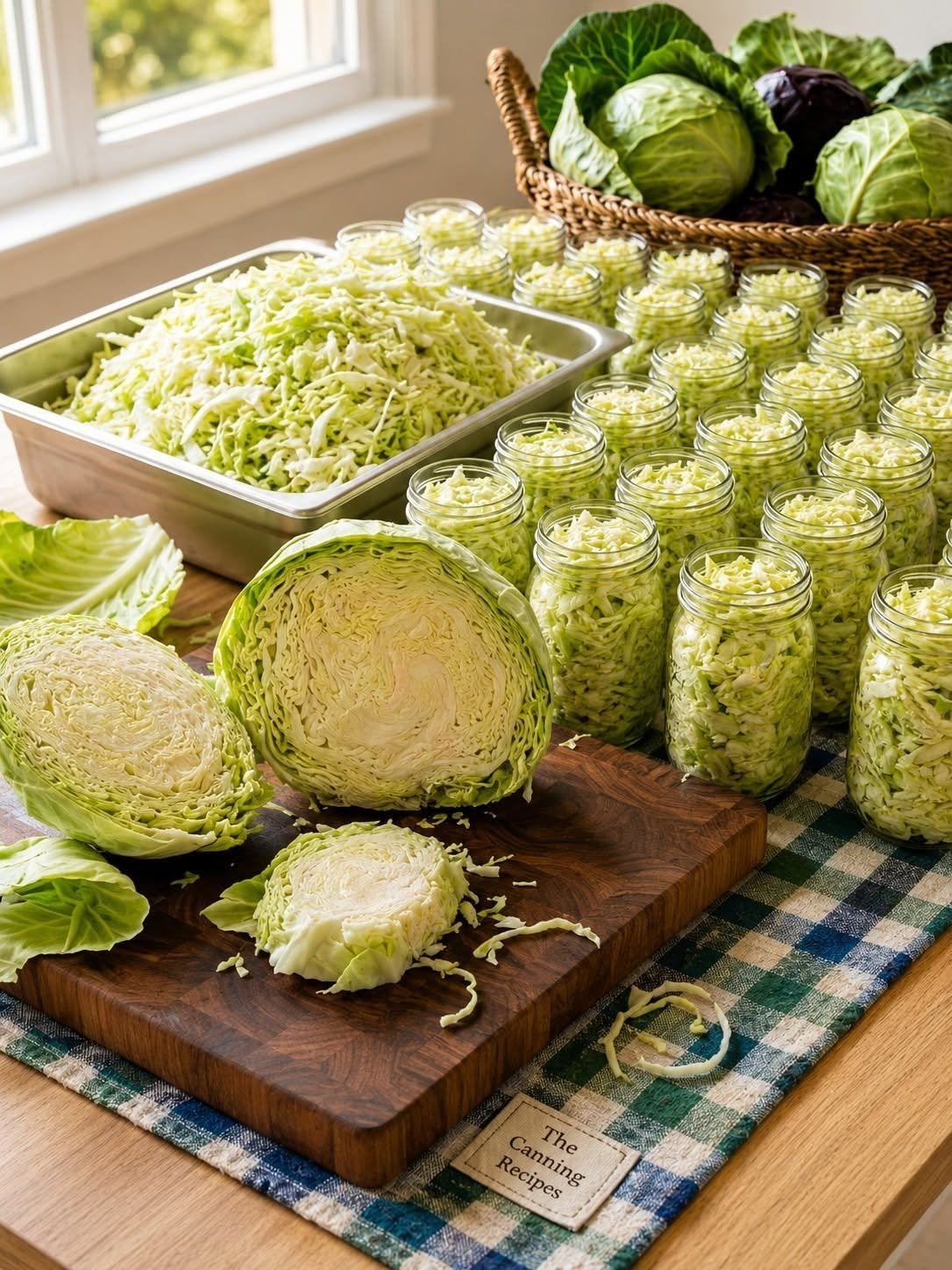
Homemade Sauerkraut
Prep Time: 25 minutes
Fermentation Time: 1 to 4 weeks (depending on desired tanginess)
Total Time: 4 weeks (active prep is minimal)
Yields: About 1 quart jar
Course: Condiment / Fermented Foods
Cuisine: Traditional Preservation / Global
Difficulty: Easy
Ingredients
1 medium head green cabbage (about 2 to 3 pounds), outer leaves removed and reserved
1 1/2 tablespoons kosher salt or fine sea salt (do not use iodized salt, as iodine can inhibit fermentation)
1 teaspoon caraway seeds (optional, for traditional European flavor)
Step-by-Step Instructions
Step 1: Prep and Shred the Cabbage
Rinse the head of green cabbage under cool water and pat it dry. Peel away any bruised or dirty outer leaves, reserving one clean outer leaf to use later as a barrier.
Cut the cabbage into quarters and slice out the tough core from each section.
Using a sharp knife or a mandoline slicer, finely shred the cabbage quarters into thin ribbons.
Step 2: Salt and Massage
Transfer the shredded cabbage into a large, clean mixing bowl.
Sprinkle the kosher salt (and caraway seeds, if using) evenly over the cabbage.
Using clean hands, vigorously massage and squeeze the cabbage for 5 to 10 minutes. The salt will draw out the natural juices from the cellular structure of the cabbage, creating a salty brine at the bottom of the bowl.
Step 3: Pack into the Jar
Transfer the shredded cabbage and all of its accumulated liquid into a clean, sterilized 1-quart glass mason jar.
As you add handfuls of cabbage, press down firmly using your fist or a wooden muddler to pack the cabbage tightly into the jar. This eliminates air pockets and forces the brine to rise above the solid vegetable matter.
Take the reserved outer cabbage leaf, fold it to fit snugly over the top of the packed shredded cabbage, and push it down below the brine level. This acts as a weight to keep everything submerged.
Step 4: Ferment
Seal the jar with a fermentation lid (airlock system) or screw a standard mason jar lid on loosely to allow carbon dioxide gases produced during fermentation to escape without building up pressure.
Place the jar on a small plate or tray (to catch any brine overflow during active bubbling) in a cool, dark place out of direct sunlight, ideally maintaining a room temperature between 65°F and 72°F (18°C to 22°C).
Check the jar daily. Ensure the cabbage remains completely submerged beneath the liquid brine. If any foam or bubbles appear, simply press down on the cabbage to release trapped gas.
Step 5: Test, Store, and Enjoy
Begin tasting the sauerkraut after 7 days. Fermentation speed depends heavily on ambient room temperature. Allow it to ferment anywhere from 1 to 4 weeks until it reaches your preferred level of crispness and sour tang.
Once the sauerkraut tastes delicious to you, secure the lid tightly and transfer the jar to the refrigerator. The cold temperature will slow down the fermentation process significantly.
Homemade sauerkraut stored in the refrigerator will remain fresh, crisp, and probiotic-rich for several months.
Nutritional Information
Amount per serving (approx. 1/2 cup):
Calories: 25 kcal
Total Carbohydrates: 6g
Dietary Fiber: 3g
Sugars: 3g
Protein: 1g
Total Fat: 0g
Sodium: 300mg (varies based on salt absorption)