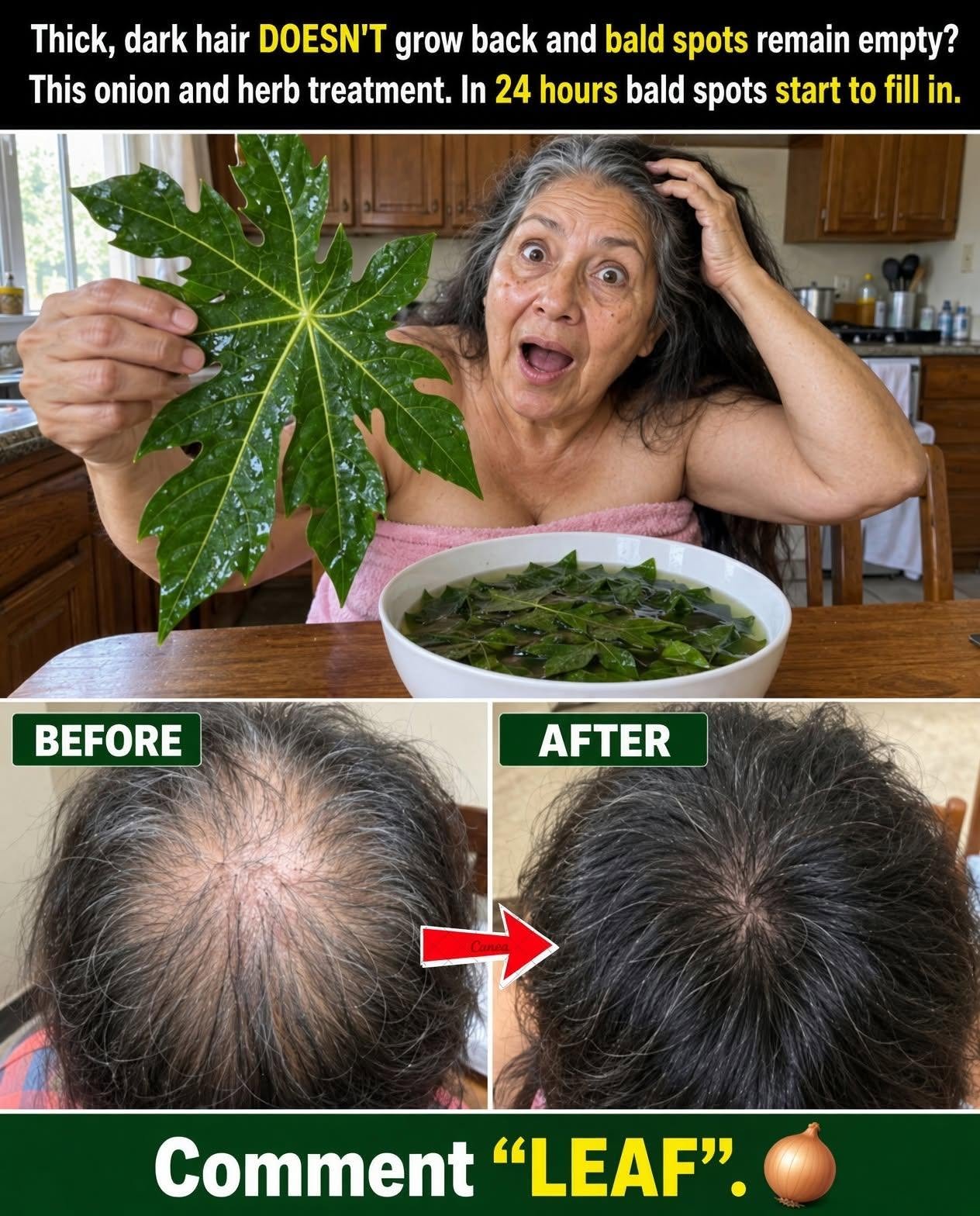
Is your hair falling out after 65? This onion-based habit is surprising many.
Some common signs include a widening of the hairline, more hair on the pillow or brush, and areas where the scalp becomes more visible. According to dermatological reviews and clinical studies, hair loss in older adults is common, but not always inevitable.
Factors that usually worsen it
These habits and conditions can accelerate hair thinning:
- Diets low in protein, iron, or zinc.
- Frequent use of irons, dryers or harsh dyes.
- Very tight hairstyles that pull on the scalp.
- Prolonged stress and poor sleep.
- Dehydration and unprotected sun exposure.
If your hair becomes more fragile, the first step is not to spend money on expensive products: it’s to understand what is weakening it from the inside and the outside.
Onions and herbs: a home remedy that many grandmothers still cherish.
Onions have garnered attention because they contain sulfur compounds, which are part of keratin, the main protein in hair. They also provide antioxidants that can help create a more favorable environment for the scalp.
Furthermore, there’s a tradition behind this remedy. In many Mexican homes, onions are combined with rosemary or guava leaves to prepare homemade rinses. This remedy is often passed down from generation to generation, and while it doesn’t replace medical treatment, it can be part of a gentle skincare routine.
A study published in The Journal of Dermatology observed improvement in people with patchy alopecia areata who used onion juice twice a day for two months. The sample size was small and it doesn’t apply to all types of hair loss, but it does suggest that this ingredient deserves attention. Meanwhile, research on rosemary has shown promising results in certain cases of androgenetic alopecia, although the evidence is still limited.
The interesting part is this: it’s not a “miracle cure,” but a support that some people tolerate well when used correctly.
How to safely prepare the remedy at home
This is a simple method many families use as a hair rinse. The idea is to use a mild infusion; don’t apply the onion directly if your scalp is sensitive.
chop
- 1 medium onion.
- 1 liter of water.
- 1 handful of fresh rosemary.
- Optional: some clean guava leaves.
Step-by-step preparation
1. Peel and cut the onion into medium-sized pieces.
2. Boil the liter of water and add the onion along with the rosemary and, if you like, the guava leaves.
3. Let it boil for 5 minutes with the pot covered.
4. Turn off the heat and let it sit until it cools completely.
5. Strain the liquid and store it in a clean glass jar in the refrigerator.
6. Use it within the next 3 days to keep it fresh.
7. Apply it to the clean scalp with your fingertips.
8. Massage gently for 3 to 5 minutes.
9. Leave it on for 20 to 30 minutes.
10. Rinse with a mild shampoo.
11. Repeat 2 to 3 times per week.
If you have sensitive skin, do a patch test behind your ear or on a small area of your forearm first. If it burns, stings, or reddens, stop using it. That’s not an exaggeration: onions can irritate some people, especially if their scalp is already dry or inflamed.
What habits do help hair look stronger?
Home remedies can be helpful, but they work best when combined with habits that support growth and reduce breakage. This is where many people notice real changes over time.
| Habits that make things worse | Habits that help |
|---|---|
| Dryer or iron on high temperature every day | Dry gently with a towel without rubbing |
| Very harsh shampoos or excessive washing | Use gentle shampoo and wash according to your hair type. |
| Tight Jackets | Loose hairstyles that don’t pull on the roots |
| Low protein in the diet | Eggs, beans, fish, chicken, or yogurt |
| Stress and poor sleep | Sufficient rest and calm routines |
Nutritional science agrees on one important point: hair needs energy, protein, and micronutrients to grow normally. If fuel is lacking, the body prioritizes more urgent functions, and the hair suffers.
Practical tips you can start today
This is where theory really comes in handy. You don’t need to do everything perfectly; just start with small, consistent steps.
Simple 7-day plan
Day 1: Check if your hair loss is recent, gradual, or sudden. If it was sudden, it’s worth consulting a doctor.
Day 2: Switch to a milder shampoo and avoid excessively hot water.
Day 3: Prepare the onion and rosemary infusion and do the sensitivity test.
Day 4: Add a source of protein to two meals of the day.
Day 5: Avoid tight hairstyles and reduce the use of heat.
Day 6: Drink more water and wear a hat if you’re going to be in the sun a lot.
Day 7: assess whether your hair feels less brittle and continue consistently for several weeks.
Consistency is more important than any expensive product. In many cases, hair doesn’t improve overnight, but it can respond better when you stop damaging it and give it daily support.
When is it advised to consult a doctor?
Not all hair loss is the same. If you notice very rapid hair loss, bald patches, intense itching, flaking, scalp pain, or general weakness, it’s best to talk to a dermatologist or your doctor.
It’s also a good idea to check for anemia, thyroid problems, nutritional shortcomings, or medication side effects. Sometimes hair loss is the first sign of something going on inside the body.
And yes, a home remedy can complement care, but it should not delay a professional evaluation when there are warning signs.
Frequently Asked Questions
Can onions make hair grow back?
There is no evidence that it is guaranteed to work in all cases. Some small studies have shown interesting results, especially in alopecia areata, but a complete or permanent recovery cannot be promised.
How often can this rinse be used?
It’s most common to apply it 2 to 3 times a week. Leaving it on for 20 to 30 minutes is usually enough. More doesn’t mean better results.
What if it irritates my scalp?
Stop using immediately. Wash with lukewarm water and a mild shampoo. If irritation persists, consult a doctor, especially if you have dermatitis, sensitive skin, or open wounds on your scalp.
Surgery
Hair loss after 65 can be frustrating, but it doesn’t mean you’re helpless. Understanding why it happens, maintaining a healthy diet, avoiding harsh habits, and trying gentle remedies like onion and rosemary infusion can help improve the appearance and strength of your hair over time.
The most important thing is to proceed calmly, consistently, and safely. If you notice any unusual signs or a significant drop in performance, seek medical advice. Sometimes, the smartest step isn’t to try more things, but to investigate the underlying issues.
In summary: onions can be an interesting home remedy, but they work best when combined with good habits and professional care if needed.
Disclaimer
This article is for informational purposes only and is not a substitute for professional medical advice or evaluation. If you have persistent hair loss, irritation, or any other medical condition, consult your doctor before trying any home remedies.