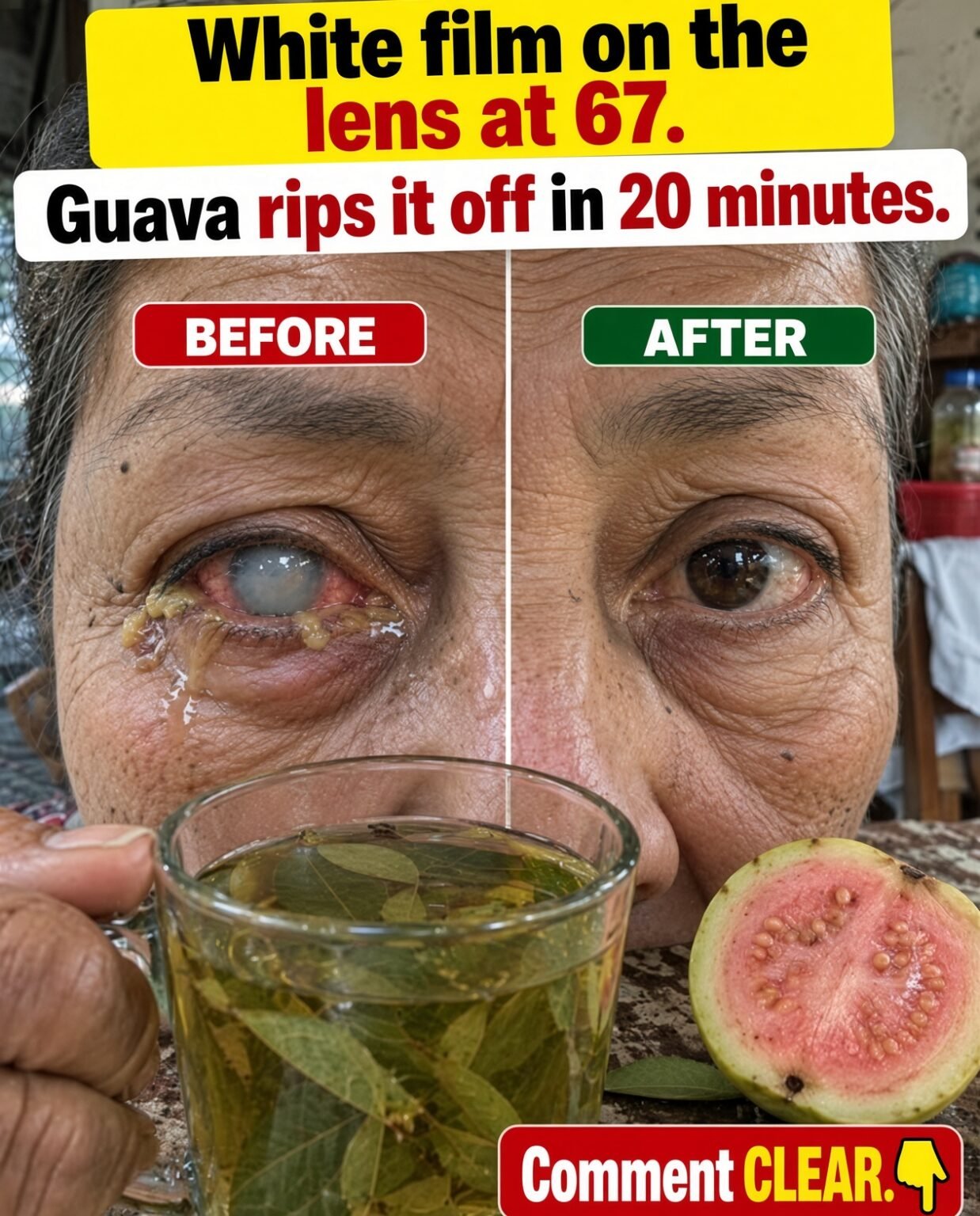
The White Film on the Lens After 67: What Guava Can and Cannot Do
Many older people start noticing their vision turning blurry, as if a layer of fog sat over their eyes. That scares, frustrates, and makes any viral remedy look like quick hope. The problem is that not everything circulating online has real backing — and trusting miracle promises can delay proper care. The good news: there are simple ways to care for your eyes and better understand what’s happening, and at the end of this article I’ll show you what almost nobody explains clearly.
What does that “white film” really mean?
When someone talks about a “white film” on the lens, they often mean a cataract — the loss of transparency of the eye’s natural lens. This doesn’t usually appear overnight, but gradually. The person notices blurry vision, more light sensitivity, or trouble seeing at night. The key: it’s not dirt that can be “ripped off” with a drink or a food.
And here’s the important part: the lens is inside the eye, so any claim that a fruit “cleans it in 20 minutes” should be taken with great caution. The available medical evidence doesn’t back that kind of quick promise.
Why these messages go so viral
Exaggerated ads work because they touch a very human worry: losing visual independence. Blurry vision is scary, especially when it affects actions as simple as reading, cooking or walking safely. But that doesn’t mean a viral solution is real.
The truth is that messages promising immediate results usually oversimplify an eye problem that needs professional evaluation. On social media, testimonials, eye-catching images and absolute phrases mix to build trust — but that’s not evidence. Serious studies and clinical guides insist lens problems require correct diagnosis and follow-up.
What is known about lens health
Cataract usually relates to age, though factors like sun exposure, smoking, diabetes and some medications also matter. Over time, lens proteins change and vision becomes less clear.
According to widely recognized medical sources — the American Academy of Ophthalmology and the National Eye Institute — the definitive treatment of an advanced cataract is surgical when it affects daily life. That doesn’t mean alarming yourself immediately; it means understanding there are clear, safe medical steps.
Signs worth taking seriously: blurry or “foggy” vision; more difficulty driving at night; strong light sensitivity or glare; frequent prescription changes; colors looking more faded. These symptoms alone don’t confirm a cataract, but they indicate you shouldn’t keep guessing.
Does guava really help?
Guava is a nutritious fruit. It provides vitamin C, fiber and antioxidants, and that’s positive for general health. However, there’s no solid evidence that on its own it “rips off” a cataract or removes a film from the lens in minutes.
This is essential to avoid false expectations. Eating better can support long-term eye health, but it doesn’t replace an ophthalmological evaluation nor correct an opacity already formed in the eye.
Good nutrition yes; miracle promises, no.
Quick comparison: what helps and what doesn’t
What can help: eye exam with an ophthalmologist; proper prescription lenses; sun protection for the eyes; controlling diabetes and blood pressure. What’s not backed: juices or fruits that “clear” the lens; promises of visual change in minutes; home remedies as a substitute for diagnosis; viral posts without scientific backing.
As you see, the difference is huge. One thing is supporting eye health; something very different is claiming a food eliminates a disease.
What to do starting today to care for your sight
If you or a family member notice cloudy vision, follow these practical steps: schedule an exam with an ophthalmologist or eye professional; write down your symptoms — when they started and what worsens them; avoid relying on viral remedies as the main solution; use lenses with the correct prescription if you were given them; protect your eyes from the sun with UV-blocking lenses; keep conditions like diabetes and hypertension controlled if you have them.
This plan doesn’t promise miracles, but it brings you closer to safe, useful decisions. And that, in visual health, is worth a lot.
When to seek care sooner
There are signals you shouldn’t let pass. If vision changes rapidly, if eye pain appears, if you see flashes, or if part of your visual field is lost, seek medical care as soon as possible. Better to check too much than arrive late.
Also consult if blurry vision already interferes with reading, cooking, walking safely or recognizing faces. Quality of life matters, and there’s no reason to resign to “it’s just age.”
Frequently asked questions
Does guava cure cataracts? No. Guava is nutritious, but there’s no scientific evidence it cures cataracts or removes a lens opacity.
What symptoms usually indicate cataracts? Blurry vision, light sensitivity, trouble seeing at night and faded colors are frequent signs worth checking with an ophthalmologist.
Can cataracts improve without surgery? In early stages, lenses or lighting are sometimes adjusted to see better — but when cataracts affect daily life, the definitive treatment is usually surgical.
This article is for informational and educational purposes only and is not medical advice. Please consult a qualified healthcare professional before making changes to your diet or health routine.