
Why Do Your Hands Fall Asleep? Common Causes and Natural Remedies That May Help
Have you ever woken up in the middle of the night with a strange tingling sensation in your hands? Or perhaps you noticed that your fingers suddenly feel numb while working or holding your phone. This uncomfortable feeling—often described as “hands falling asleep”—is surprisingly common.
In many cases, the sensation is temporary and harmless. However, frequent numbness may signal issues related to nerves, circulation, or lifestyle habits. Understanding the causes can help you find simple natural remedies to relieve the problem and protect your overall health.
What Does It Mean When Your Hands Fall Asleep?
When your hands fall asleep, you may experience:
Tingling or “pins and needles”
Numbness or reduced sensation
Temporary weakness in the fingers
A feeling of heaviness in the hand or wrist
This usually happens when nerves are compressed or blood circulation is temporarily reduced, interrupting normal nerve signals to the brain.
While occasional numbness is common, frequent episodes should not be ignored.
Common Causes of Hand Numbness
Understanding the underlying causes is the first step toward preventing the problem.
1. Poor Sleeping or Sitting Posture
One of the most common causes is simply sleeping or sitting in a position that compresses nerves or blood vessels.
For example:
Sleeping with your arm under your head
Resting your elbow on a desk for long periods
Keeping your wrist bent while using a phone
These positions can reduce circulation or press on nerves, leading to numbness in the hands.
2. Nerve Compression or Carpal Tunnel Syndrome
Repeated hand movements—such as typing, cooking, or using tools—may lead to nerve compression in the wrist.
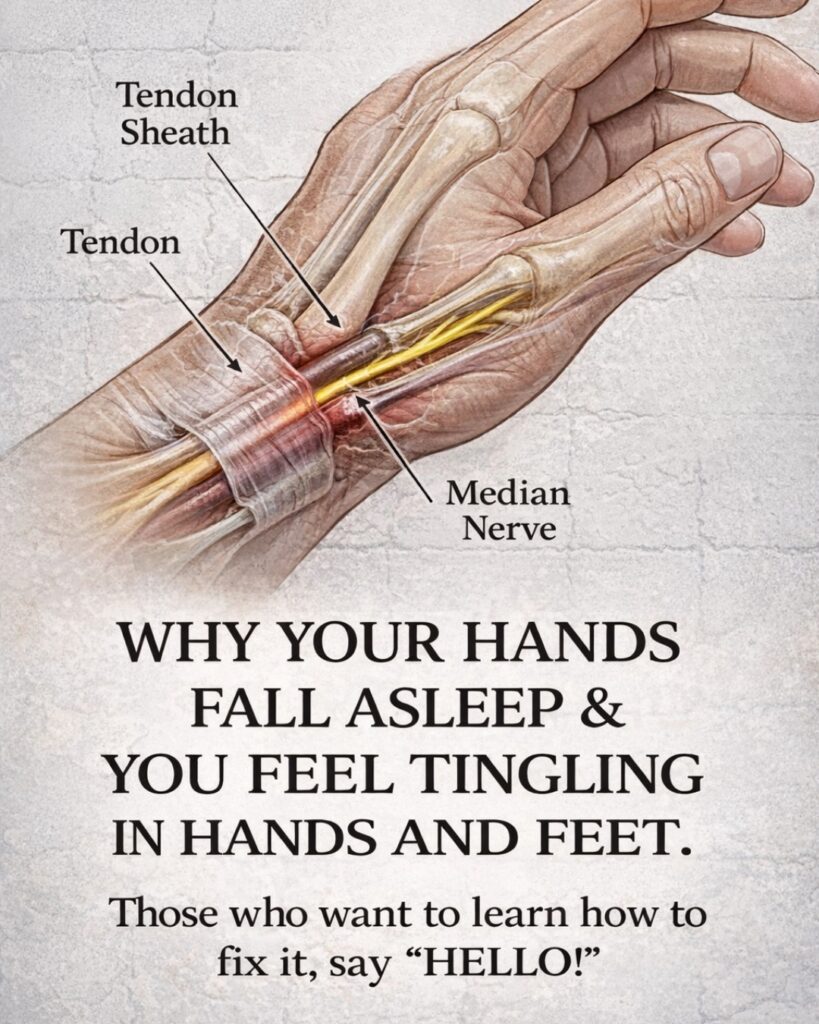
One common condition is carpal tunnel syndrome, which occurs when the median nerve in the wrist becomes compressed. This can cause numbness, tingling, and weakness in the fingers.
People at higher risk include:
Office workers
Manual laborers

People who use smartphones frequently
Musicians

3. Poor Blood Circulation
Reduced blood flow to the hands can also cause numbness.
Circulation problems may be linked to:
Lack of movement
Cold temperatures
Artery narrowing
Cardiovascular conditions
When blood supply decreases, nerve signals may temporarily stop, creating the classic tingling sensation.
4. Nutritional Deficiencies
The nervous system requires certain vitamins and minerals to function properly.
Deficiencies that may lead to numbness include:
Vitamin B12
Magnesium
B-complex vitamins
Without these nutrients, nerves may become damaged or function less efficiently.
5. Stress and Muscle Tension
Chronic stress can cause muscles in the neck and shoulders to tighten. This tension may compress nerves that extend down to the arms and hands.
As a result, people under high stress sometimes experience:
Tingling hands
Arm numbness
Wrist stiffness
Stress-related symptoms may worsen after long workdays or poor sleep.

Natural Remedies That May Help Relieve Hand Numbness
If your symptoms are mild or occasional, several simple remedies may help improve circulation and nerve function.
1. Gentle Hand and Wrist Exercises
Stretching the hands can restore circulation and relieve nerve pressure.
Try this simple routine:
Extend your arms forward.
Rotate your wrists slowly in circles.
Open and close your fists 10–15 times.
Stretch your fingers outward.
Regular stretching improves blood flow and flexibility in the joints.
2. Massage Therapy
A gentle hand massage can stimulate circulation and relax tense muscles.
You can:
Massage the palm and fingers
Use natural oils like lavender or eucalyptus
Apply circular motions from fingers toward the wrist
Massage helps increase blood flow and relieve numbness naturally.
3. Warm Compress or Warm Water
Applying heat can relax muscles and improve circulation.
Try:
Soaking your hands in warm water for 10–15 minutes
Using a warm towel or heating pad
This remedy is especially helpful when numbness occurs due to cold temperatures.
4. Improve Your Diet
Supporting nerve health starts with proper nutrition.
Include foods rich in:

Vitamin B12 (eggs, dairy, fish)
Magnesium (nuts, seeds, leafy greens)
Omega-3 fatty acids (flaxseed, walnuts)
Proper hydration and balanced nutrition help maintain healthy nerves and circulation.
5. Adjust Your Daily Habits
Small lifestyle changes can make a big difference.
Helpful habits include:
Taking breaks from typing or phone use
Maintaining ergonomic posture at work
Sleeping with arms relaxed, not under your body
Reducing stress through relaxation techniques
When Should You See a Doctor?
Although occasional numbness is common, persistent symptoms may signal an underlying health issue.
Consult a healthcare professional if:
Numbness lasts several days
You experience severe pain or weakness
The sensation spreads to the arms or legs
Symptoms occur frequently without clear cause
Some medical conditions—such as diabetes, nerve disorders, or spinal problems—can also cause persistent numbness.
Final Thoughts
Occasional hand numbness is often caused by simple issues like posture, nerve compression, or temporary circulation problems. Fortunately, many cases can improve with stretching, massage, better nutrition, and healthier daily habits.
However, if the sensation becomes frequent or severe, it is important to seek medical advice to rule out more serious conditions.
Taking care of your circulation, nerves, and posture today can help keep your hands strong, comfortable, and healthy for years to come.
