
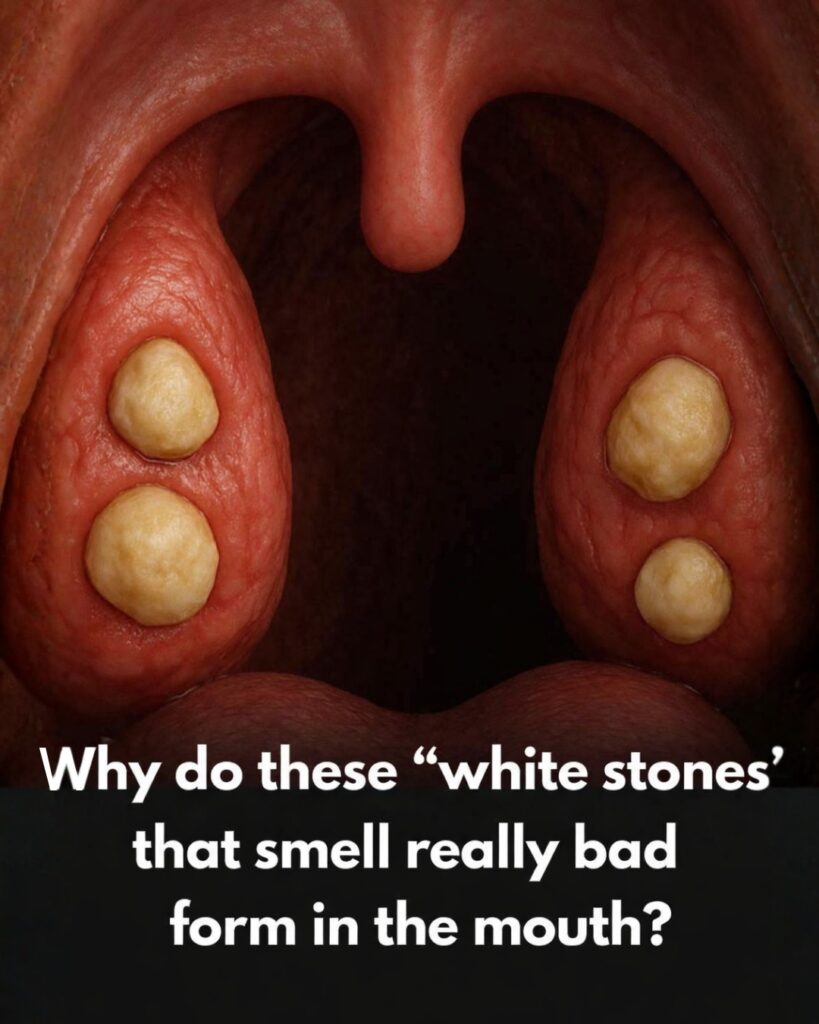
Why Do White “Smelly Stones” Form in the Mouth? (Tonsil Stones Explained)
Have you ever noticed small white or yellowish “stones” in your throat that smell extremely unpleasant? You’re not alone. These tiny, foul-smelling lumps are known as tonsil stones, and while they can be alarming, they are usually harmless.
In this article, you’ll discover what causes these “white stones,” why they smell so bad, and how to prevent and treat them effectively.
What Are Tonsil Stones?
Tonsil stones (also called tonsilloliths) are small, hardened deposits that form in the crevices of your tonsils. Your tonsils have tiny pockets called crypts, where debris can get trapped.
These stones are typically made of:
Food particles
Dead cells
Mucus
Bacteria
Over time, this mixture hardens and forms those noticeable white lumps.
Why Do They Smell So Bad?
The unpleasant odor comes from bacteria that produce sulfur compounds. These are the same compounds responsible for bad breath (halitosis).
When bacteria break down trapped debris, they release gases that smell like:
Rotten eggs
Sulfur

Decay

That’s why even a small tonsil stone can cause strong, persistent bad breath.
Common Causes of Tonsil Stones
Several factors increase the likelihood of developing tonsil stones:
1. Poor Oral Hygiene
Not brushing or flossing regularly allows bacteria and debris to build up.
2. Chronic Tonsillitis
Frequent throat infections can enlarge tonsil crypts, making it easier for debris to get stuck.
3. Post-Nasal Drip
Excess mucus from allergies or sinus issues can accumulate in the tonsils.
4. Large Tonsil Crypts
Some people naturally have deeper tonsil pockets, increasing the risk.
5. Dry Mouth
Saliva helps clean your mouth. Less saliva means more bacterial growth.
Symptoms to Watch For
Tonsil stones don’t always cause symptoms, but when they do, you may notice:
Bad breath (most common sign)
White or yellow lumps in the throat
Sore throat
Difficulty swallowing
Ear pain (referred pain)
Feeling like something is stuck in your throat

How to Remove Tonsil Stones Safely
If the stones are small, they may fall out on their own. Otherwise, you can try:
At-Home Remedies
Gargle with warm salt water
Use a cotton swab gently
Try a water flosser on low pressure
Coughing forcefully
⚠️ Be gentle to avoid injuring your tonsils.
Medical Treatment
If stones are large or recurring, a doctor may recommend:
Professional removal
Antibiotics (in some cases)
Tonsillectomy (rare, for severe cases)
How to Prevent Tonsil Stones
Prevention is key to avoiding recurrence:

Brush teeth at least twice daily
Floss regularly
Clean your tongue
Stay hydrated
Use antibacterial mouthwash
Treat sinus or allergy issues
When Should You See a Doctor?
Seek medical advice if:
Stones are large or painful
You have frequent infections
Bad breath doesn’t improve
Swallowing becomes difficult
Final Thoughts
Those “white smelly stones” in your mouth may be unpleasant, but they are usually not dangerous. With good oral hygiene and simple preventive steps, you can keep tonsil stones under control and maintain fresh breath.
