
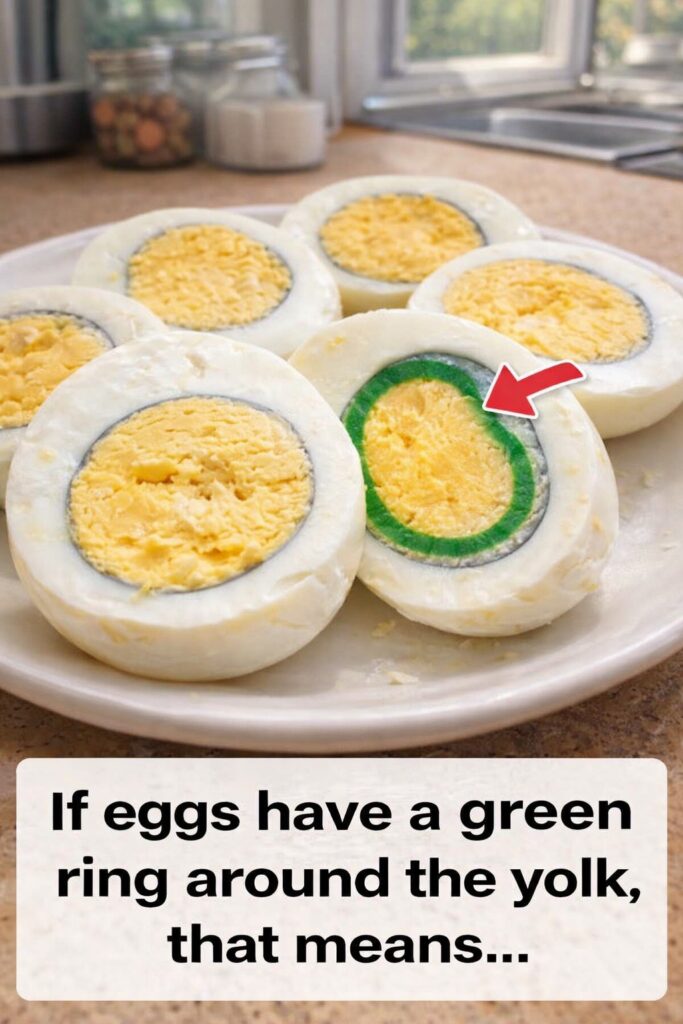
Peeling a hard-boiled egg and spotting that greenish-gray ring around the yolk can be disappointing, especially when you’re aiming for a picture-perfect snack or salad topper. It might make you question your cooking skills or wonder if the egg has gone bad, adding unnecessary frustration to what should be a simple kitchen task. But here’s the good news: this common issue has a straightforward scientific explanation and easy fixes. Stick around to uncover a surprising tip at the end that could change how you boil eggs forever.
What Causes the Green Ring in Hard-Boiled Eggs?
That greenish or grayish ring isn’t a sign of spoilage—it’s a natural occurrence during cooking.
It happens due to a chemical reaction inside the egg.
Research from food science experts, like those at the American Egg Board, explains it clearly.
But that’s not all—understanding this can help you avoid it entirely.
The ring forms at the boundary between the yolk and the white.
The Science Explained: How Iron and Sulfur Interact
Egg whites contain sulfur compounds in their proteins.
Yolks are rich in iron.
When heat is applied, things start to change.
Heat denatures the proteins in the egg white, releasing hydrogen sulfide gas.
This gas migrates toward the yolk.
There, it reacts with the iron to form ferrous sulfide.
Ferrous sulfide is that greenish compound you see.
Studies in food chemistry journals show this reaction speeds up above 158°F (70°C).
Here’s the interesting part: it’s similar to how rust forms on metal.
But wait, there’s more to why it happens specifically in hard-boiled eggs.

Why Hard-Boiled Eggs Are More Prone to This Discoloration
Hard-boiled eggs require longer cooking times for a fully set yolk.
This extended heat exposure amplifies the reaction.
Soft-boiled eggs, with shorter cook times, rarely show the ring.
Factors like altitude can play a role too—higher elevations mean lower boiling points.
The truth is, even the egg’s age matters.
Older eggs have a higher pH, which can intensify the sulfur release.
Fresh eggs might peel harder but could reduce the ring if cooked right.
Let’s break down the key contributors in a simple list:
- Overcooking: Exceeding the ideal time allows more reaction.
- High heat: Rapid boiling pushes temperatures too far.
- No rapid cooling: Residual heat continues the process.
- Egg freshness: Very fresh ones might need adjusted timing.
This isn’t just theory—experiments by culinary scientists confirm it.
Now, imagine boiling eggs without this hassle.
Step-by-Step Guide: How to Prevent the Green Ring
Preventing the green ring is easier than you think.
Follow these actionable steps for consistent results.
Start with room-temperature eggs if possible.
But here’s a pro tip: always use a timer.
Choose the Right Cooking Method
Place eggs in a single layer in a pot.
Cover with cold water by about an inch.
Bring to a gentle simmer over medium heat.

Avoid a full rolling boil to keep temperatures steady.
Time It Precisely
For large eggs:
- Soft-boiled: 4-6 minutes for runny yolks.
- Medium-boiled: 7-9 minutes for semi-firm.
- Hard-boiled: 10-12 minutes for fully set.
Remove from heat immediately.
Adjust for egg size or altitude—add a minute at high elevations.
Cool Them Down Fast
Prepare an ice bath in a bowl.
Transfer eggs straight from the pot.
Let them sit for 5-10 minutes.
This halts cooking and contracts the contents for easy peeling.
Additional Tips for Success
Use slightly older eggs for easier peeling.
Add a pinch of salt or vinegar to the water—some say it helps.
Research from USDA food safety guidelines supports quick cooling.
And here’s the fun part: experiment with one egg first.
Compare results in this table:
| Factor | With Green Ring | Without Green Ring |
|---|---|---|
| Cooking Heat | High boil | Gentle simmer |
| Time | 15+ minutes | 10-12 minutes |
| Cooling | Air cool | Ice bath |
| Egg Age | Very fresh | 1-2 weeks old |
| Result | Discolored yolk | Bright yellow yolk |
Seeing the difference? It motivates you to try.
But does this ring actually matter beyond looks?
Impact on Taste, Safety, and Nutrition
The green ring is cosmetic only—no off flavors.
Eggs taste the same, whether ringed or not.

Safety-wise, it’s harmless; no bacteria or toxins form.
Nutrients like protein, vitamins, and minerals stay intact.
According to nutrition studies, overcooking might slightly reduce some nutrients, but the ring itself doesn’t.
So, feel free to eat them.
That said, perfect eggs boost enjoyment.
Creative Ways to Use Hard-Boiled Eggs
Beyond basics, get creative.
Make deviled eggs with herbs.
Chop for salads or sandwiches.
Pickle them for a tangy twist.
The reality is, mastering boiling opens recipe doors.
Final Thoughts: Master Egg Boiling with Confidence
In summary, the green ring in hard-boiled eggs stems from a simple iron-sulfur reaction triggered by overcooking or high heat. By using gentle simmering, precise timing, and quick cooling, you can achieve vibrant, ring-free eggs every time. This knowledge not only improves your cooking but also adds a layer of science to your kitchen routine.
And remember that surprising tip? Adding a teaspoon of baking soda to the water can raise the pH slightly, making peeling even easier without affecting the ring—give it a try next time.
Frequently Asked Questions
Is the green ring in boiled eggs safe to eat?
Yes, it’s completely safe. The discoloration is from a natural chemical reaction and doesn’t indicate spoilage or harm.
How long should I boil eggs to avoid the green ring?
For hard-boiled large eggs, aim for 10-12 minutes at a gentle simmer, then cool in ice water right away. Adjust based on egg size.
Does egg freshness affect the green ring?
Older eggs (1-2 weeks) may reduce the ring due to even cooking from air pockets, but fresh ones work too with proper technique.
Disclaimer: This article is for informational purposes only and not intended as medical advice. Consult a healthcare professional for personalized guidance.
