
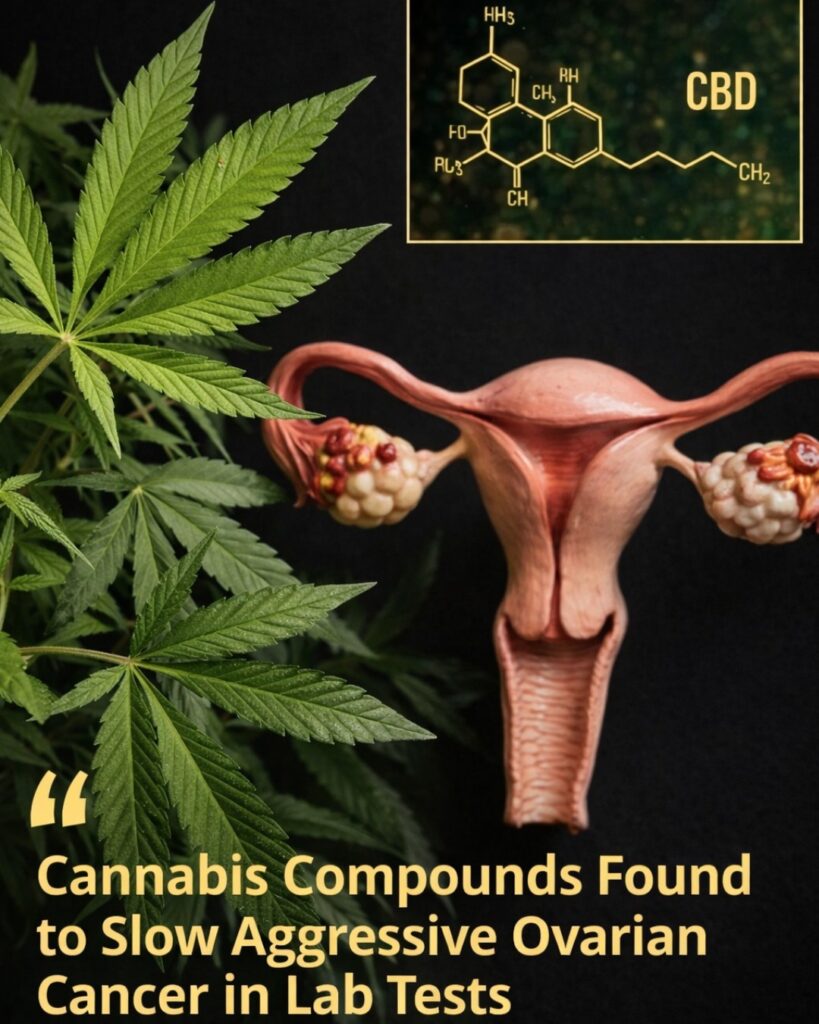
Ovarian cancer touches so many lives, often showing up quietly in later stages when options feel limited and side effects from standard approaches can be overwhelming. It’s one of the toughest gynecological cancers to manage, with high recurrence rates that leave patients and families searching for new insights. But emerging preliminary research is highlighting something intriguing from an unexpected source—compounds found in cannabis—and it’s opening doors to questions about future possibilities that we’ll explore further below.

Understanding Ovarian Cancer: Why It’s So Challenging
Ovarian cancer is often called a “silent” disease because symptoms like bloating, pelvic pain, or feeling full quickly can be subtle at first.
By the time it’s detected, it has frequently spread, making management more complex.
Current approaches typically involve surgery and chemotherapy, but resistance can develop, and the side effects—like nausea, fatigue, and neuropathy—take a real toll on quality of life.
That’s why scientists are constantly exploring new avenues in lab settings to understand how different natural compounds interact with cancer cells.
And here’s where recent studies get interesting…
The Role of Cannabinoids: CBD and THC Explained
Cannabinoids are natural compounds found in the cannabis plant. The two most studied are:
- CBD (cannabidiol): Non-psychoactive, meaning it doesn’t cause a “high.”
- THC (delta-9-tetrahydrocannabinol): The compound responsible for psychoactive effects.
Our bodies even have an endocannabinoid system that interacts with these compounds, influencing processes like inflammation and cell signaling.

In lab research, scientists have been testing how CBD and THC affect various cell types, including cancer cells.
But that’s not the full story…

Key Findings from Recent Laboratory Studies
A 2025 study published in Frontiers in Pharmacology by researchers at Khon Kaen University examined CBD and THC on ovarian cancer cell lines in vitro (in lab dishes).
Here’s what they observed:
- Both CBD and THC individually slowed the growth and reproduction of ovarian cancer cells.
- When combined, especially in a 1:1 ratio, the effects were stronger—they reduced colony formation (how cancer cells group and multiply) and limited cell migration (a key step in spreading).
- Importantly, these compounds showed selectivity: they impacted cancer cells at lower doses while requiring much higher amounts to affect healthy cells.
The researchers noted that the combination appeared to influence a signaling pathway called PI3K/AKT/mTOR, which is often overactive in ovarian cancer and contributes to cell survival and resistance.
By modulating this pathway, the compounds helped restore more normal regulation in the lab setting.
This aligns with summaries reported on ScienceDaily and other science outlets, emphasizing that these are early, preclinical observations.
The truth is, while promising in petri dishes, translating this to real-world applications requires much more investigation.

Why These Results Matter—But With Important Caveats
Ovarian cancer remains one of the deadliest gynecological cancers, with metastasis (spreading) being a major challenge.
Lab findings like these suggest potential areas for future exploration, such as:
- Developing less toxic supportive options.
- Understanding how natural compounds might complement existing research directions.
However, these are strictly laboratory tests on cell lines—not human trials.
No conclusions can be drawn about effects in people, and much more rigorous study is needed, including animal models and clinical research.
This is purely informational, highlighting ongoing scientific curiosity.

Practical Steps: Supporting Your Health While Awaiting More Research
While we wait for further studies, focusing on evidence-based habits can make a difference in overall well-being. Here are actionable tips anyone can consider discussing with a healthcare provider:
- Stay informed through reliable sources: Follow updates from reputable organizations like the American Cancer Society or National Cancer Institute.
- Prioritize regular check-ups: Early detection tools, like transvaginal ultrasound or CA-125 blood tests for high-risk individuals, are key.
- Adopt anti-inflammatory lifestyle habits:
- Eat a balanced diet rich in fruits, vegetables, and whole grains.
- Incorporate gentle exercise, like walking or yoga, most days.
- Manage stress through mindfulness or support groups.
- Talk openly with your doctor: If interested in cannabis for symptom management (where legal), discuss medical options—they can guide on safe use.
These steps empower you today, regardless of emerging research.
Other Areas Where Cannabinoids Are Being Studied
Beyond ovarian cancer, lab research on CBD and THC has explored:

- Reducing inflammation in various models.
- Supporting nausea relief during chemotherapy.
- Potential interactions with pain pathways.
Again, these are preliminary, and human evidence varies.
Conclusion
Recent lab experiments have shed light on how cannabis compounds like CBD and THC interact with ovarian cancer cells, showing reduced growth, colony formation, and migration in controlled settings—particularly when combined. These findings, while early and exciting for researchers, underscore the need for caution and more comprehensive studies. Science moves step by step, and staying hopeful while grounded in facts is the best approach.
Frequently Asked Questions (FAQ)
Is cannabis a treatment for ovarian cancer?
No, current research is limited to laboratory cell studies. There is no evidence it treats or prevents ovarian cancer in humans. Always consult a doctor for personalized advice.
Are CBD and THC safe for everyone?
Effects vary, and they can interact with medications. THC may cause psychoactive effects. Discuss with a healthcare professional, especially if you have health conditions.
Where can I learn more about this study?
Check the original publication in Frontiers in Pharmacology (2025) or summaries on ScienceDaily for details.
Disclaimer: This article is for informational purposes only and is not medical advice. It does not diagnose, treat, cure, or prevent any disease. Always consult a qualified healthcare provider for health concerns. Research discussed here is preliminary and from lab tests only.
