
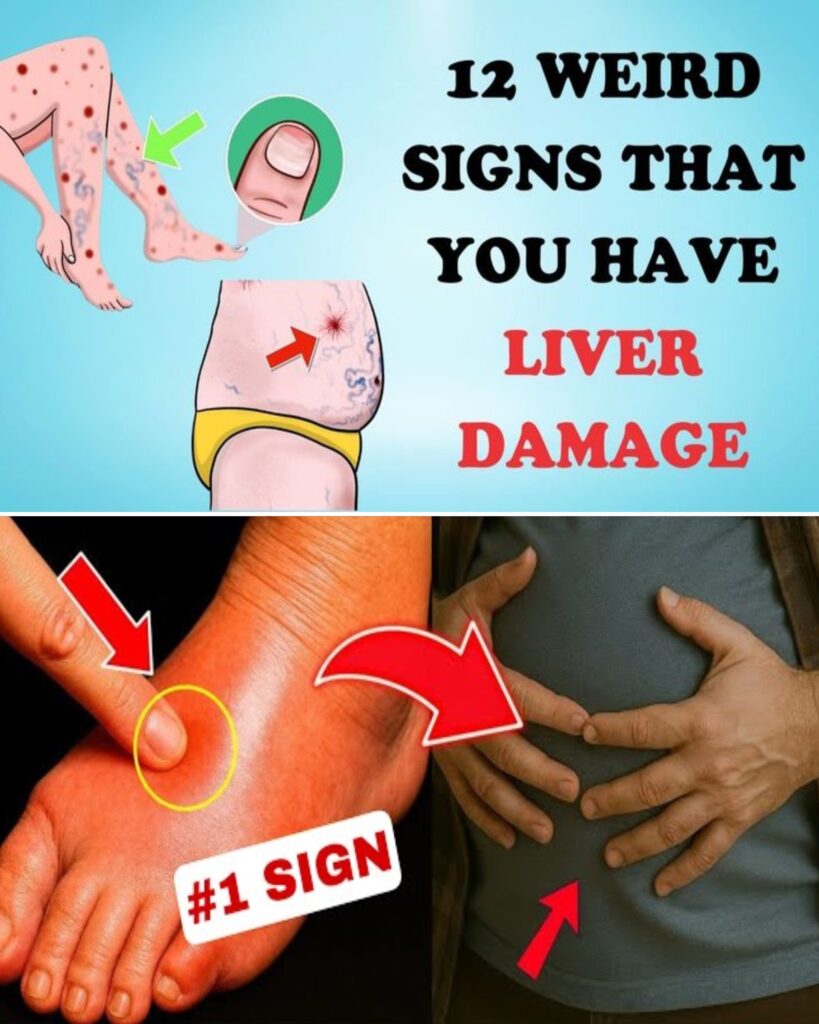
Imagine waking up one morning, scratching an itch that won’t quit, even though there’s no rash in sight. Or glancing in the mirror and noticing your palms look unusually flushed, like they’ve been dipped in red paint. These odd, easy-to-dismiss changes often hide in plain sight while your liver quietly struggles. The liver, your body’s largest internal organ, filters toxins, processes nutrients, and keeps everything balanced. When damage builds—whether from alcohol, fatty buildup, viruses, or medications—it rarely screams for attention early on. Instead, it whispers through subtle, sometimes bizarre signs that many people brush off as aging, stress, or coincidence. By the time classic symptoms like yellow skin appear, harm may already be advanced. Research from places like the Mayo Clinic, Cleveland Clinic, and Johns Hopkins highlights how these lesser-known clues can signal trouble long before obvious jaundice or swelling. This article uncovers 12 weird signs of potential liver damage that often go ignored. Recognizing them could prompt timely checks and lifestyle shifts. Let’s count them down, starting with the strangest.
Liver damage progresses silently in many cases, especially early stages of conditions like fatty liver disease, hepatitis, or cirrhosis. The organ has incredible regenerative power, but once scarring sets in deeply, reversal becomes harder. Studies show early detection through blood tests or imaging can halt progression in many instances. Yet people frequently attribute these quirky symptoms to unrelated causes. Could one be happening to you right now?
The buildup of toxins, bile salts, or hormonal imbalances creates these unusual effects. What seems minor might connect to the liver’s failing filtration role. You might think “it’s just my skin” or “I’m just tired”—but patterns matter. Let’s explore.
Sign #12: Persistent Itchy Skin Without a Rash
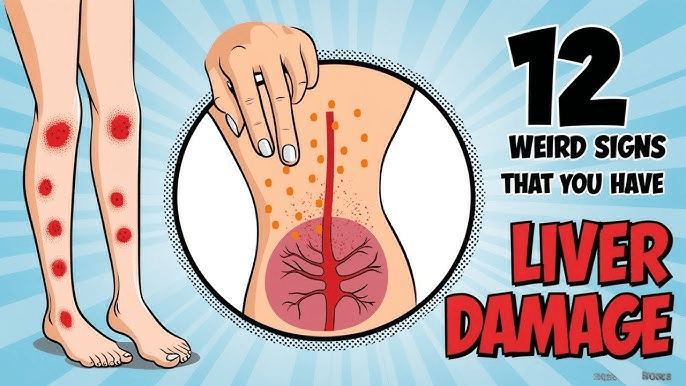
Picture running your nails over your arms or legs at night, the prickling sensation driving you crazy with no visible bumps or redness. Bile salts accumulating in the bloodstream irritate nerve endings under the skin, a classic yet overlooked clue in liver issues like cholestasis or cirrhosis. Research notes this pruritus often worsens at night and resists typical creams.
You may assume dry skin or allergies—yet when paired with other signs, it points to bile flow problems. Ever wake scratching?
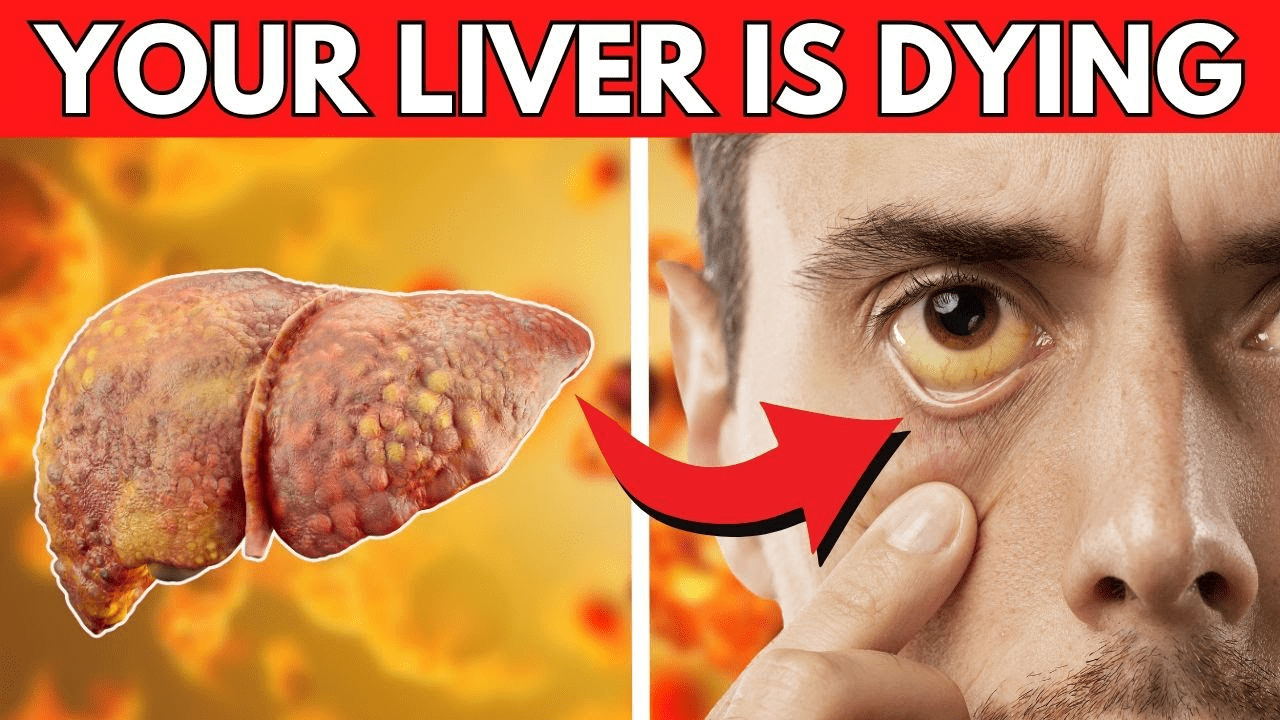
Sign #11: Bright Red Palms (Palmar Erythema)
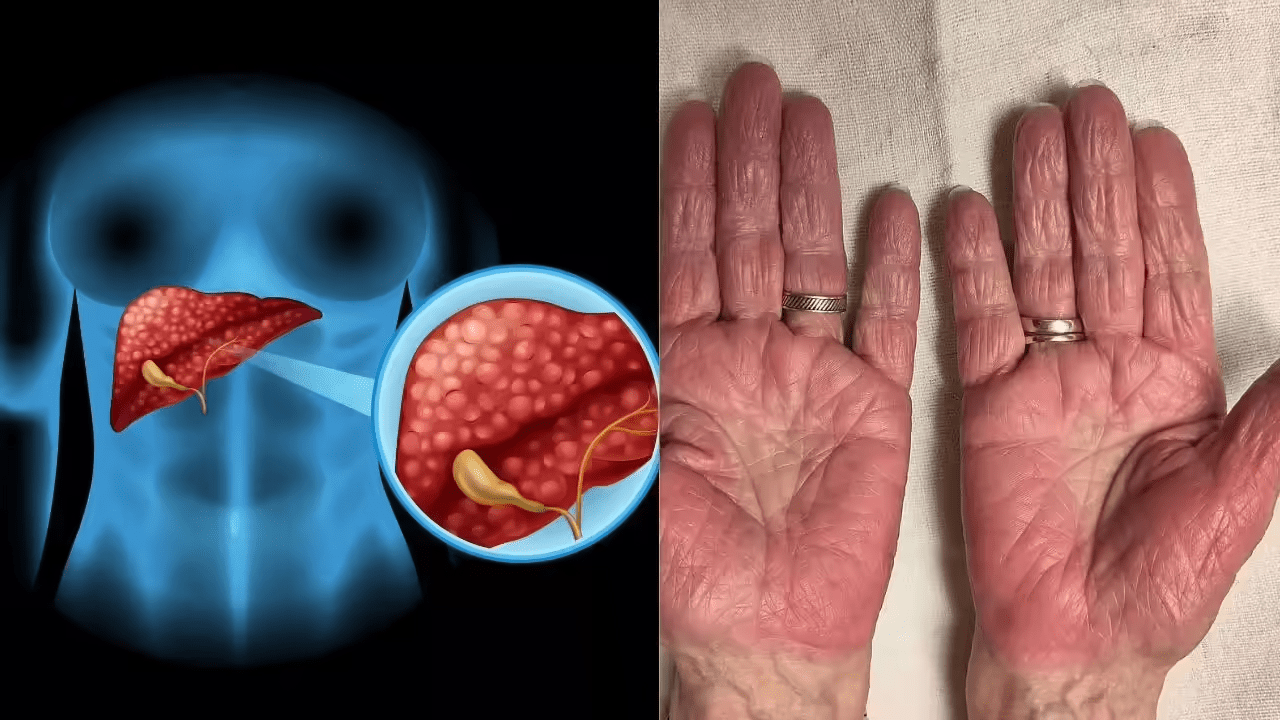
Envision pressing your hands together and seeing vivid red patches across the palms, almost like a permanent blush. Hormonal shifts from impaired liver processing cause dilated blood vessels in the skin. Studies link this to chronic liver disease, especially in cirrhosis.
Many dismiss it as circulation or heat—surprisingly common in seniors. Notice this reddish hue lately?
- Reddened palms, often mottled
- More pronounced on the thenar and hypothenar eminences
- May fade with pressure but return quickly
But hold on—the next one affects something you see every day.
Sign #10: Spider-Like Blood Vessels on Skin (Spider Angiomas)
Think of tiny red spots sprouting thin, spider-web legs on your chest, face, or arms. These form from estrogen buildup the damaged liver can’t clear. Evidence shows they’re frequent in advanced liver conditions and may blanch when pressed.
You might think harmless birthmarks—yet clusters signal potential trouble. Spot any lately?

Sign #9: Unexplained Easy Bruising or Bleeding
Recall bumping your arm lightly and watching a large purple bruise bloom overnight. The liver produces clotting factors; when impaired, even minor trauma causes marks or prolonged bleeding from cuts.
Often blamed on thin skin with age—yet it ties to reduced prothrombin. Bruising more than usual?
Sign #8: Changes in Sleep Patterns or Flapping Tremor
Imagine your hands trembling or “flapping” when you hold them out, or suddenly reversing day-night sleep. Early hepatic encephalopathy from toxin buildup affects the brain subtly at first—mood swings, forgetfulness, or altered rhythms.
Many attribute it to stress or poor sleep—yet it’s a red flag. Noticing odd tremors?
But wait, the following disrupts your bathroom routine in strange ways.
Sign #7: Pale or Clay-Colored Stools
Visualize stools looking unusually light, almost gray or putty-like. Blocked bile flow prevents pigment from reaching the intestines, a sign of cholestasis or obstruction.
Often overlooked as diet changes—yet persistent pale stools warrant attention. Any recent color shifts?
Sign #6: Dark Tea-Colored Urine
Think of urine looking cola-dark even when hydrated. Excess bilirubin spills into urine when the liver can’t process it properly.
Many blame dehydration or food—yet combined with pale stools, it’s classic. Urine darker than normal?
Sign #5: Metallic or Sweet Breath Odor
Sense a strange, musty-sweet or metallic taste/odor in your mouth that lingers. Toxins like ammonia build up and exhale through lungs in advanced damage.
Dismissed as bad hygiene—yet it’s a quirky clue. Notice odd mouth smells?
Sign #4: Muscle Wasting or Weakness
Feel arms or legs thinning despite eating normally, or struggling with grip strength. Advanced liver issues cause muscle breakdown from poor protein processing and inflammation.
Often thought as normal aging—yet rapid loss signals concern. Losing muscle tone unexpectedly?
Sign #3: Confusion, Brain Fog, or Personality Shifts
Picture forgetting simple things mid-sentence or feeling unusually irritable. Toxins crossing to the brain cause hepatic encephalopathy—starting subtly with concentration lapses.
Many blame “senior moments”—yet progression can worsen fast. Foggy thinking more often?
Sign #2: Swelling in Legs or Abdomen (Without Obvious Cause)
Envision socks leaving deep indents or your belly feeling bloated and tight. Fluid leaks from portal hypertension or low albumin in damaged livers.
Frequently attributed to salt or standing—yet persistent edema links to liver strain. Notice unexplained swelling?
And now, the top weird sign—one that surprises many.
Sign #1: Chronic Fatigue That Rest Doesn’t Fix
Imagine dragging through days, exhausted despite full nights’ sleep. The liver’s role in energy metabolism falters, causing profound, unrelenting tiredness.
Often dismissed as aging or stress—yet it’s among the earliest and most common subtle signs. Rest failing to recharge you?
These signs interconnect: itchy skin pairs with jaundice risks, brain fog with toxin buildup, swelling with portal issues. In seniors, comorbidities like diabetes or medications amplify vulnerability.
| Sign | Why It’s “Weird” or Overlooked | Potential Liver Connection |
|---|---|---|
| Itchy Skin No Rash | No visible cause | Bile salts irritating nerves |
| Red Palms | Looks like a flush | Hormonal imbalance |
| Spider Angiomas | Tiny, harmless-looking | Estrogen buildup |
| Easy Bruising | Minor bumps cause big marks | Clotting factor shortage |
| Flapping Tremor/Sleep Changes | Subtle neurological | Toxin effects on brain |
| Pale Stools | Diet-related assumption | Bile blockage |
| Dark Urine | Hydration blamed | Bilirubin spillover |
| Metallic Breath | Hygiene issue | Ammonia exhalation |
| Muscle Wasting | Aging expected | Protein processing failure |
| Brain Fog | Stress/senior moments | Encephalopathy onset |
| Leg/Abdominal Swelling | Salt or inactivity | Fluid imbalance |
| Persistent Fatigue | Normal tiredness | Energy metabolism disruption |
Consider Lan, 68 from Da Nang, who ignored chronic itch and fatigue for years, thinking menopause or age. A check revealed elevated liver enzymes; addressing causes eased symptoms dramatically. Or Minh, 72, whose red palms and easy bruising prompted tests showing early fibrosis—early action helped stabilize.
You might wonder if these apply casually—many do when combined.
Start tracking: note patterns in a journal.
- Log unusual skin changes or fatigue levels
- Monitor urine/stool color weekly
- Note any cognitive or sleep shifts
Discuss with your healthcare provider promptly—they may order liver function tests, ultrasound, or viral screens. Early insight often allows reversal or management.
| Step | Practical Tip | Safety Note |
|---|---|---|
| Symptom Journal | Record daily odd changes | Helps spot patterns |
| Hydration & Diet Check | Maintain balanced intake | Avoid excess alcohol/fats |
| Gentle Movement | Short walks if able | Supports circulation |
| Professional Visit | Mention multiple signs | For accurate evaluation |
These aren’t definitive diagnoses but prompts for awareness. No food or habit cures damage alone—professional guidance matters most.
Don’t ignore another strange symptom. These 12 weird signs—from itchy skin to red palms—often whisper liver trouble before it roars. Imagine catching it early, feeling energized, sleeping soundly, moving freely. Talk to your doctor soon; small awareness prevents big problems. Share with loved ones over 60—it might spark their check-up too.
P.S. A simple blood test for liver enzymes takes minutes but reveals volumes.
This article is for informational purposes only and is not a substitute for professional medical advice—readers are encouraged to consult their healthcare provider for personalized guidance.
