
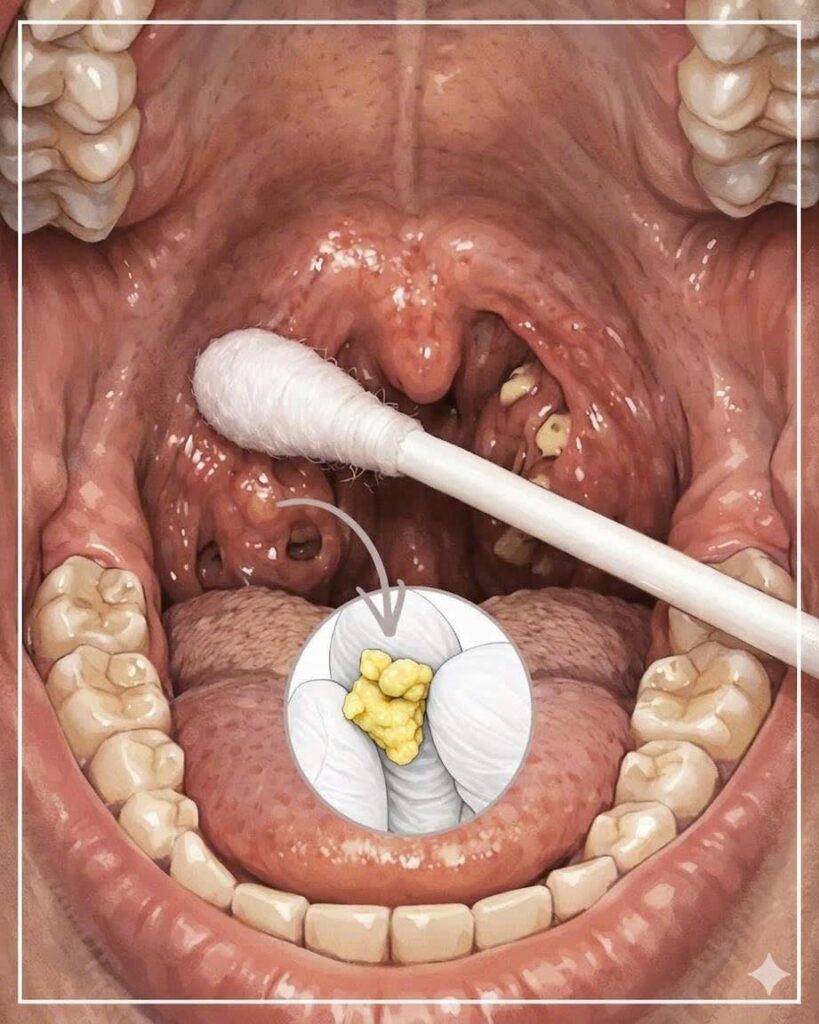
Tonsil Stones: A Hidden Cause of Persistent Bad Breath
What are tonsil stones?
Tonsil stones, medically known as Tonsillolith, are small deposits that can form in the Tonsils.
Some people occasionally notice small whitish or yellowish particles coming from their throat. These particles may be soft or hardened and often have a very unpleasant smell.
Although they can look like pus, tonsil stones are not always a sign of infection. Because of this, the presence of white or yellow spots on the tonsils does not automatically mean antibiotics are needed.
How tonsil stones form
The tonsils contain small natural pockets called Tonsillar crypts. These spaces can trap various materials over time, including:
Food particles
Dead cells from the mouth lining
Bacteria

Mucus

When these substances accumulate, they may gradually compact and harden, forming small deposits known as tonsil stones.
The strong odor associated with tonsil stones occurs because bacteria in these deposits produce sulfur compounds, which are also a common cause of bad breath.
Common symptoms
Many people have tonsil stones without noticing them. However, when symptoms appear, they may include:
Persistent bad breath, also known as Halitosis
A sensation that something is stuck in the throat
Mild discomfort when swallowing
Small white or yellow spots visible on the tonsils
Occasional expulsion of small foul-smelling particles

People with deeper tonsillar crypts tend to experience repeated accumulation of these deposits more often.
Can tonsil stones be prevented?
Although it may not always be possible to prevent them completely, several habits may help reduce their formation:
Maintaining good oral hygiene
Brushing the tongue regularly
Gargling with water or recommended mouth rinses
Staying well hydrated
These practices can help reduce bacterial buildup and remove debris before it collects in the tonsillar crypts.

When to see a doctor
If tonsil stones occur frequently, cause persistent discomfort, or lead to ongoing bad breath, it may be helpful to consult a specialist in Otolaryngology.
A healthcare professional can evaluate the tonsils and recommend appropriate management options.
An often overlooked condition
Many people have expelled a tonsil stone at some point in their lives without realizing what it was. Although usually harmless, understanding this condition can help individuals recognize the source of persistent bad breath and seek guidance when necessary.
This content is provided for informational purposes only and does not replace professional medical evaluation. If you experience symptoms, consult a qualified healthcare professional.
