
Thyroid Ultrasound: A Key Test for Evaluating Thyroid Health
Understanding the role of the thyroid gland
The Thyroid gland is a small butterfly-shaped gland located at the front of the neck. Despite its small size, it plays a vital role in many functions of the human body.
The thyroid produces hormones that regulate metabolism, influence energy levels, control body temperature, and support several other physiological processes.
Because of its importance, doctors often recommend diagnostic tests when a thyroid disorder is suspected.
What is a thyroid ultrasound?
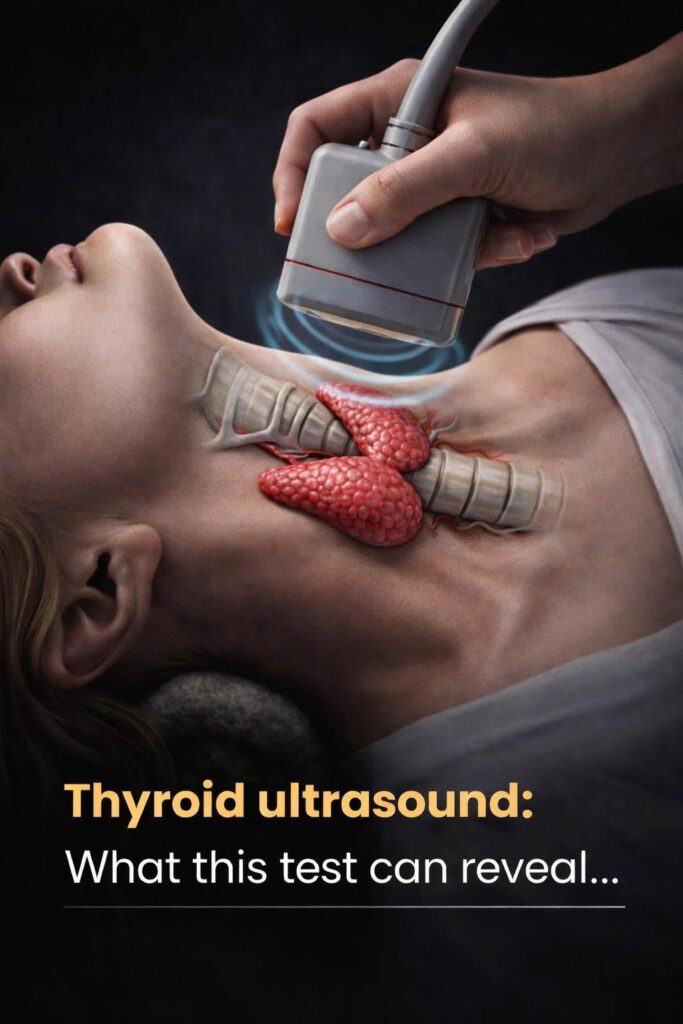
A Thyroid ultrasound is a medical imaging test that uses sound waves to visualize the structure of the thyroid gland.
This procedure is widely used because it is:
Non-invasive
Painless
Free of radiation

Quick to perform

During the examination, the patient typically lies on their back with the neck slightly extended while a technician moves a small probe over the skin of the neck to capture images.
When doctors recommend a thyroid ultrasound
Healthcare professionals may request a thyroid ultrasound for several reasons. It is commonly recommended when:
A lump or nodule is detected in the neck
The thyroid appears enlarged (goiter)
Blood tests show abnormal thyroid hormone levels
There is suspicion of thyroid disease
Doctors need to monitor previously detected thyroid nodules

This test helps doctors better understand the condition of the gland and decide on the next steps in diagnosis or treatment.
What a thyroid ultrasound can reveal
A thyroid ultrasound provides detailed images of the gland’s internal structure. With this test, doctors may identify:
Thyroid nodules
Cysts
Changes in the size of the thyroid gland
Inflammation of the gland
Characteristics of nodules that may indicate potential risk
In certain cases, ultrasound imaging is also used to guide procedures such as Fine Needle Aspiration, where a thin needle is used to collect cells from a nodule for laboratory analysis.

An essential tool in endocrine health
Thyroid ultrasound has become one of the most important tools in the field of Endocrinology.
Because the test is safe, accessible, and highly informative, it helps doctors detect thyroid abnormalities early and monitor changes over time.
Early evaluation allows healthcare providers to determine whether further testing, treatment, or simple monitoring is needed.
For many patients, this quick and painless scan can provide valuable insights into their thyroid health and overall well-being.
