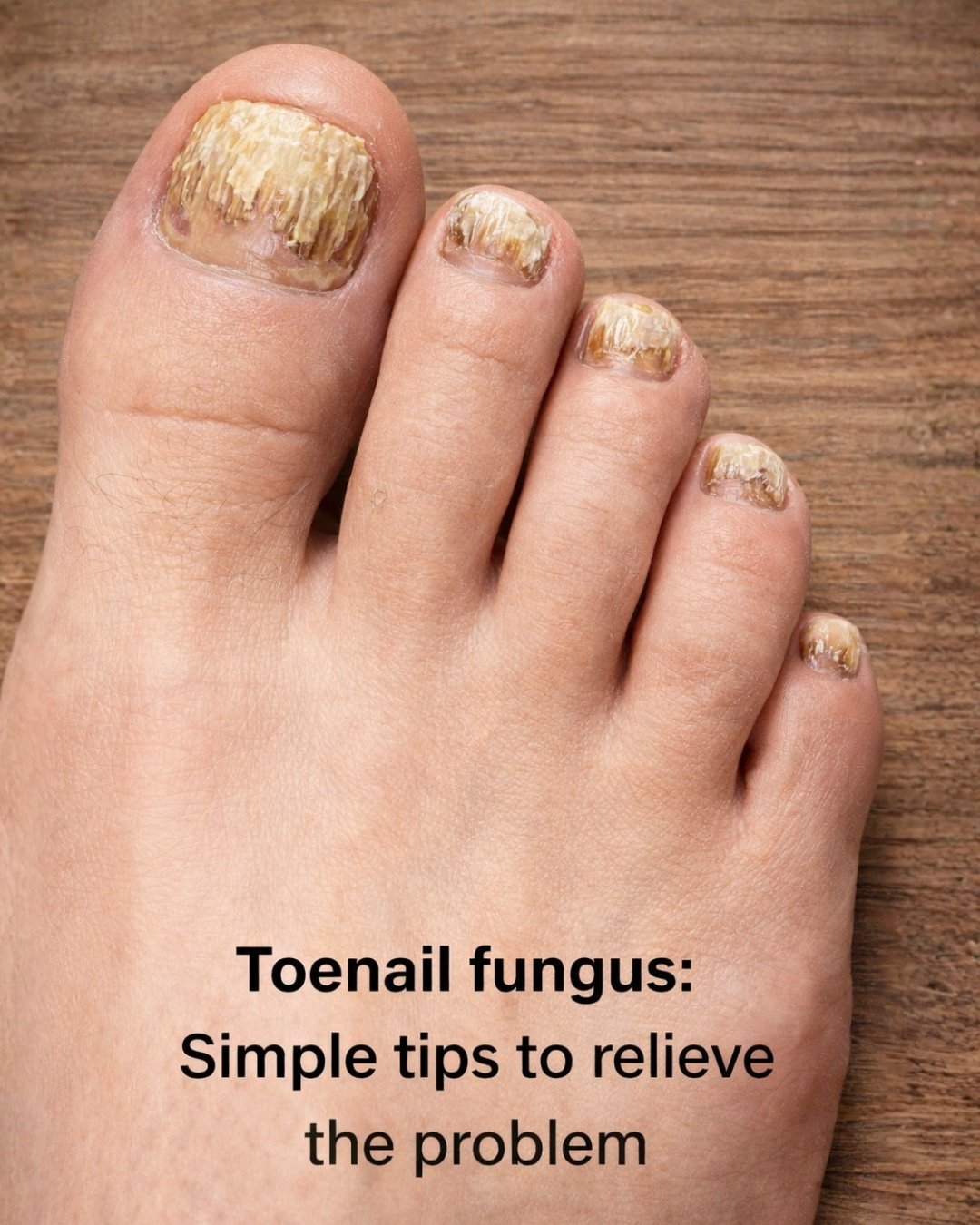
Nail Fungus: Simple Tips to Relieve and Treat This Common Condition
Nail fungus, medically known as onychomycosis, is a very common infection that affects both toenails and fingernails. It develops when fungi invade the nail bed or the area beneath the nail, causing changes in appearance and texture. Around 10% of adults worldwide are affected at some point in their lives.
What is Nail Fungus?
A fungal nail infection occurs when fungi grow under or around the nail. These microorganisms thrive in warm, moist environments, which is why the problem often starts in the feet. Over time, the affected nail may become thickened, discolored (yellow, brown, white), brittle, or crumbly.
Symptoms may include:
Nail discoloration
Thick, distorted nails
Nail separation from the nail bed
Fragile or crumbly edges
Possible smell or discomfort in severe cases
Causes and Risk Factors
Fungal nails are caused by several types of fungi, including dermatophytes and yeast. Typical risk factors include:

Wearing closed or damp footwear for long periods
Poor foot hygiene
Walking barefoot in public, humid areas
Athlete’s foot or other fungal skin infections
Weakened immune system or conditions like diabetes
Easy Tips to Relieve Nail Fungus
While medical treatment is sometimes necessary, many people start with simple home care and natural methods to ease symptoms and slow fungal growth:
1. Keep Nails Clean and Dry
Maintain good hygiene by washing your feet or hands daily. Dry them thoroughly — especially between the toes — before putting on socks or shoes. Keeping the nails short and clean makes it harder for fungi to thrive.
2. Try Natural Foot Soaks
A warm foot soak can help soften nails and reduce irritation:
Salt or Epsom salt bath: Add salt to warm water and soak feet for 15–20 minutes to soothe and help reduce fungal growth.

Vinegar soak: Mix equal parts of vinegar and warm water and soak daily. Vinegar’s acidic environment can make it harder for fungi to survive.

3. Use Antifungal Oils
Certain natural oils may help thanks to their antifungal properties:
Tea tree oil: Antiseptic and antifungal, tea tree oil applied carefully twice a day may help improve nail appearance.
Oregano oil: Contains thymol, a compound that can inhibit fungal growth when diluted with a carrier oil.
Always dilute essential oils with a carrier oil (like coconut or olive oil) before applying to skin or nails to avoid irritation.
4. Home Remedies You Can Try
Baking soda paste: Mix with water and apply to the nail to help control moisture and fungal growth.
Vicks VapoRub: Some people find the menthol and eucalyptus in VapoRub can offer relief when applied daily.
These home strategies are supplements to good hygiene and care and often work best in mild cases.
When to See a Professional
If symptoms are severe or don’t improve after several weeks, it’s wise to consult a dermatologist or podiatrist. They can recommend topical or oral antifungal medications, laser therapy, or other chronic treatments. Medical antifungals may be more effective for stubborn infections.

Prevention Is Key
To prevent fungal nail infections from returning, follow these simple steps:
Change socks regularly
Avoid walking barefoot in communal damp spaces
Choose breathable footwear
Don’t share nail tools
Disinfect towels and shoes regularly
Good habits combined with consistent care can help you win the fight against nail fungus.