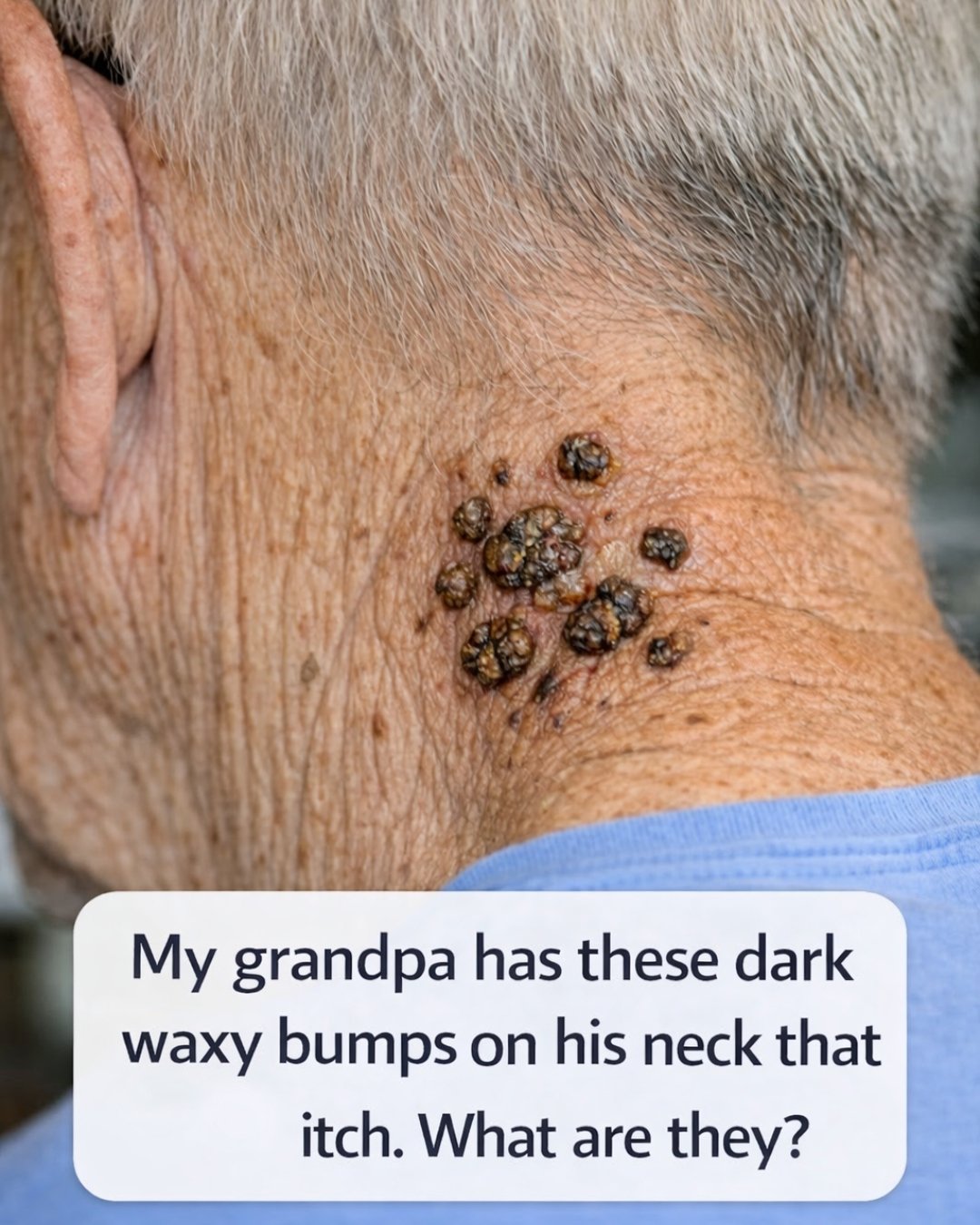
My grandpa has these dark waxy bumps on his neck that itch. What are they?
As people age, their skin often becomes a canvas for various types of growths and blemishes. While many of these are harmless, they can cause concern due to their appearance or symptoms such as itching. One common type of skin growth that older adults experience is known as seborrheic keratosis. These growths can appear suddenly or develop slowly over time, often leading to questions and worries about their nature.

Understanding what these skin changes are and why they occur can help in managing them effectively. This article aims to shed light on these dark, waxy bumps that your grandpa is experiencing on his neck, providing insight into what they are, how they differ from more serious conditions, and what steps can be taken to address them.
1. What Those Dark, Waxy Neck Bumps Most Likely Are
The dark, waxy bumps on your grandpa’s neck are most likely seborrheic keratoses. These are non-cancerous skin growths that are very common in older adults. They often appear as brown, black, or pale growths and have a waxy, scaly, slightly elevated appearance. Seborrheic keratoses can vary in size, typically ranging from a few millimeters to over 2.5 centimeters. They can develop on any part of the body, but are most common on the chest, back, head, and neck.
2. Classic Signs Of Seborrheic Keratosis You Can Spot At Home
Seborrheic keratoses have a few hallmark features that can help in identifying them. They often have a waxy or pasted-on look, similar to a dab of candle wax or a piece of clay. These growths might appear singly or in clusters and can be flat or raised, with a rough texture. The color can range from light tan to black, and they often look like they are stuck onto the skin’s surface. It’s important to note that they may sometimes itch, especially if they become irritated by clothing or scratching.
3. How Seborrheic Keratoses Are Different From Skin Cancer
While seborrheic keratoses can sometimes resemble skin cancers, such as melanoma, there are key differences. Seborrheic keratoses have a uniform color and shape, which is less common in cancerous growths. Melanomas, for instance, often have irregular borders, multiple colors, and asymmetry. However, any change in the appearance of a skin growth should be evaluated by a healthcare professional to rule out malignancy.
4. Why Your Grandpa’s Age And Skin Type Matter
Seborrheic keratosis is more common in older adults, typically appearing after age 50. This prevalence is likely due to cumulative sun exposure and the natural aging process of the skin. Additionally, individuals with fairer skin types may notice these growths more readily, although they can occur in any skin type. Understanding that these growths are a part of the aging process can help in managing expectations and reducing anxiety associated with their appearance.
5. Common Triggers: Sun, Genetics, And Irritation
While the exact cause of seborrheic keratoses is not entirely understood, certain factors are believed to contribute to their development. Sun exposure over many years is thought to play a role, as these growths often appear on sun-exposed areas of the skin. Genetics also significantly influence their formation, as they tend to run in families. Additionally, irritation from clothing or other factors can exacerbate the itchiness and discomfort associated with these growths.
6. When Itching, Bleeding, Or Changes Are A Red Flag
While seborrheic keratoses are usually harmless, there are instances when medical advice should be sought. If a growth starts to itch excessively, bleed, or change in size, shape, or color, it is important to consult a dermatologist. These changes could potentially indicate a different condition that requires attention. Persistent symptoms, such as severe itching or bleeding, should not be ignored as they can lead to secondary infections or other complications.
7. How Dermatologists Confirm The Diagnosis
Diagnosis of seborrheic keratosis is usually straightforward and can often be made based on the appearance of the growth. Dermatologists may use a dermatoscope, a special magnifying tool, to examine the skin’s surface in greater detail. In some cases, a skin biopsy may be performed to rule out any other conditions, especially if the growth has atypical features. This involves taking a small sample of the skin for analysis under a microscope.
8. Treatment Options: From Freezing To Scraping To Lasers
Treatment for seborrheic keratosis is not always necessary unless the growths are causing symptoms or cosmetic concerns. Common treatment options include cryotherapy, where the growth is frozen off with liquid nitrogen, or curettage, which involves scraping the growth from the skin. Laser therapy is also an option and can be used to vaporize the growth. These procedures are typically quick and performed in a dermatologist’s office with minimal recovery time.
9. Home Care, What Not To Do, And When To Skip DIY Fixes
While there are many home remedies suggested for seborrheic keratoses, it is generally not advisable to attempt removal at home. Picking or scratching at these growths can lead to irritation, bleeding, or infection. Over-the-counter treatments may not be effective and could potentially cause more harm than good. It’s important to consult with a healthcare provider before trying any home treatments to ensure safety and effectiveness.
10. Helping An Older Relative Talk To Their Doctor About Skin Changes
Encouraging an older relative to discuss skin changes with their doctor can be crucial in managing conditions like seborrheic keratosis. It’s helpful to prepare for the appointment by noting any changes in the skin’s appearance or symptoms like itching or bleeding. Accompanying them to the appointment can provide support and ensure that all concerns are addressed. Open communication with healthcare providers can lead to better management and peace of mind for both the patient and their family.