
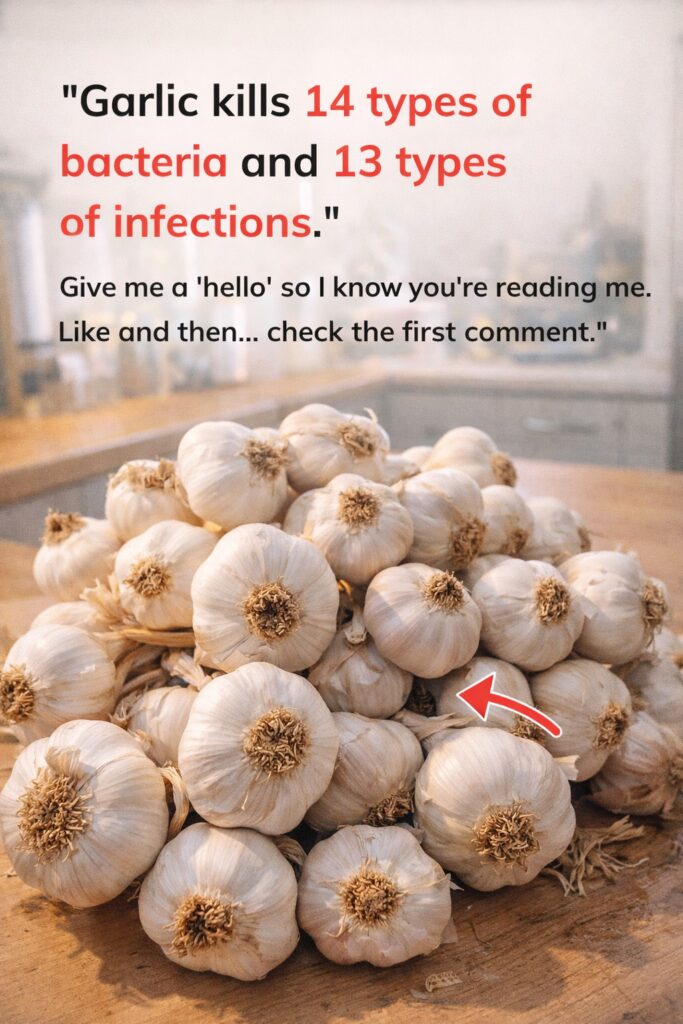
Is Garlic Really a Natural Antibiotic That Kills 14 Types of Bacteria and 13 Infections?
You’ve probably seen that viral claim floating around: garlic kills 14 types of bacteria and 13 types of infections. It sounds incredibly powerful—almost too good to be true—especially when you’re dealing with stubborn infections, rising antibiotic resistance, or just wanting a natural way to support your health. Many people turn to garlic as a home remedy because it’s cheap, readily available, and has been used for centuries in traditional medicine. But does the science back up such specific numbers? The short answer is no—the exact “14 bacteria and 13 infections” figure isn’t supported by reliable studies. However, research does show garlic has real antimicrobial potential, thanks to its key compound allicin. Let’s break it down honestly so you can decide how (and how much) garlic might fit into your wellness routine.
But here’s the intriguing part: while the precise numbers may be exaggerated, garlic’s active ingredients show broad activity against various bacteria in lab settings. Stick around—by the end, you’ll discover practical ways to use garlic safely and what the research really says about its limits.

What Makes Garlic So Special? The Science Behind Its Antimicrobial Power
Garlic (Allium sativum) has been prized for thousands of years for fighting infections. When you crush or chop fresh garlic, an enzyme called alliinase converts alliin into allicin—the compound largely responsible for garlic’s strong smell and many health effects.
Studies show allicin has broad antimicrobial activity. It works by reacting with thiol groups (sulfur-containing parts) in bacterial enzymes, disrupting essential processes like metabolism and DNA/RNA synthesis. This mechanism helps explain why garlic shows effects against both Gram-positive and Gram-negative bacteria, including some multidrug-resistant strains.
Research highlights:

- Allicin exhibits activity against a wide range of Gram-positive and Gram-negative bacteria, including multidrug-resistant strains of Escherichia coli.
- It also shows antifungal effects (e.g., against Candida albicans), antiparasitic activity (e.g., against Entamoeba histolytica and Giardia lamblia), and some antiviral properties.
- Garlic extracts inhibit biofilm formation (the protective layer bacteria use to resist antibiotics) and quorum sensing (how bacteria communicate to cause infection).
But here’s the key: most evidence comes from in vitro (test-tube) studies or lab experiments. Human clinical trials are limited, and results vary because allicin is unstable—it breaks down quickly in the body, especially when cooked or processed.

Debunking the Viral Claim: Where Did “14 Bacteria and 13 Infections” Come From?
The specific claim of “14 types of bacteria and 13 types of infections” appears in social media posts and viral images, often without sources. Some older studies mention garlic oil or extracts showing activity against around 14 enteric pathogens (gut-related bacteria) and 11 commensal bacteria in lab tests. However, these aren’t exact matches to the viral numbers, and they focus on in vitro inhibition—not killing infections in people.
No major peer-reviewed review or health authority (like NIH, WHO, or Mayo Clinic) endorses these precise figures. The claim seems to be an oversimplification or exaggeration of garlic’s broad-spectrum potential in test tubes. Real-world effects are more modest, and garlic isn’t a replacement for medical treatment.
But that’s not all… Garlic’s supportive role in immune health and as a dietary addition is backed by promising research.

Garlic vs. Bacteria: What the Studies Actually Show
Here’s a quick overview of bacteria commonly tested against garlic or allicin:
- Gram-positive (e.g., Staphylococcus aureus, including some MRSA strains; Streptococcus species)
- Gram-negative (e.g., Escherichia coli, Salmonella, Pseudomonas aeruginosa, Helicobacter pylori in some tests)
- Multidrug-resistant strains in lab settings
| Bacteria Type/Example | Garlic/Allicin Activity (In Vitro) | Notes from Studies |
|---|---|---|
| Staphylococcus aureus (incl. MRSA) | Strong inhibition | Disrupts enzymes; may help with biofilms |
| Escherichia coli | Moderate to strong | Effective against some resistant strains |
| Salmonella spp. | Inhibition observed | Common in food safety studies |
| Helicobacter pylori | Variable; some inhibition | Mixed results in human trials |
| Pseudomonas aeruginosa | Moderate | Capsule-producing strains more resistant |
These are generalizations—effectiveness depends on concentration, preparation (fresh vs. aged), and bacterial strain.

Garlic also shows synergy with some antibiotics in lab tests, potentially enhancing their effects against resistant bacteria. However, this doesn’t mean it cures infections alone.

How to Use Garlic for Potential Health Support (Actionable Tips)
If you’re interested in incorporating garlic for general wellness (not as a cure), here’s how to maximize its benefits safely:
- Choose fresh garlic — Crush or chop it and let it sit 10-15 minutes before cooking to maximize allicin formation.
- Eat it raw or lightly cooked — Add minced garlic to salads, dressings, or spreads. Start small (1-2 cloves/day) to avoid stomach upset.
- Try aged garlic extract — Supplements with standardized allicin potential or aged extracts may be gentler on the stomach and retain some benefits.
- Combine with meals — Pair with immune-supportive foods like ginger, honey, or veggies for added synergy.
- For topical use — Some use crushed garlic for minor skin issues (diluted to avoid burns), but test on a small area first.
Always start slow—too much raw garlic can cause digestive irritation, heartburn, or bad breath.
Wrapping It Up: Garlic’s Real Place in Your Health Toolkit
Garlic isn’t a miracle cure that kills exactly 14 bacteria and 13 infections, but science supports its role as a natural antimicrobial food with promising lab results against various bacteria, including some resistant ones. Its allicin and other compounds offer broad potential in test tubes, and it may support overall immune health when part of a balanced diet. Think of garlic as a helpful ally—not a standalone treatment.
For serious infections or health concerns, always consult a healthcare professional. Natural remedies like garlic can complement, but never replace, evidence-based medical care.

FAQ
1. Can garlic replace antibiotics?
No. While lab studies show antibacterial effects, garlic isn’t proven to treat bacterial infections in humans like antibiotics do. Use it supportively, not as a substitute.
2. Is raw garlic better than cooked?
Yes—for allicin content. Cooking reduces allicin, but aged garlic extracts or supplements can provide benefits without the raw intensity.
