
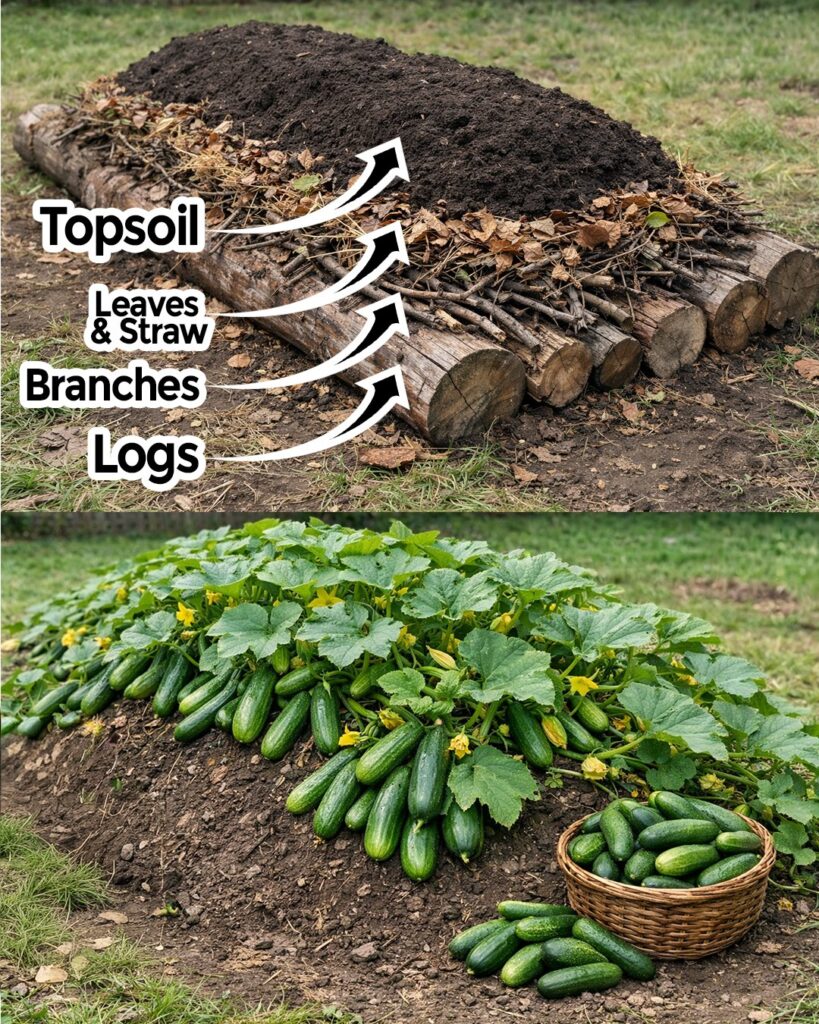
Hugelkultur Mound Garden – A Self‑Watering Raised Bed for Rich Harvests
Hugelkultur (a German word meaning “hill culture”) is one of the most efficient ways to turn yard waste into a long‑lasting, productive garden bed. Instead of removing old wood, branches, and leaves, you bury them under soil to create a raised mound that feeds plants and stores water naturally.
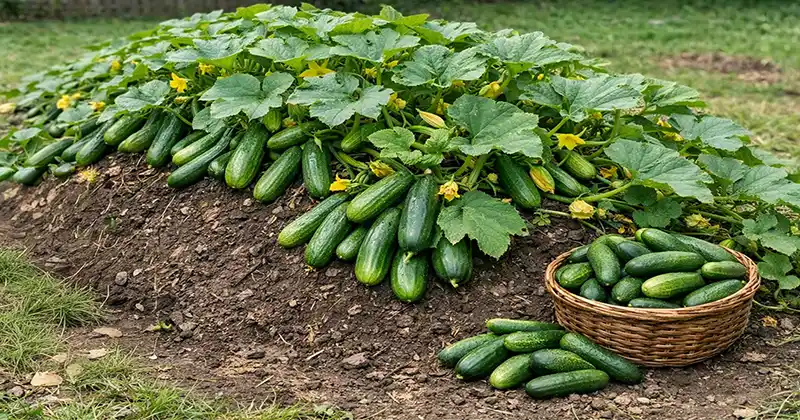
A properly built hugelkultur mound can hold moisture for weeks without irrigation, improve soil structure year after year, and produce heavy harvests with minimal maintenance.
Below is a complete, practical guide to building, planting, and maintaining your own hugelkultur garden.
Why Hugelkultur Works So Well
Buried wood acts like a natural underground sponge.
As logs slowly decompose, they:
- Absorb rainwater and store it deep in the mound
- Release moisture gradually to plant roots during dry periods
- Create air pockets that improve soil oxygen levels
- Feed beneficial fungi and microbes
- Build rich, dark soil over time
This creates a self‑regulating growing system that becomes better every season.
How to Build the Layers (Step‑by‑Step)
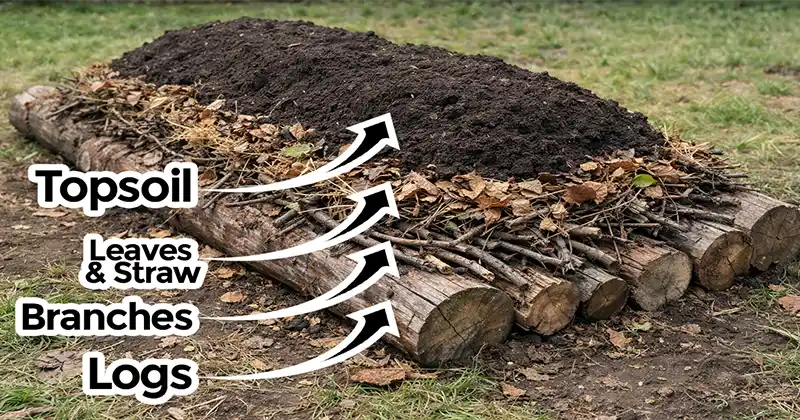
A hugelkultur mound is built like a layered cake, from the largest materials at the bottom to the finest at the top.
1. Base Layer – Logs and Thick Branches
Use:
- Hardwood logs if possible (oak, beech, maple, fruit trees)
- Thick branches and untreated wood
Avoid:

- Painted or treated wood
- Black walnut (can inhibit plant growth)
Tip: Slightly rotting wood is even better than fresh wood because it absorbs water faster.
Thickness: 20–40 cm (8–16 inches)
2. Second Layer – Smaller Wood Material
Add:
- Thin branches
- Twigs
- Wood chips
- Bark pieces
This layer fills air gaps and creates a strong structure.
3. Third Layer – Soft Organic Matter
Use any garden waste such as:
- Dry leaves
- Grass clippings
- Straw or hay
- Old plant stems
- Shredded cardboard (optional)
This layer provides fast nutrients while the wood decomposes slowly underneath.
4. Top Layer – Compost and Garden Soil
Finish with:
- Compost mixed with garden soil
- Depth: 15–20 cm (6–8 inches)
This is where roots start growing and microbes become active.
Water the mound well after finishing to settle the layers.
Ideal Mound Shape and Dimensions
For best results:

- Orientation: North to south for even sunlight
- Fresh height: 90–120 cm (3–4 feet)
- Width: 1.2–1.5 m (4–5 feet)
- Side slope: about 45° for stability
- Length: any size you want
Expect the mound to settle about 30% in the first year as materials compact and decompose.
How Hugelkultur Manages Water Naturally
- Fresh wood captures rainfall underground
- Moisture is stored inside the logs like a reservoir
- Plant roots grow downward toward the water source
- The surface soil may dry quickly, but the core stays cool and damp
- Mature mounds often need little to no extra watering
In hot climates, hugelkultur beds can reduce watering by 50–80%.
Best Crops by Year
Because the soil changes over time, different plants perform best in different years.
Year 1 – Heavy Feeders
- Squash
- Pumpkins
- Zucchini
- Melons
- Cucumbers (large varieties)
These plants love the heat and nutrients from fresh decomposition.
Year 2 – Balanced Crops
- Tomatoes
- Cucumbers
- Beans
- Peppers
- Corn
The soil becomes more stable and nutrient‑rich.
Year 3 and Beyond – Almost Anything
- Leafy greens
- Herbs
- Root vegetables
- Strawberries
- Onions
- Garlic
By this stage, the mound behaves like premium garden soil.
Extra Tips for Better Results
Choose the Right Location
- Full sun is best (6–8 hours daily)
- Avoid low areas where water pools
- Keep at least 50 cm (20 inches) from fences
Plant Densely
Hugelkultur beds support dense planting because:
- Roots grow vertically and horizontally
- Moisture is abundant
- Nutrients are continuously released
Dense planting also shades the soil and reduces evaporation.
Mulch the Surface
Cover with:
- Straw
- Dry leaves
- Grass clippings
Mulch reduces water loss and prevents erosion.

Expect Some Nitrogen Use Early
Fresh wood may temporarily absorb nitrogen during decomposition.
To compensate:
- Add compost or manure to the top layer
- Plant legumes (beans, peas) in the first year
- Use organic fertilizer if needed
Longevity
A well‑built hugelkultur mound can remain productive for:
- 5–10 years (softwood base)
- 10–20+ years (hardwood base)
Common Mistakes to Avoid
- Using treated or painted wood
- Making slopes too steep
- Skipping compost in the top layer
- Planting root vegetables in year one
- Building too small (larger mounds perform better)
Why Many Gardeners Switch to Hugelkultur
- Uses free materials
- Reduces watering
- Improves poor soil
- Raises planting area (better drainage)
- Produces heavy harvests
- Requires little maintenance after setup
Hugelkultur turns yard waste into a self‑watering garden system.
One afternoon of stacking can create years of low‑maintenance harvests 🌱
