
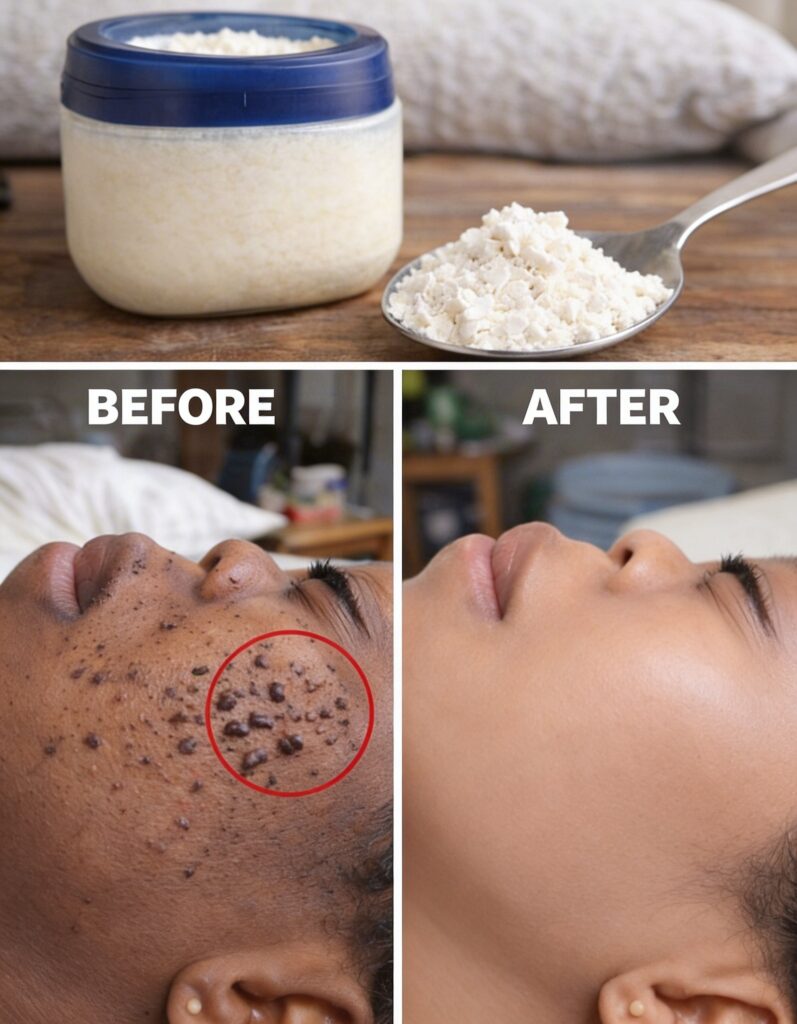
Dealing with skin tags can feel incredibly frustrating when those soft, fleshy bumps appear on your neck, underarms, or other friction-prone spots and start catching on clothes or jewelry every single day. They might be harmless, but the constant irritation and the way they affect how you feel in your own skin can wear you down fast, especially if you’ve tried hiding them or worrying they’ll keep multiplying. That’s why the viral promise of removing skin tags in one night naturally at home with something as simple as Vaseline sounds almost too good to be true. But here’s the part most people miss: while those dramatic before-and-after photos flood social media, the real story behind this popular home remedy is far more surprising than the hype suggests—and it could save you time, money, and unnecessary skin trouble if you keep reading until the end.
What Exactly Are Skin Tags?
Skin tags, also known as acrochordons, are small, soft, benign growths of extra skin cells that often hang from a thin stalk. They commonly show up in warm, moist areas where skin rubs together, such as the neck, armpits, groin, or eyelids.
Research shows they become more common with age, weight gain, pregnancy, or conditions like diabetes, thanks to increased friction and hormonal changes.
The good news? They’re completely non-cancerous and usually painless unless they get irritated or snagged. Yet for many people, the cosmetic bother is reason enough to explore removal options.
But before you reach for that jar in your medicine cabinet, let’s look at the method everyone is talking about.
The Vaseline Skin Tag Myth: What the Photos Don’t Show
Here’s the claim making rounds online: slather thick Vaseline (petroleum jelly) on skin tags overnight, and they’ll supposedly “suffocate,” dry out, and fall off by morning. Those eye-catching photos seem to prove it works instantly and naturally at home.
But here’s the truth that changes everything. Vaseline is an occlusive moisturizer—it locks in moisture and protects skin rather than drying it out or cutting off blood supply. Dermatologists actually recommend it after professional procedures to speed healing and reduce scarring, not to remove tags in the first place.
No scientific studies back the idea that petroleum jelly can dissolve or eliminate skin tags. The “before-and-after” results you see? They’re often explained by better lighting, different angles, temporary swelling reduction, or even natural variation over time.

Some tags do eventually fall off on their own, but not overnight from Vaseline alone. Experts from trusted dermatology resources confirm this method simply doesn’t work as advertised.
Why “Overnight” Removal Claims Raise Red Flags
Skin tags contain living tissue with their own blood supply, which means true removal needs a process that interrupts circulation or physically removes the growth—something that naturally takes days or weeks.
That’s why promises of instant overnight fixes almost always involve heavy irritation that can backfire. Harsh DIY approaches may cause a tag to darken or drop off, but they often leave behind burns, scars, infection, or uneven skin tone.
Dermatologists consistently warn against experimenting at home because it’s easy to mistake a skin tag for something more serious, like a mole or wart. Plus, most at-home remedies lack FDA approval for safety or effectiveness.
If a tag suddenly changes color, bleeds, grows rapidly, or hurts, that’s your cue to see a healthcare professional right away.
Safer Professional Options for Skin Tag Removal
When you want reliable results without guesswork, professional removal stands out as the gold standard. Here are the most common methods dermatologists use:
- Cryotherapy: Liquid nitrogen freezes the tag so it falls off within 1–2 weeks.
- Snip excision: A quick, sterile cut removes the tag immediately with minimal discomfort.
- Electrosurgery or ligation: Heat or a tiny tie-off stops blood flow for clean removal.
These procedures are fast, low-risk when performed by a trained provider, and they also confirm the growth is truly just a harmless skin tag.
But what if you’re not ready for a clinic visit yet? You still have smart ways to manage things at home while you decide.
Safe Home Care Tips You Can Start Today
While waiting for professional help or for tiny, non-bothersome tags, simple daily habits make a big difference. Follow these easy steps:

- Keep the area clean and dry with gentle soap and patting dry—no rubbing.
- Avoid picking, twisting, or scratching the tags to prevent irritation or infection.
- Wear loose clothing and use a friction-reducing powder in sweaty areas if needed.
- Apply a thin layer of plain Vaseline around (not directly on) the tag if the surrounding skin feels dry—this protects healthy skin without false removal hopes.
These steps won’t remove tags overnight, but they stop new irritation and give your skin the best chance to stay comfortable.
Natural Approaches Worth Considering (With Caution)
Some people explore gentle drying agents for small tags, though results are slower and purely anecdotal. Here’s a quick comparison of popular options versus Vaseline:
| Method | How It Works | Typical Timeframe | Evidence Level | Key Risks |
|---|---|---|---|---|
| Professional Cryotherapy | Freezes tissue | 1–2 weeks | Strong (medical) | Minor blistering, pigment change |
| Snip Excision | Physically removes tag | Immediate | Strong | Slight bleeding if not sterile |
| Diluted Tea Tree Oil | May dry tissue over time | Several weeks | Anecdotal | Allergic reaction, irritation |
| Apple Cider Vinegar | Acidic drying effect | Variable | Anecdotal | Burns, scarring if overused |
| Vaseline Alone | Locks in moisture | No removal | None for removal | None major, but ineffective |
As you can see, professional methods consistently outperform home remedies in both speed and safety. Always patch-test anything new on a small area first and stop immediately if redness or discomfort appears.
Building a Long-Term Plan for Clearer Skin
The smartest move starts with a quick visit to a dermatologist, especially if tags are on your face, genitals, or multiplying quickly. They can rule out similar-looking conditions and recommend the best removal plan for your skin type.
In the meantime, focus on prevention to stop new tags from forming. Maintaining a healthy weight, choosing breathable clothing, and managing conditions like diabetes can reduce friction and lower your chances dramatically.
Monitor your skin monthly for changes, and remember: patience with evidence-based options almost always wins over rushed experiments.
Conclusion: Choose What Actually Works for You
Those overnight Vaseline stories spark hope because they feel easy and cheap, but they lack real support and often lead to disappointment. Skin tags respond best to professional care or simple time and observation—not petroleum jelly on its own.
The three essentials to remember? Vaseline protects skin beautifully but won’t remove tags, quick DIY fixes carry real irritation risks, and dermatologist-guided methods give you the safest, most predictable results.
You deserve smoother skin without the stress or guesswork. When you’re ready, a quick professional chat can give you peace of mind and clear results you’ll love.

P.S. Many skin tags naturally fade or drop off over the years with no intervention at all—sometimes the gentlest approach is simply keeping an eye on them.
FAQ
Can you really remove skin tags in one night naturally at home?
Most claims of overnight removal are not supported by science. Professional methods work within days to weeks, while home remedies rarely deliver instant results and may cause irritation.
Is Vaseline safe to use on skin tags?
Yes, Vaseline is safe as a moisturizer and can protect surrounding skin, but it does not remove tags or speed up the process on its own.
What should I do if a skin tag starts changing or bleeding?
See a dermatologist promptly. Any sudden change could need professional evaluation to rule out other skin concerns.
Disclaimer: This article is for informational purposes only and is not a substitute for professional medical advice. Always consult a qualified healthcare provider or dermatologist before trying any skin tag removal method, especially if you have underlying health conditions. Individual results may vary.
