
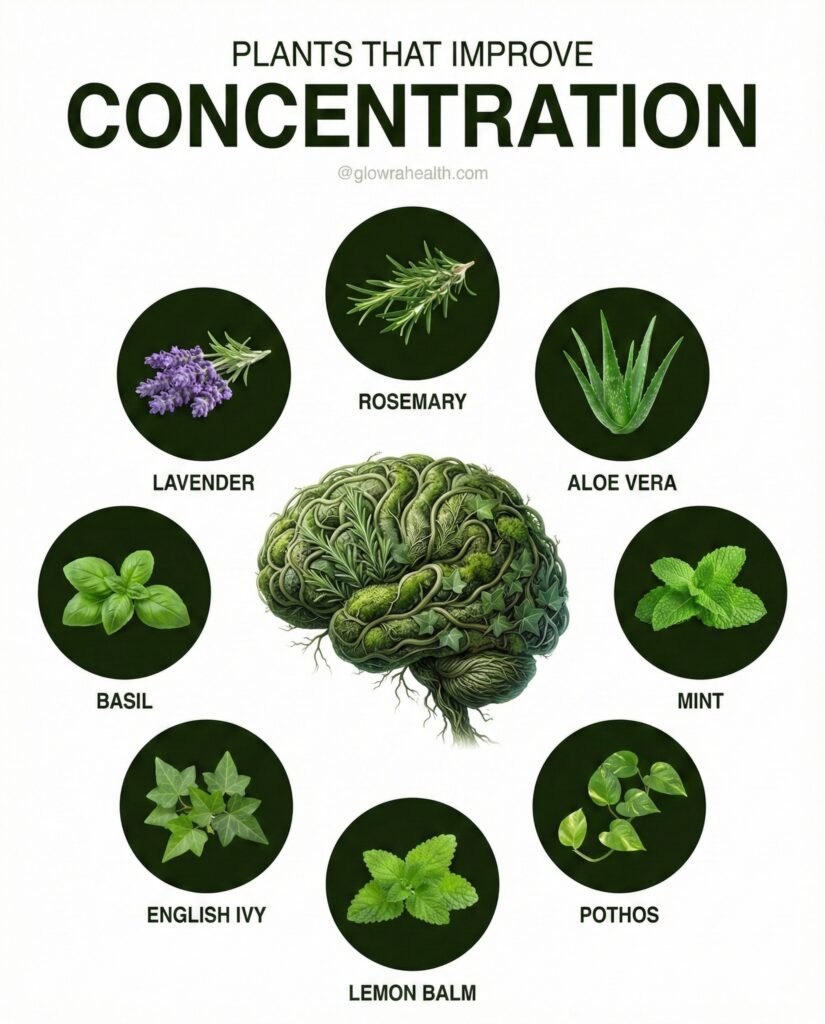
Did You Know 8 Plants That Improve Concentration Naturally

Losing focus is not always about willpower.
For many people, poor concentration comes from stress, mental overload, restless sleep, dry indoor air, and constant screen exposure.
Here is what most people overlook: your daily environment and small sensory habits can strongly influence how your brain performs. Certain plants and herbs help create a calmer, fresher, and more mentally supportive space, which makes focusing feel easier and more natural.
Why Plants Can Support Concentration
Plants help concentration in three main ways:
- They influence mood and stress levels
- They improve the feel of your environment
- Some provide gentle aromatic or herbal support for the nervous system
These are not stimulants. They work by reducing mental noise, not forcing alertness.
The Plant List
1. Rosemary
Rosemary has long been associated with memory and alertness.
Why it helps focus:
Its fresh, herbal aroma can feel mentally stimulating and help you feel more awake during tasks that require attention.
How to use it:
- Keep a rosemary plant near a bright window in your workspace
- Lightly rub a sprig and inhale before studying or working
- Brew a light rosemary tea by steeping 1 small sprig for 5–7 minutes

2. Lavender
Lavender is best known for calm, not stimulation.

Why it helps focus:
When anxiety and tension drop, the brain can stay on one task longer without jumping around.
How to use it:
- Place dried lavender near your desk or bed
- Use lavender tea or aroma in the evening to support better sleep
- Smell fresh lavender during short breaks
3. Aloe Vera
Aloe vera is a popular indoor plant that is easy to care for.
Why it helps focus:
A cleaner-feeling, calmer workspace improves comfort, which indirectly supports attention.
How to use it:
- Place aloe on a sunny windowsill
- Water only when the soil is completely dry
- Use it as a low-maintenance desk or room plant
4. Mint
Mint has a bright, refreshing scent that many people find energizing.
Why it helps focus:
It can help reduce mental heaviness and refresh the senses, especially in the afternoon.
How to use it:

- Add fresh mint to water while working
- Brew mint tea after meals
- Keep a small mint pot in the kitchen or near a window

5. Basil
Basil is a familiar herb that supports mental clarity through routine and aroma.
Why it helps focus:
Its uplifting scent and use in meals can support steadier energy and mood.
How to use it:
- Add fresh basil to meals regularly
- Keep basil near sunlight and pinch leaves often
- Make basil water by crushing a few leaves in cold water
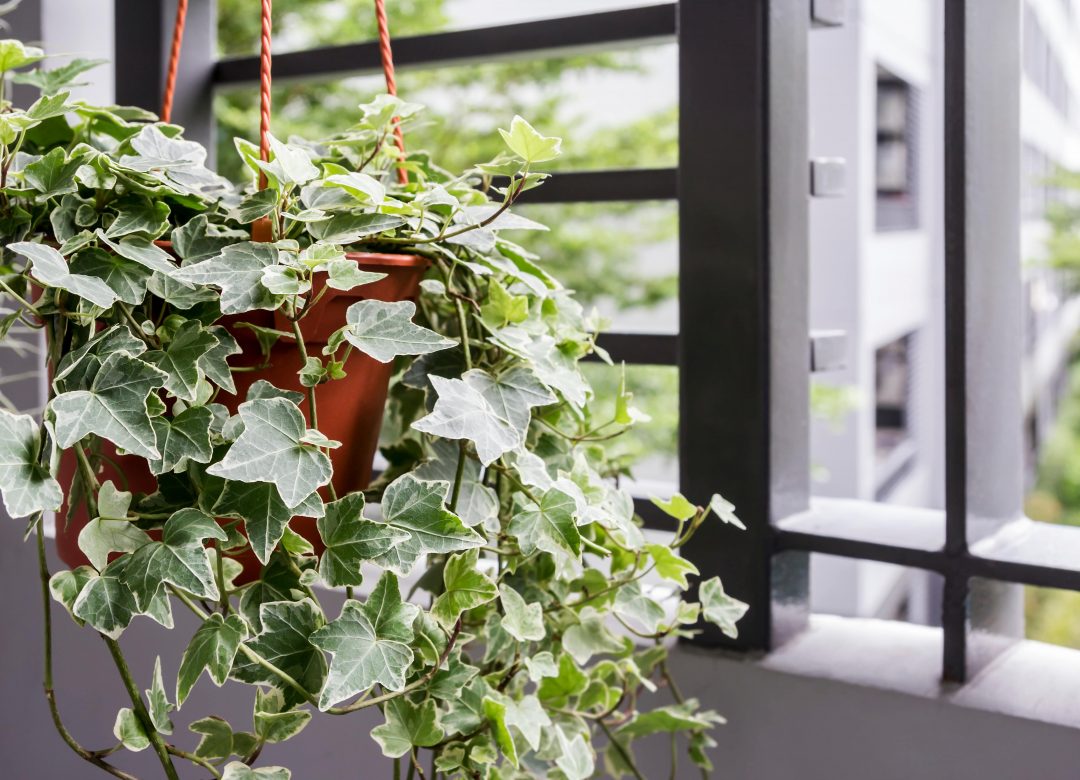
6. English Ivy
English ivy is often used as a decorative indoor plant.
Why it helps focus:
A greener environment can reduce stress and mental fatigue, which supports sustained attention.
How to use it:
- Place in indirect light
- Water when the top soil feels dry
- Keep away from pets and children, as it should not be ingested
7. Lemon Balm
Lemon balm is a gentle herb traditionally used for nervous tension.
Why it helps focus:
It supports calm alertness, especially when concentration issues are linked to stress or restlessness.

How to use it:
- Brew lemon balm tea (1 tablespoon leaves, steep 7–10 minutes)
- Drink in the late afternoon or early evening
- Grow in a pot, as it spreads easily
8. Pothos
Pothos is one of the easiest indoor plants to maintain.
Why it helps focus:
A visually calming, low-effort green plant can subtly improve mood and motivation.
How to use it:
- Place on shelves, desks, or hanging planters
- Water when soil is dry
- Keep out of reach of pets

How to Create a Focus-Friendly Space
You do not need all eight plants. A simple setup works well:
- One aromatic plant (rosemary, mint, basil, or lavender)
- One easy green plant (pothos or aloe vera)
- One calming tea herb (lemon balm or lavender)
This supports focus without overwhelming your space.
When You May Notice Changes
- Fresher mood and environment: same day
- Less stress-related distraction: 3–7 days
- More stable focus through routine: 2–3 weeks
Plants support consistency. They are not instant fixes.
Safety Notes
- Keep English ivy and pothos away from pets and children
- Use herbal teas gently if pregnant, breastfeeding, or on medication
- Start with small amounts if you are sensitive to scents
Final Takeaway
Better concentration often starts with a calmer nervous system and a supportive environment. These plants help make focus feel more natural instead of forced.
Save this guide if you want to build a concentration-friendly space later. Share it with someone who struggles to stay focused and needs a gentle reset.
