
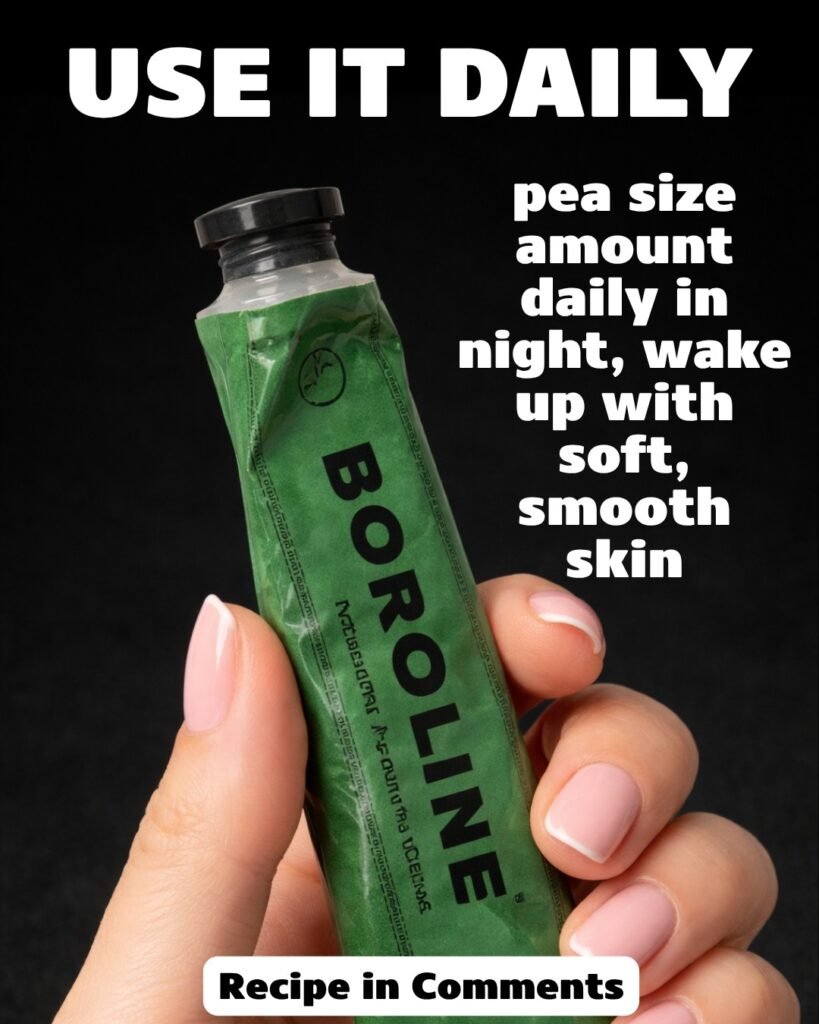
Boroline Cream’s Anti Aging Benefits
Boroline has been around since 1929. It was never meant for anti-aging. It was made for cracked heels, cuts, and dry patches in the Indian winter. And yet, somewhere along the way, it quietly became the thing your grandmother used on her face every night, and she has fewer wrinkles than people half her age.
So what’s actually going on?
What’s in it that matters
Boroline contains zinc oxide, boric acid, and lanolin. That last one is doing most of the work when it comes to skin aging.

Lanolin is a wax derived from sheep’s wool. It mimics the natural oils your skin produces, which tend to slow down after your mid-twenties. When skin loses that moisture barrier, fine lines become more visible. Lanolin helps restore it. It doesn’t erase wrinkles — nothing topical does — but keeping skin hydrated consistently makes lines look less pronounced over time.
Zinc oxide has mild anti-inflammatory properties and has historically been used to protect skin from minor irritants and sun exposure. It’s not sunscreen, but it offers some incidental shielding.
Boric acid is mostly there as a preservative and antiseptic. It doesn’t contribute much to the anti-aging angle.
How to use it:
Apply a very small amount to clean skin at night. The texture is heavy and slightly greasy — this is not a daytime moisturizer unless you want to look like you’ve been at the ghee for a while.
Focus on areas where you’re seeing fine lines: around the eyes, the mouth, forehead. These zones dry out faster and show the first signs of aging. Dab it, don’t rub aggressively.

Use it consistently. The people who see actual results from Boroline aren’t doing a one-week experiment. They’re using it three or four nights a week for months. The mechanism here is cumulative — keeping skin moisturized over a long period helps it retain elasticity.
One thing that works surprisingly well: mixing a tiny bit with your regular night cream if Boroline alone feels too heavy for your skin. It dilutes the greasiness while still delivering the lanolin.
What it won’t do
It will not reduce deep wrinkles. Those involve collagen breakdown and changes in the skin’s structural layer, which no over-the-counter moisturizer can reverse. If you’re looking at that level of concern, retinoids or professional treatments are what the research actually supports.
It will not fade pigmentation or age spots. That’s a different problem requiring ingredients like niacinamide, vitamin C, or AHAs.
It won’t replace sunscreen. This point is worth repeating because no anti-aging routine works if you’re not blocking UV damage during the day. Boroline at night and no SPF during the day is like locking the back door and leaving the front wide open.

Why it still makes sense
Indian skin, particularly in dry climates or air-conditioned offices, loses moisture fast. Most expensive moisturizers are essentially delivering similar ingredients — occlusives, emollients, humectants — wrapped in better packaging and a higher price tag. Boroline does the occlusive and emollient job reasonably well for about forty rupees.
There’s also something to be said for consistency. People who have used Boroline for decades tend to stick with it because it’s cheap, available everywhere, and their skin is used to it. The regularity matters more than the brand.
It won’t transform your skin overnight. No cream will. But as a basic nighttime moisturizer with a long track record and ingredients that hold up to scrutiny, Boroline earns its place in an anti-aging routine — as long as you’re not expecting miracles.
