How to Make Homemade Jewelweed Remedies for Poison Ivy and Bug Bites and More
Safety and Medical Disclaimer:The information provided in this article is for educational and informational purposes only. We do not take any responsibility for your use of these plants, recipes, or remedies. This is not medical advice. Always consult a medical professional, doctor, or dermatologist before treating severe rashes, allergic reactions, or unknown skin conditions. If you experience a severe allergic reaction to poison ivy, such as difficulty breathing or swelling of the face, seek emergency medical care immediately.
If you spend time outdoors working in the garden, hiking, or clearing brush, you likely know the absolute dread of brushing against poison ivy. The itchy, blistering rash it leaves behind can last for weeks. However, nature has a fascinating habit of growing the cure right next to the cause. Enter Common Jewelweed.
Common Jewelweed (Impatiens capensis), also known as the spotted touch-me-not, is a powerhouse wild plant when it comes to soothing irritated skin. For centuries, people have used its juicy, water-filled stems to stop the severe itch caused by poisonous plants and bug bites. Best of all, it is incredibly easy to find and prepare at home. Here is everything you need to know about the power of Jewelweed and how to use it safely.
How to Identify Common Jewelweed
Before you can use this plant, you need to know exactly what you are looking for. Jewelweed thrives in shady, wet areas like creek beds, swamp edges, and damp woods. It often grows in the exact same environments as poison ivy.
Here are the main features to look for:
- The Stems: The stems are light green, completely smooth, slightly translucent, and hollow. They look and feel very watery, almost like a succulent plant. If you snap a stem in half, a clear, watery sap will instantly leak out.
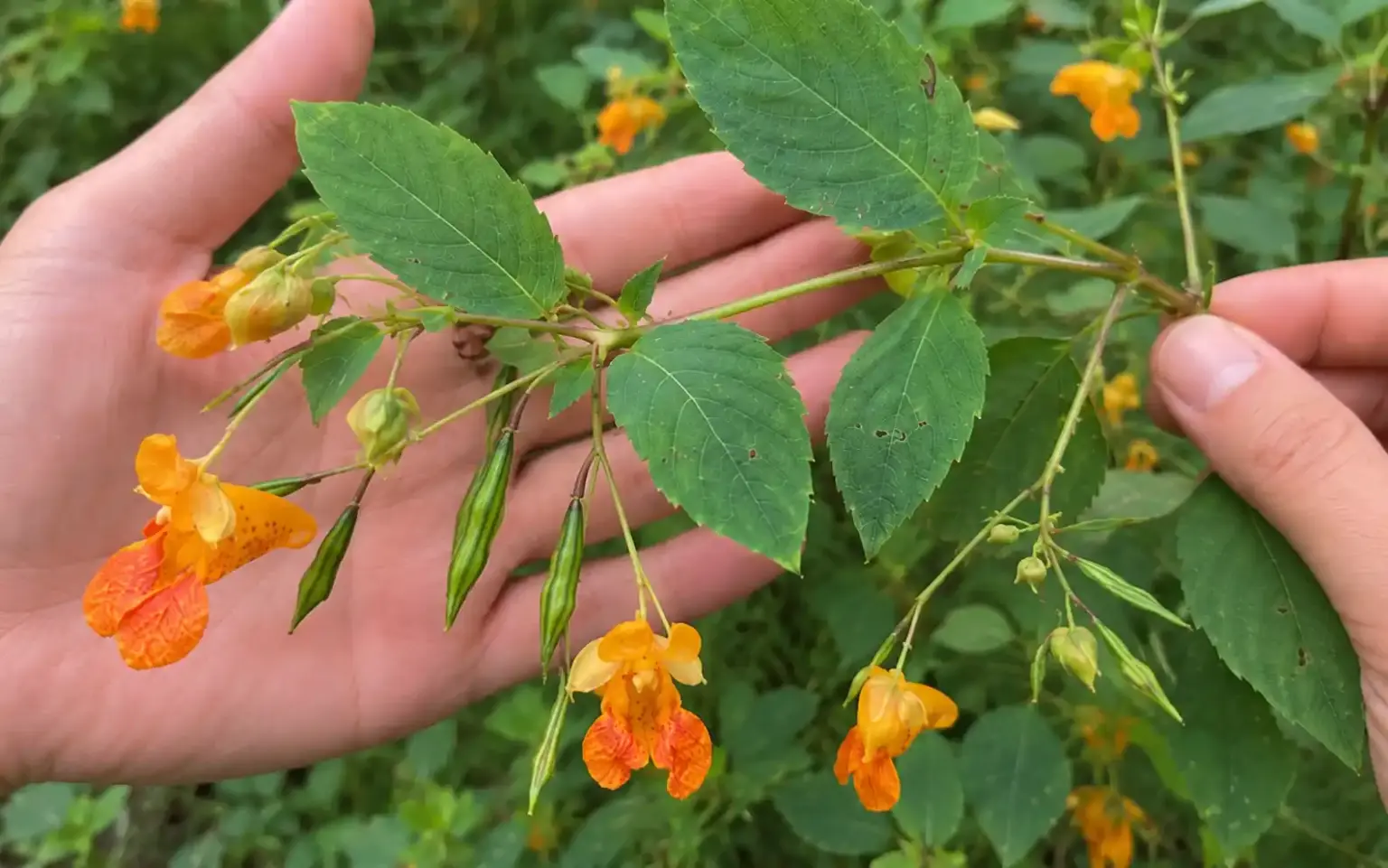
- The Flowers: From mid-summer to early fall, it produces small, bright orange flowers. They are shaped like tiny trumpets or cornucopias and are usually covered in dark reddish-brown spots.
- The Leaves: The leaves are soft, thin, and oval-shaped with gently toothed edges. If you hold a fresh leaf underwater, it takes on a silvery, glowing shine, which is how the plant got the name “Jewelweed.”
- The Seed Pods: In the late summer, the plant grows tiny green seed pods. When they are ripe, touching them lightly causes them to burst open and shoot seeds in all directions. This explosive habit gave the plant its nickname, “touch-me-not.”
The Power of Jewelweed
Why does this simple weed work so well? Poison ivy, poison oak, and poison sumac cause rashes through an invisible, sticky oil called urushiol. When this toxic oil gets on your skin, your immune system reacts violently, causing severe itching and blisters.
Jewelweed defeats this process in two specific ways:
- Natural Soaps: The juice inside the Jewelweed stem contains natural cleaning agents called saponins. If you rub the crushed plant on your skin immediately after touching poison ivy, these natural soaps physically break down and wash away the sticky toxic oil before it can bond to your skin.
- Anti-Inflammatory Compounds: Jewelweed is packed with a chemical compound called lawsone. This acts as a natural antihistamine and anti-inflammatory. If a rash has already started, applying the plant juice reduces the swelling, cools the hot skin, and takes away the intense urge to scratch.
Because of these properties, Jewelweed is not just for poison ivy. It is highly effective against:
- Mosquito bites and bee stings
- Stinging nettle burns
- Razor burn and minor scrapes
- General skin irritations and mild hives
How to Harvest Jewelweed
Harvesting Jewelweed is very simple, but you should follow a few basic rules:
- Check your surroundings: Because Jewelweed loves the same soil as poison ivy, always look closely at the ground before you step into a patch of it. Do not accidentally step in poison ivy while trying to harvest your medicine.
- Take the juicy parts: The highest concentration of the healing sap is in the thick lower stems.
- Snap, do not pull: Simply pinch or snap the stems off at a joint. The plant has very shallow roots, and if you pull too hard, you will rip the whole plant out of the ground.
Homemade Jewelweed Remedies
The best way to use Jewelweed is fresh, right out of the ground. However, you can also preserve it at home so you have it ready in the winter when the plant dies back. Here are four simple ways to use it.
1. The Quick Field Crush (Fresh Poultice)
This is the fastest and most effective method if you realize you just walked through poison ivy.
- Snap off a thick, juicy stem of fresh Jewelweed.
- Crush the stem between your hands or mash it up with a clean rock until the whole plant is bruised and dripping with liquid.
- Rub the crushed, juicy mash aggressively directly onto the exposed skin.
- Leave the juice on the skin to dry.
2. Jewelweed Ice Cubes
Because Jewelweed is mostly water, it goes bad quickly once picked. Freezing it is the absolute best way to preserve its healing power for months.
- Gather a large handful of fresh Jewelweed stems and leaves.
- Chop them into small pieces using a knife or scissors.
- Place the chopped plant into a blender. Add just enough water to get the blender spinning.
- Blend until it turns into a thick, green smoothie.
- Pour this green liquid into regular ice cube trays and freeze.
- When you get a bug bite or a poison ivy rash, pop out one green ice cube and rub it directly over the itchy skin. The cold ice will shrink the swelling, while the plant juice treats the itch.
3. Jewelweed Witch Hazel Spray
This is a great liquid spray to keep in the refrigerator for bug bites.
- Chop up enough fresh Jewelweed stems and leaves to fill a glass mason jar halfway.
- Pour liquid Witch Hazel (available at any pharmacy) into the jar until the plant matter is completely covered.
- Put the lid on and put the jar in the refrigerator for two weeks. Shake it gently every few days.
- After two weeks, strain the liquid through a coffee filter or paper towel to remove all the solid plant pieces.
- Pour the clear, infused liquid into a small spray bottle. Spray it directly onto itchy skin as needed. Keep the bottle stored in the fridge.
4. Jewelweed Infused Oil
If you want to make a skin rub, you can infuse Jewelweed into oil. Note: Because the plant is full of water, you must wilt it first, otherwise, the water will cause the oil to grow mold.
- Harvest your Jewelweed and lay it out flat on a dry towel indoors for 24 to 48 hours. Let it wilt until it looks limp and has lost most of its moisture.
- Chop the wilted plant and place it in a heat-safe glass jar.
- Cover the plant material completely with a carrier oil, such as olive oil or sweet almond oil.
- Place the glass jar into a pot of water on the stove (creating a double boiler). Turn the heat to low.
- Let the oil gently warm for 2 to 3 hours. Never let the oil boil or fry the plant.
- Remove from the heat, let it cool, and strain out all the plant material using a fine cloth.
- Rub this green-tinted oil onto rashes to soothe the skin.
Important Safety Rules for Homemade Use
While Jewelweed is a gentle and safe plant for the skin, keep the following safety rules in mind:
- For External Use Only: Jewelweed is meant for your skin, not your stomach. Eating the plant raw can cause severe stomach cramps and digestive issues due to high levels of calcium oxalate crystals. Never drink Jewelweed teas or infusions.
- Watch for Spoilage: Fresh Jewelweed rots very quickly. If you make a water-based tea or spray, it will go bad and grow mold in a few days if left at room temperature. Always store water-based preparations in the refrigerator or freeze them.
- Do a Patch Test: Everyone’s skin is different. Before rubbing a new plant all over your body, rub a tiny drop of the juice on the inside of your wrist and wait 20 minutes to ensure you are not personally allergic to it.
By keeping a lookout for those bright orange flowers and watery stems, you can turn a miserable encounter with poison ivy into a minor inconvenience. Armed with this knowledge, you can confidently utilize one of nature’s best homemade remedies.