Keep these tips in mind to avoid visiting the dentist

it is important to clarify that true cavities cannot be naturally repaired or removed at home once a physical hole has formed.
The “natural” process often discussed online is remineralization, which can only reverse the very earliest stage of decay—before structural damage occurs.
The Limits of Natural Repair
- Reversible Stage (Pre-Cavity): When decay is just a microscopic loss of minerals (appearing as white spots on the enamel), it may be reversed by redepositing minerals like calcium and phosphate back into the tooth.
- Irreversible Stage (Actual Cavity): Once bacteria have eaten through the enamel to create a physical hole, the damage is permanent. Only a dentist can treat this by removing the decay and placing a restoration like a filling, crown, or performing a root canal.
General Strategies to Prevent and Halt Early Decay
While home remedies cannot “fill” a hole, they can support oral health and potentially stop “pre-cavities” from worsening:
- Fluoride and Hydroxyapatite: Brushing twice daily with fluoride toothpaste or hydroxyapatite-based products is the most effective way to strengthen weakened enamel.
- Dietary Changes: Reducing intake of sugar and acidic foods deprives cavity-causing bacteria of their food source, allowing enamel a chance to remineralize.
- Oil Pulling: Swishing coconut or sesame oil for 10–20 minutes may reduce harmful mouth bacteria and plaque, though it is not a substitute for brushing and cannot fix existing holes.
- Vitamins and Minerals: Ensuring adequate intake of Vitamin D, calcium, and phosphorus provides the building blocks for strong teeth.
- Chewing Xylitol Gum: This stimulates saliva flow, which naturally neutralizes acids and washes away food particles.
Dangers of Delaying Professional Treatment
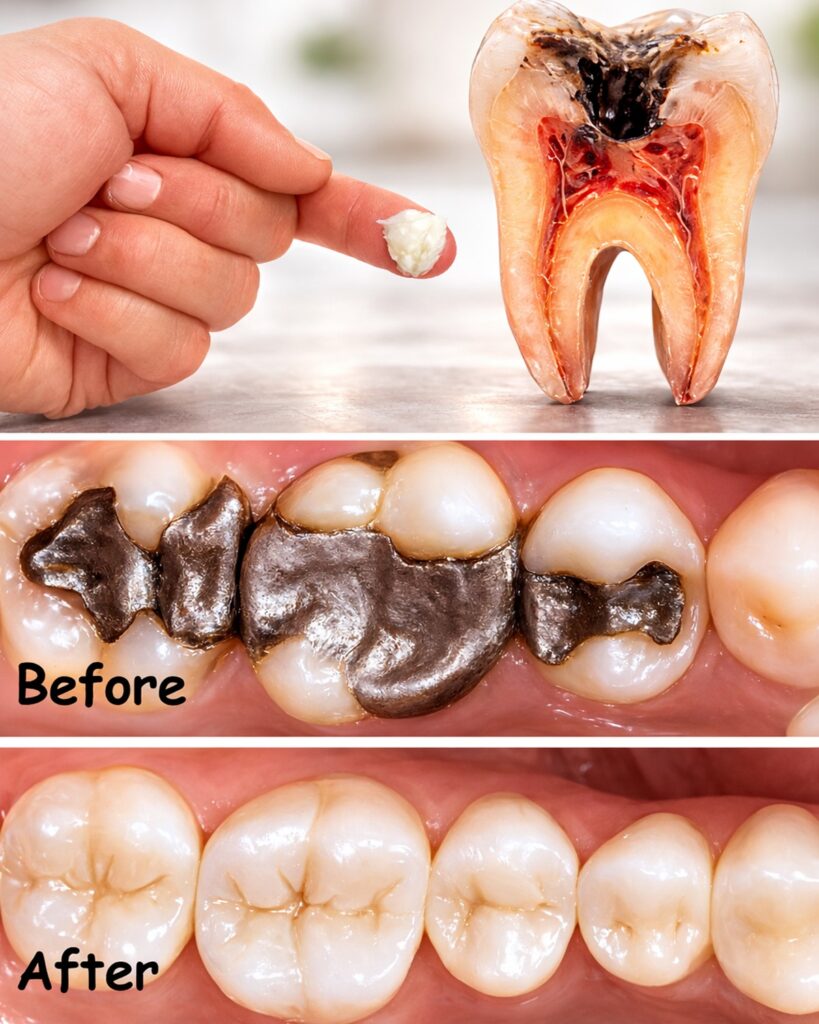
If a cavity is deep (resembling the “before” image), ignoring it can lead to:
- Severe Pain and Infection: Decay reaching the tooth pulp can cause intense pain and develop into a life-threatening abscess.
- Tooth Loss: Untreated decay eventually weakens the tooth structure until it breaks or requires extraction.
- Systemic Health Risks: Bacteria from dental infections can enter the bloodstream, potentially contributing to heart disease or diabetes complications.
Medical Disclaimer: This information is for general purposes only and not a substitute for professional medical or dental advice. Always consult a dentist if you suspect you have a cavity or are experiencing tooth pain
Since you are experiencing specific symptoms like sensitivity or have noticed a visible dark spot, it is important to understand what these signs may indicate.
The images you provided show a progression of tooth decay: the top image depicts a deep cavity reaching the inner pulp (nerves and blood vessels), while the middle image shows large silver (amalgam) fillings that have been replaced by tooth-colored composite resin in the bottom image.
What Your Symptoms May Indicate
Based on common dental patterns, your symptoms are consistent with several possibilities:
- Enamel Erosion or Early Decay: Sensitivity to hot, cold, or sweets often occurs when enamel wears thin or a small cavity begins, exposing the sensitive dentin layer underneath.
- A Structural Cavity: A visible dark spot that feels “sticky” or like a hole often indicates that decay has broken through the enamel. At this stage, “natural” remedies cannot fix the hole; the decayed material must be professionally removed.
- A Failing Filling: If you already have fillings (like those in the “Before” image), a dark spot around the edges or new sensitivity can mean the seal has broken, allowing new bacteria to leak underneath.
Observed Features in Your Images
- The Cross-Section (Top): Shows advanced decay (black area) that has penetrated the enamel and dentin, reaching the pulp. This typically causes throbbing pain and requires a root canal.
- The “Before” Image (Middle): Shows large amalgam fillings. These can sometimes expand or contract over time, leading to cracks in the tooth or “recurrent decay” around the edges.
- The “After” Image (Bottom): Shows composite restorations. These are bonded to the tooth, which can help support the remaining structure and provide a more natural appearance.
Immediate Steps to Take
While you wait for a professional evaluation, you can try these general comfort measures:
- Desensitizing Toothpaste: Use a toothpaste containing potassium nitrate or hydroxyapatite to help block pain signals from the nerves.
- Saltwater Rinse: Mix a half-teaspoon of salt in warm water to help reduce bacteria and soothe gum inflammation.
- Avoid Extreme Temperatures: Stick to room-temperature foods and drinks to prevent triggering sharp pain.
Why Professional Diagnosis is Critical
A dentist uses tools like X-rays and explorers to determine the depth of the dark spot. If it is just a stain, it may be harmless; if it is a cavity, catching it early prevents the need for more invasive treatments like a root canal or extraction.
Medical Disclaimer: This information is for general purposes only and not a substitute for professional medical or dental advice. Please double-check any product labels for ingredients and usage instructions. You should consult a dentist for a physical exam and diagnosis.