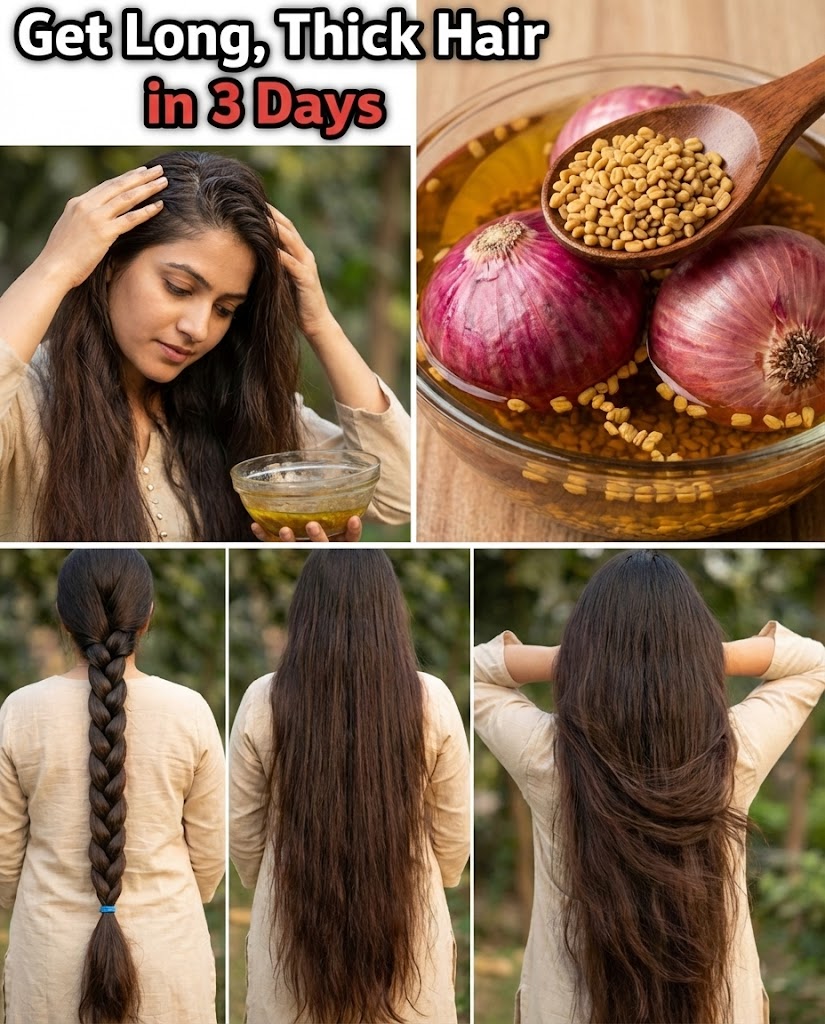
Fenugreek Hair Booster Tonic: The Viral Kitchen Recipe That Might Help—If You Use It the Smart Way
Have you ever cleaned your shower drain and felt your stomach drop?
Not because it’s gross—because the clump looks like it came from someone else’s head.
Or maybe you’ve stared at your part under bright bathroom light and thought, “Was it always this wide?”
If you’re in your 30s, 40s, or beyond, hair changes can feel personal fast.

Rate your current hair fall 1–10 (1 = barely noticeable, 10 = handfuls in the shower).
Hold that number.
Because this viral fenugreek-onion “hair booster” promises a dramatic transformation in 7 days—and that’s where we need to be honest.
Hair doesn’t grow inches in a week.
But your hair experience can change quickly: less breakage, calmer scalp, less itch, less shedding from irritation, more shine, and better texture.
Those shifts can make your hair look fuller long before new growth shows up.
So what’s really happening with this viral recipe?
Let’s break it down—ingredient by ingredient—then rebuild it into a safer, more realistic routine you can actually stick with.
Why Kitchen Remedies Keep Winning (Even When the Claims Are Too Big)

Natural hair rituals feel empowering because they’re affordable and accessible.
Plus, topicals can be low risk when prepared carefully.
The viral formula tries to hit multiple targets at once:
- Nourish follicles and scalp
- Reduce microbes linked to dandruff and itch
- Calm inflammation that worsens shedding
- Improve circulation through massage and warming oils
- Reduce breakage so hair retains length
You may be thinking, “But do these ingredients really do that?”
Some have promising evidence for scalp comfort and hair quality.
Others are more anecdotal—or even potentially problematic if overused.
Quick self-check: On a scale of 1–5, how often does your scalp feel itchy or flaky?
If you’re at 3+, you may benefit most from the anti-itch and anti-flake effects first.
That’s usually where people feel “results” quickest—keep reading.
The Viral Duo Explained: Serum + Infused Oil

The video uses two products:
- A water-based serum/tonic (fenugreek + onion + cloves simmered and strained)
- An oil infusion (coconut oil simmered with ginger, amla, cloves, camphor, curry leaves, and fenugreek)
This structure makes sense.
Water-based tonics can feel light and reach the scalp quickly.
Oil infusions can protect strands, reduce dryness, and support massage.
But there’s a catch: more ingredients doesn’t always mean better.
It can mean more irritation risk.
So we’ll keep the benefits and reduce the downsides.
The “Hero Ingredient” Breakdown: What Each One Might Contribute

Fenugreek Seeds (Methi Dana): Slip, Strength, and Scalp Comfort
Fenugreek contains mucilage (a gel-like fiber), proteins, and plant compounds used traditionally for hair and scalp.
Topically, fenugreek can coat hair, reduce friction, and make strands feel thicker and softer.
Some people report less shedding, but often that’s reduced breakage rather than new follicle growth.

If you’ve been snapping hair mid-shaft, fenugreek can be a game-changer in how your hair feels.
But it’s not a guaranteed regrowth potion.
Its most reliable win is texture and scalp comfort—then consistency becomes easier.
Onion: The Strong Smell with a Stronger Reputation

Onion juice is famous because a small study in patchy hair loss showed regrowth with consistent use.
Even if your hair loss isn’t patchy, onion’s sulfur compounds may support scalp circulation and keratin building blocks.
The real-world issue is irritation and smell.
Some scalps tolerate it. Some react fast.
You may be thinking, “I can handle it if it works.”
That’s the trap—because irritation can increase shedding.
So onion is powerful, but it must be used thoughtfully, not aggressively.
Cloves: Scalp Comfort, Not Magic
Cloves contain eugenol, often discussed for anti-inflammatory and antimicrobial properties.
In a scalp routine, cloves may support comfort and reduce certain microbes.
But cloves can also irritate sensitive skin if too concentrated.
Think of cloves as a “supporting actor,” not the lead.
Coconut Oil: The Reliable Carrier
Coconut oil is widely used to reduce protein loss in hair and improve softness and shine.
It also makes scalp massage easier, which is a huge part of why oil routines feel so effective.
If you’re dealing with dryness, breakage, or frizz, coconut oil is one of the most consistent performers in this recipe.
Amla (Indian Gooseberry): Shine, Scalp Support, and Tradition
Amla is rich in antioxidants and is used traditionally for scalp and hair quality.
Many people report improved shine and a calmer scalp.
It may support healthier growth conditions over time, though “fast regrowth” claims are still a leap.
Curry Leaves: Nourishment Symbol, Light Evidence
Curry leaves are traditional in hair oils for nourishment and anti-graying folklore.
They may add antioxidants and a pleasant herbal profile to the oil.
But evidence is mostly anecdotal—still fine as a gentle addition.
Ginger: The Ingredient You Should Use Carefully
Ginger is often described as a circulation booster.
But some lab findings suggest certain ginger compounds may not always support hair growth in the way people assume.
That doesn’t mean ginger is “bad,” but it means more ginger isn’t better.
If you include ginger, keep it minimal and watch your scalp.

Camphor (Kapoor): The Biggest Safety Red Flag
Camphor can feel cooling and stimulating on skin, but it can also irritate and should not be used excessively.
It should never be ingested and should be kept away from eyes and sensitive skin.
If you have a reactive scalp, you may want to skip camphor entirely.
You may be thinking, “But the video says no side effects.”
That’s not realistic for everyone. Skin is individual.
The Countdown: 9 Realistic Benefits You Might Notice (If It Works for You)
9) Hair Feels Softer and Less “Rough”
Fenugreek’s coating effect can make hair feel silkier quickly.
That alone boosts confidence—and makes breakage less likely.
8) Less Itch and Flaking (If Dandruff Is Mild)
Antimicrobial ingredients plus a calmer scalp routine can reduce irritation.
This is often the first “wow” people notice.
7) Reduced Breakage That Mimics “Less Hair Fall”
Many people confuse breakage with hair fall.
When strands stop snapping, shedding looks dramatically reduced.
6) Better Shine and Smoother Ends
Coconut oil and amla-based infusions can improve gloss and manage frizz.
Photos start looking better even before growth changes happen.
5) A Scalp Routine That Makes You More Consistent
The ritual matters.
Consistency is what turns a trendy recipe into a real experiment.
4) Less “Tender Scalp” from Overwashing or Harsh Products
A gentler routine can calm inflammation.
And a calmer scalp often sheds less.
3) Baby Hairs (Sometimes) Along the Hairline
Some people notice small hairs—especially if shedding was stress-related or irritation-driven.
Not guaranteed, but possible.
2) A Fuller Look From Better Volume and Less Oiliness
When buildup drops and hair isn’t weighed down, volume improves.
Fuller look, same number of follicles—still a win.
1) The Big Outcome: Better Hair Quality Over 6–12 Weeks
This is the realistic timeline.
If you stay consistent and avoid irritation, you may see healthier density and improved texture.
Not in 7 days. In weeks.
Now let’s make the safest version of the recipe.

The Safer Recipe: Simplified, Still Effective, Less Irritating
You don’t need every ingredient to get benefits.
Start with a cleaner formula, then add extras only if your scalp tolerates it.
Water-Based Tonic (Fenugreek + Onion, Optional Clove)
- Soak 2 tablespoons fenugreek seeds overnight
- Simmer with 1 chopped onion in water until reduced
- Optional: 2–3 cloves (not a handful)
- Cool completely, strain well
- Store refrigerated, use within 5–7 days
How to use:
Apply to scalp 3–4 nights per week, massage gently, leave on.
If irritation occurs, stop.
Oil Infusion (Coconut + Fenugreek + Curry Leaves, Optional Amla)
- Warm coconut oil on low heat
- Add 1 teaspoon fenugreek + a small handful curry leaves
- Optional: a few amla pieces
- Simmer briefly, cool, strain
How to use:
Massage 2–3 times per week, leave 2–4 hours or overnight, then shampoo.
Skip camphor at first.
Add ginger only in tiny amounts if your scalp is not sensitive.
Safety and Use Guide Table (Read This Before You Start)
| Step | Frequency | Best for | Watch-outs |
|---|---|---|---|
| Patch test | Once | Everyone | Redness/itch = don’t use |
| Tonic nights | 3–4x/week | Shedding + scalp support | Onion can irritate |
| Oil massage | 2–3x/week | Dryness + breakage | Don’t over-apply |
| Add-ons (ginger/camphor) | Only after 2 weeks | Only if tolerated | Higher irritation risk |
| Progress photos | Weekly | Motivation | Same lighting matters |
What Will Make This Work Better (Even If the Recipe Is “Perfect”)
This is the part most people skip: hair responds to systems.
- Eat enough protein
- Check iron status if shedding is heavy
- Be gentle with heat and tight hairstyles
- Manage stress where possible
- Sleep matters more than most hair videos admit
You may be thinking, “I just want the tonic.”
Use the tonic—but don’t ignore the foundations.
The foundation is where lasting results usually live.
Closing: The Best Hair Booster Is the One You’ll Actually Keep Using
Imagine 30–90 days from now: fewer strands in the drain, a calmer scalp, softer hair, and real confidence returning.
That outcome is possible for some people with consistent, gentle routines.
The cost of chasing viral “7-day miracles” is frustration—or worse, irritation-driven shedding.
Start small.
Choose either the tonic or the oil this week, not both on day one.
Track your hair fall score at 4 weeks, not 4 days.
And if you notice burning, redness, or worsening shedding, stop and consider professional guidance.
P.S. Insider tip: warm the oil in your hands before applying and massage gently for 3 minutes—no aggressive rubbing. The goal is comfort and consistency, not “scrubbing follicles awake.”
This article is for informational purposes only and does not replace professional medical advice. Consult your healthcare provider for personalized guidance, especially if you have scalp conditions, allergies, are pregnant, or experience sudden or severe hair loss.