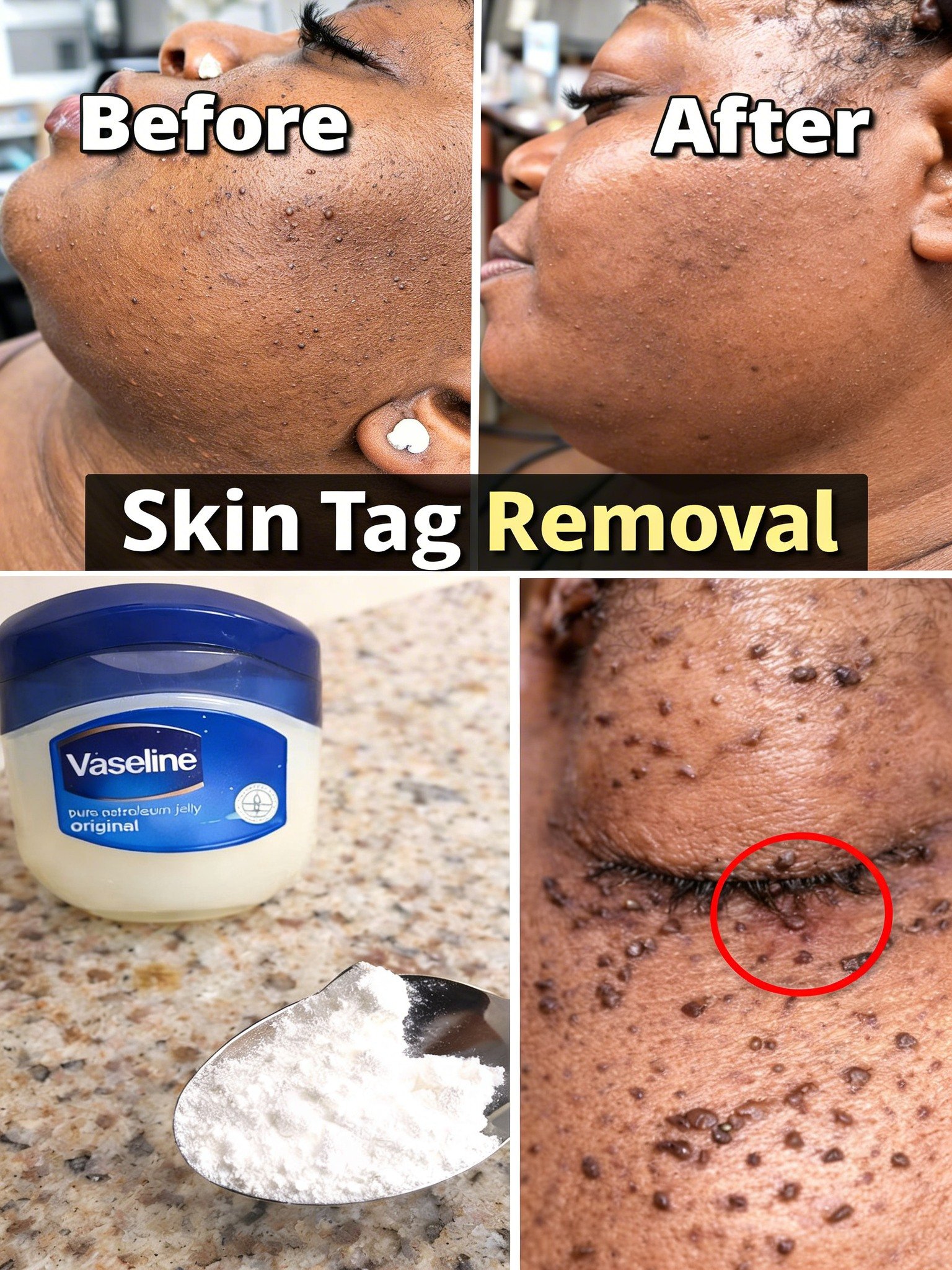
Skin tags are those small, soft, harmless growths that often appear in areas where skin rubs together, like the neck, armpits, or under the breasts. Many people feel self-conscious about them or find them irritating when jewelry or clothing catches on them. While they’re completely benign and don’t require removal, the desire to address them at home is understandable—especially when searching for gentle, everyday options.
But here’s something intriguing: some popular online discussions mention combining household staples like pure petroleum jelly (such as Vaseline) with other simple items in gentle routines. Could these everyday products play a role in exploring skin care for skin tags? We’ll dive into what’s commonly shared, why people try these ideas, and important considerations to keep in mind—plus safer perspectives from skin health experts. Stick around until the end for practical insights that might surprise you.
What Exactly Are Skin Tags and Why Do They Appear?
Skin tags, also known as acrochordons, are tiny flaps of extra skin that hang off a small stalk. They’re very common, especially as we age, and often show up in skin folds due to friction.
Factors like genetics, weight changes, pregnancy, or even diabetes can make them more likely to develop. The good news? They’re not contagious, cancerous, or a sign of anything serious in most cases.
Many people notice them more on areas with frequent movement or moisture, leading to curiosity about gentle at-home care routines.
Common Myths vs. Gentle Home Care Ideas for Skin Tags
Online forums and social media are full of stories about quick fixes for skin tags. But let’s be clear: no home method is proven to reliably remove them overnight or guarantee results. Scientific studies and dermatology sources generally note that most natural approaches lack strong clinical evidence and can sometimes lead to irritation.

Still, some people explore protective or moisturizing habits using items already in their bathroom cabinet. One frequently mentioned item is pure petroleum jelly, like Vaseline Original.
Why do people talk about Vaseline in skin tag discussions?
- It’s a simple occlusive that helps lock in moisture and create a barrier.
- In post-removal care (after professional procedures), dermatologists often recommend it to support healing and reduce scarring.
- Some anecdotal routines suggest applying it around the area to protect surrounding skin during experiments with other gentle applications.
However, sources like Healthline, WebMD, and Harvard Health emphasize that petroleum jelly itself doesn’t dry out or eliminate skin tags—it’s more about skin protection and comfort.
Popular Gentle Mixtures People Experiment With at Home
While no approach promises fast or certain changes, here’s what some share in online communities about combining Vaseline with other household items. Remember, these are unproven and shared for informational purposes only.
One variation involves mixing a small amount of Vaseline with a drying powder like baking soda to form a gentle paste:
- Clean the area thoroughly with mild soap and water, then pat dry.
- Apply a thin protective layer of pure petroleum jelly around (not directly on) the skin tag to shield nearby skin.
- Mix a tiny bit of baking soda with a drop of water or more Vaseline to create a mild paste.
- Dab a small amount onto the tag itself (avoid healthy skin).
- Cover loosely with a breathable bandage if needed.
- Rinse gently after several hours and moisturize the area.
Key precautions in these shared routines:
- Always patch-test on a small area first to check for sensitivity.
- Stop immediately if redness, burning, or discomfort occurs.
- Avoid sensitive spots like eyelids or genitals.
- Don’t pick or force anything off.
Other common mentions include tea tree oil diluted in a carrier (with Vaseline sometimes used as the base) or apple cider vinegar—soaked cotton—but experts warn these can irritate more than help, with little supporting research.

What Dermatologists Actually Recommend for Skin Tags
The most reliable path? Consulting a dermatologist. They can confirm it’s a skin tag (ruling out other growths) and offer quick, in-office options like:
- Snipping with sterile tools (often painless and instant).
- Freezing with cryotherapy.
- Cauterization or ligation.
These methods are safe, effective, and minimize risks like infection or scarring. Home attempts, even gentle ones, carry chances of irritation or incomplete results.
If a skin tag gets caught and bleeds, clean it gently and apply a thin layer of petroleum jelly to support natural healing—something doctors often suggest post-procedure.
Step-by-Step Gentle Home Care Routine to Consider
If you’re curious about supportive daily habits (not removal promises), try this simple, low-risk approach focused on comfort:
- Cleanse daily — Use a mild, fragrance-free soap on affected areas.
- Moisturize consistently — Apply pure petroleum jelly like Vaseline to keep skin soft and reduce friction.
- Protect from irritation — Wear loose clothing and avoid tight jewelry in prone spots.
- Monitor changes — Note any growth, color shift, or pain, and see a doctor promptly.
- Be patient — Skin health improves gradually with consistent care.
Bonus tips for everyday comfort:
- Stay hydrated and maintain steady weight to potentially reduce new ones.
- Use soft fabrics to minimize rubbing.
- Consider over-the-counter protective barriers if friction is an issue.
Wrapping It Up: Realistic Expectations and Next Steps
Exploring gentle home care with everyday items like Vaseline can be part of a broader skin comfort routine, but it’s not a substitute for professional advice. Skin tags are usually just a cosmetic concern, and many people live with them without issue. If they bother you, a quick dermatologist visit often provides the clearest path forward.
Prioritize safety, listen to your skin, and consult a healthcare professional for personalized guidance.

Frequently Asked Questions
Can Vaseline alone make skin tags disappear?
No, pure petroleum jelly is great for moisturizing and protecting skin, but there’s no evidence it removes skin tags on its own.
How long do home experiments typically take if people try them?
Anecdotal reports vary widely—some mention weeks of consistent application—but results aren’t guaranteed and irritation is a common concern.
When should I see a doctor about a skin tag?
If it changes in size/color, bleeds frequently, causes pain, or you’re unsure what it is—professional evaluation is always the smartest move.
Disclaimer: This article is for informational purposes only and not medical advice. Skin tags are generally harmless, but self-experimentation carries risks of irritation or infection. Always consult a qualified healthcare professional before trying any new routine or if you have concerns about your skin. Results vary, and no method guarantees outcomes.