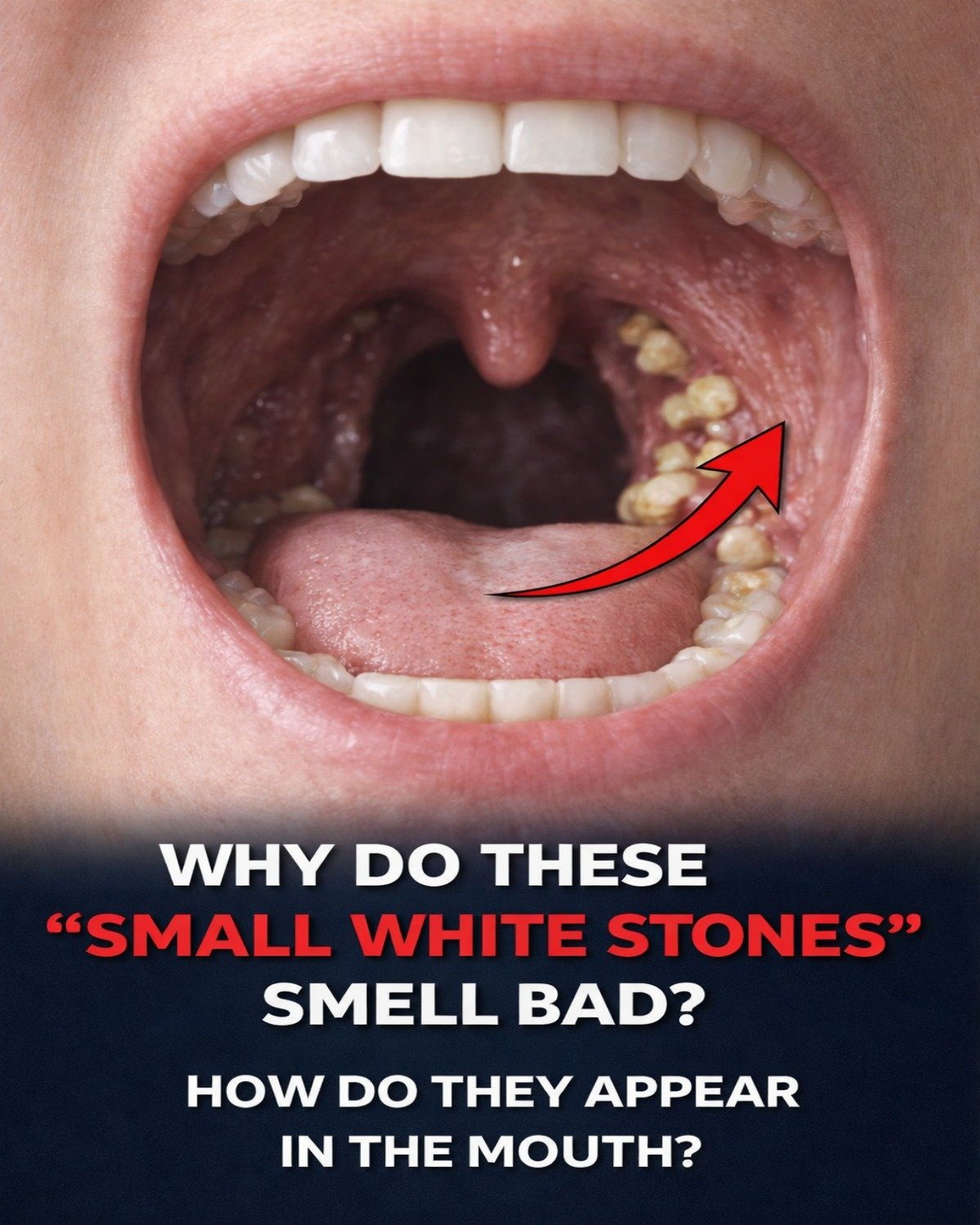
They’re surprisingly common, especially in people with deeper crevices in their tonsils, and while they’re usually harmless, the foul odor they produce can be embarrassing and persistent.
Here’s a clear breakdown of what they are, why they form, why they smell so bad, and what you can do about them.
What Exactly Are Tonsil Stones?
Tonsil stones are small, hard, pebble-like lumps that develop in the tonsils — the soft tissue pads at the back of your throat that help fight infections.
They typically look like tiny white or yellowish spots (sometimes off-white or pale), ranging from the size of a grain of rice to larger pea-sized pieces.
You might spot them when looking in a mirror with good light, feel them as something irritating stuck in your throat, or suddenly cough one out unexpectedly.
Why Do They Form?

Your tonsils have natural folds and pockets called crypts (think tiny craters on the surface).
These crypts can trap:
- Bits of food debris
- Dead skin cells from the mouth and throat
- Mucus (especially from post-nasal drip)
- Bacteria and sometimes fungi
Over time, this trapped material hardens as minerals like calcium deposit and calcify around it, turning the soft buildup into a solid “stone.”
People with larger or more irregular tonsils (deeper crypts) tend to get them more often.
Frequent tonsil infections (tonsillitis), poor oral hygiene, chronic sinus issues, or even dehydration can increase the chances because more debris and bacteria linger in the area.
Why Do They Smell So Bad?
The signature rotten-egg or cheesy stench comes from bacteria breaking down the trapped proteins in the debris.
These anaerobic bacteria (ones that thrive without oxygen) produce volatile sulfur compounds (VSCs) — the same smelly gases responsible for much of bad breath in general.
When the stone sits in the warm, moist crypt, bacteria multiply rapidly on its surface (forming a biofilm), releasing even more of these pungent compounds.

Even tiny, barely visible stones can create noticeable odor because the smell gets trapped and released when you talk, breathe, or dislodge them.
Common Symptoms Beyond the Stones Themselves
Many people have small tonsil stones without noticing any issues.
When symptoms do appear, they often include:
- Persistent bad breath (halitosis) that doesn’t improve much with brushing or mouthwash
- A metallic, foul, or bad taste in the mouth
- Feeling like something is stuck in your throat (globus sensation)
- Mild sore throat or irritation
- Occasional ear pain (referred pain from the throat)
- A chronic low-grade cough
Larger stones might cause more discomfort, but serious complications are rare.
How to Manage or Remove Them at Home
Most tonsil stones don’t require medical intervention and often dislodge on their own.
Safe at-home approaches include:
- Gargling vigorously with warm salt water several times a day — this can loosen small stones and reduce bacteria
- Coughing forcefully or clearing your throat to pop them out
- Using a low-pressure water flosser (oral irrigator) aimed carefully at the tonsils to flush out crypts
- Gentle removal with a clean cotton swab if the stone is visible and loose (never force it — avoid gagging or injury)
- Staying well-hydrated and practicing excellent oral hygiene: brush twice daily, floss, scrape your tongue, and use an alcohol-free mouthwash
Improving these habits often reduces how frequently new stones form.

When to See a Doctor
Consult a healthcare provider (like an ENT specialist) if:
- Stones are very large, painful, or recurrent
- You have frequent tonsil infections or chronic sore throat
- Bad breath persists despite good hygiene
- You experience swelling, fever, difficulty swallowing, or bleeding
In persistent cases, doctors can remove stones in-office using tools, or — for severe recurring problems — discuss options like tonsillectomy (tonsil removal), though this is usually a last resort.
Quick Prevention Tips
- Brush and floss thoroughly after meals
- Stay hydrated to keep saliva flowing (saliva naturally cleans the mouth)
- Gargle with salt water regularly if you’re prone to them
- Address allergies or sinus issues that cause excess mucus
- Avoid dairy if it seems to increase mucus and debris for you
Tonsil stones are annoying but almost never dangerous.
Understanding they’re just calcified buildup — not an infection or serious disease — often brings relief.
If the smell or irritation keeps bothering you, simple daily habits can make a big difference.
This information is for educational purposes only and not a substitute for professional medical advice.
If you’re concerned about symptoms in your mouth or throat, consult a doctor or dentist for personalized evaluation and guidance. Individual experiences vary.