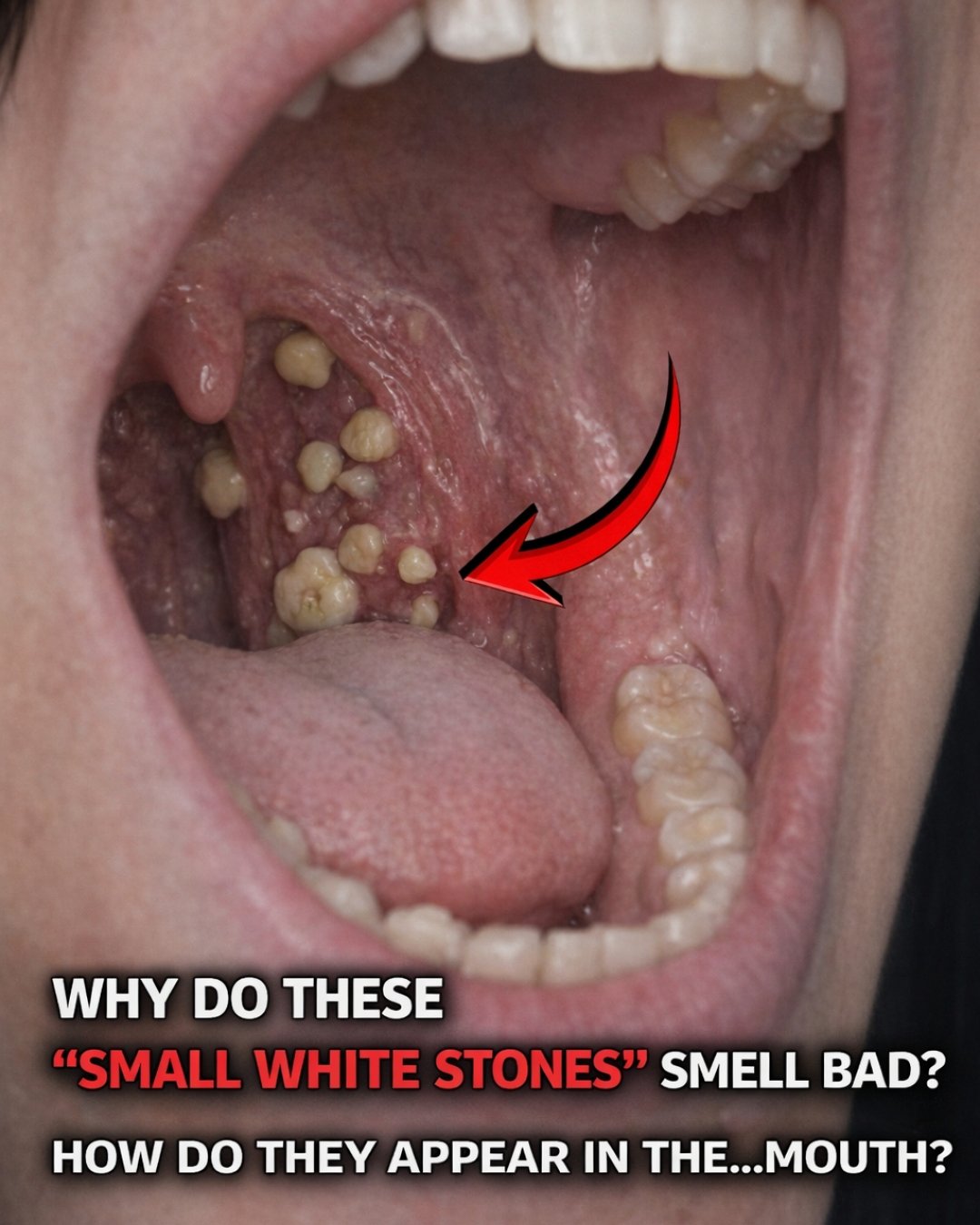
😮💨 What Are Those Smelly White “Stones” in Your Mouth That Cause Terrible Bad Breath?
The Truth About Tonsil Stones (Tonsilloliths)
You cough or clear your throat — and suddenly, a small hard lump pops out.
It’s white or yellowish.
And the smell… absolutely unbearable.
So strong it can make you gag.
These are tonsil stones, also known as tonsilloliths — one of the most overlooked causes of chronic bad breath, especially when brushing, flossing, and mouthwash don’t seem to help at all.
Many people suffer for years without realizing the problem isn’t their teeth — it’s hiding deeper in the throat.
🤔 What Exactly Are Tonsil Stones?
Tonsil stones are small calcified deposits that form inside the natural crevices of your tonsils, called crypts.
They develop when:
Food particles get trapped
Dead cells and mucus accumulate
Anaerobic bacteria feed on this material
Minerals in saliva (calcium, phosphorus, magnesium) harden the debris
Over time, everything solidifies into small “stones.”
They can be:
As tiny as a grain of rice
Or as large as a pea
Some people get one occasionally.
Others develop several every week.
🤢 Why Do Tonsil Stones Smell So Bad?
Because the bacteria living inside them produce volatile sulfur compounds (VSCs) — the same gases responsible for:
Rotten egg smell

Sulfur odor
Severe halitosis

Even one tiny stone can make your breath smell worse than garlic or onions for hours.
This is why normal mouthwash often fails — it doesn’t reach where the smell actually comes from.
🚨 8 Common Signs You May Have Tonsil Stones
(Even if you can’t see them)
Persistent bad breath that doesn’t improve with oral hygiene
Bad or metallic taste at the back of the throat
Frequent sore throat or feeling something stuck
White or yellow spots on the tonsils
Ear pain (shared nerve pathways)
Mild recurring tonsillitis
Small hard lumps you occasionally cough out
Difficulty swallowing or constant throat clearing
Many people experience several of these without ever connecting them to tonsil stones.
👥 Who Is More Likely to Get Them?
Tonsil stones are more common in:
People with large or deeply “cryptic” tonsils
Teenagers and young adults
Those with post-nasal drip
Chronic sinus issues or allergies
People who had frequent tonsillitis in childhood

They are not caused by poor hygiene — anatomy plays a major role.
🏠 How to Reduce and Manage Tonsil Stones at Home
👉 Gentle removal (only if visible)
Use a clean cotton swab
Or a low-pressure oral irrigator
Never force or dig deeply
After removal, always gargle with warm salt water.
🔁 Daily prevention routine
Consistency matters more than force.
Gargle every night with warm salt water or alcohol-free mouthwash
Use an oral irrigator gently near the tonsils
Stay well hydrated (dry mouth promotes stones)
Scrape your tongue daily
Consider nasal rinsing if mucus is constant
Many people see improvement within 5–10 days.
🌿 Natural Tonsil Spray Many People Use
Some prefer a simple homemade spray to help loosen stones and reduce bacteria.
You’ll need:

200 ml warm water
1 teaspoon salt
3–4 drops grapefruit seed extract
or food-grade peppermint essential oil
Spray lightly toward the tonsil area 3–4 times per day.
Many users report that stones loosen, shrink, or fall out naturally after a few days.
🩺 When to See a Professional
Seek medical or dental evaluation if:
Stones are larger than 5–6 mm
You experience bleeding
One tonsil stays swollen on only one side
Infections keep returning
A professional can discuss deeper cleaning methods or long-term options if needed.
📊 Quick Comparison of Approaches
| Method | Reduces Bad Breath | Removes Stones | Prevents New Ones | Cost |
|---|---|---|---|---|
| Mouthwash alone | Temporary | ❌ | Low | $$ |
| Salt water + irrigator | ✅ | ✅ | Very good | $ |
| Professional procedures | ✅ | ✅ | Long-lasting | $$$$ |
Many people who follow a simple nightly gargle + gentle irrigation routine stop forming tonsil stones completely — and notice fresher breath fast.
💡 Final Message
You’re not unhygienic.
Your tonsils simply have deep crypts.
With the right daily routine and gentle care, your body can naturally clear out the remaining stones — often within days.
Fresh breath is possible again.
Disclaimer:
This content is for informational purposes only and does not replace professional medical advice. If symptoms persist, worsen, or cause pain, consult a qualified healthcare provider.