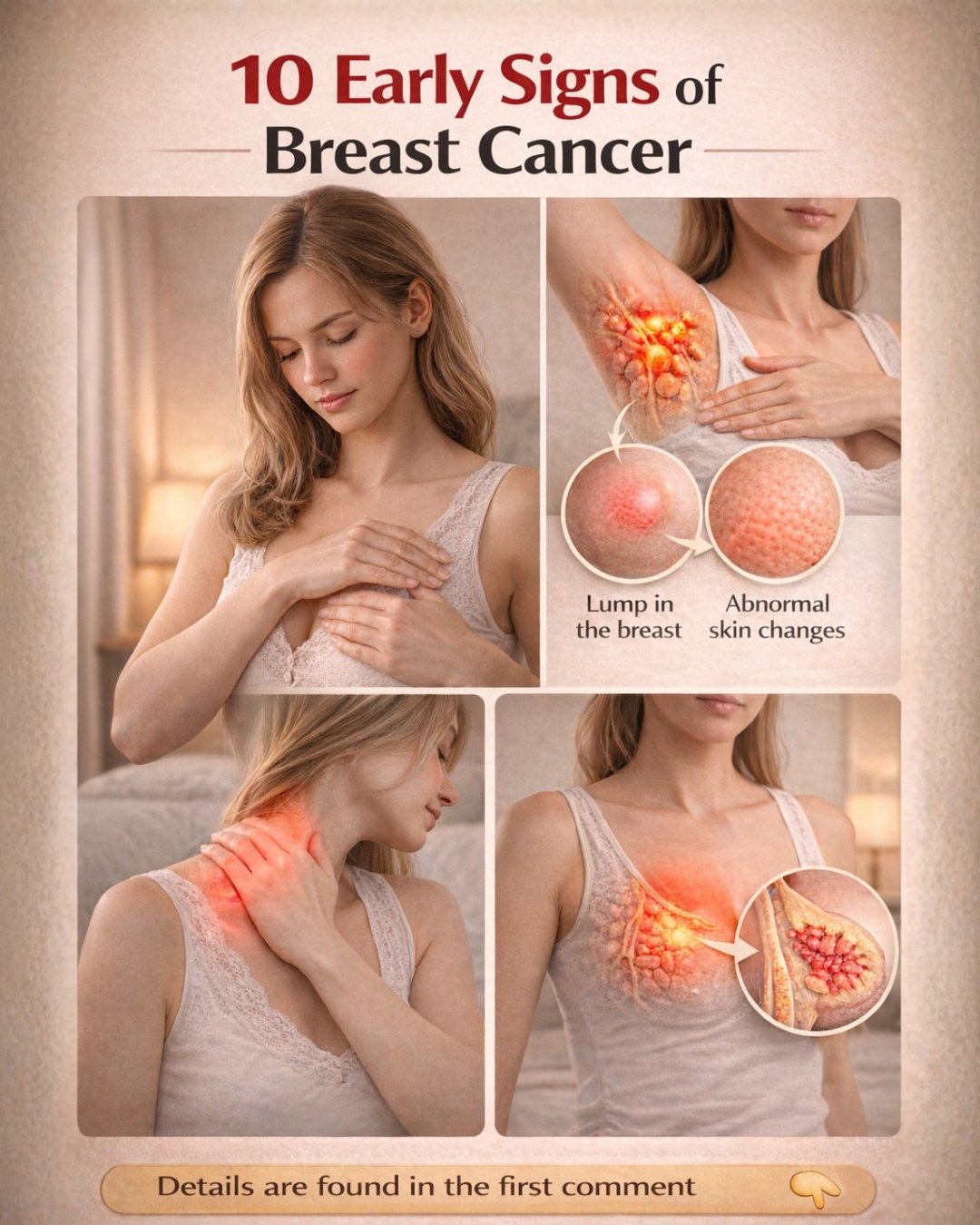
10 Warning Signs of Breast Cancer You Should Never Ignore
Paying Attention to Breast Changes: Possible Early Signs of Breast Cancer
Many women notice small changes in their breasts and brush them off, assuming they’re caused by hormonal shifts, stress, or temporary irritation. Life is busy, and it’s easy to think, “It will go away.” However, in some cases, these subtle changes can be early warning signs of breast cancer. Ignoring them may allow a highly treatable condition to progress into something far more serious.
The good news is this: when breast cancer is detected early, outcomes improve dramatically. Awareness truly saves lives.
Below are 10 important warning signs of breast cancer that everyone—women and men—should watch for closely. Sometimes, even one of these signs may indicate that cancer has already begun to spread. Knowing what to look for empowers you to act sooner.
Why Early Detection Matters So Much
Breast cancer often begins silently, developing inside the milk ducts or lobules without obvious symptoms. When detected early—before it spreads beyond the breast—the 5-year survival rate is about 99%, according to the American Cancer Society.
Once cancer spreads to nearby lymph nodes or distant organs, survival rates drop significantly. Research consistently shows that routine screenings and paying attention to bodily changes lead to diagnosis at earlier stages, when treatment is more effective and less invasive.
In 2025, an estimated 316,950 new cases of invasive breast cancer will be diagnosed in women in the United States, along with approximately 2,800 cases in men. At the same time, more than 4 million survivors stand as proof that early detection works.
Many delays happen because people wait, hoping symptoms will disappear on their own. Knowledge changes that pattern.
10 Possible Warning Signs of Breast Cancer
10. Unexplained Changes in Breast Size or Shape
A sudden change in the size, shape, or position of one breast—without pregnancy, weight change, or hormonal explanation—can be an early sign.
Red flags include:
Affects only one breast
Lasts longer than two weeks
Unrelated to your menstrual cycle

A feeling of heaviness or firmness

Tip: Take monthly photos of your breasts using the same lighting and position to catch subtle changes over time.
9. Skin Dimpling or Texture Changes
If the skin of the breast begins to look puckered, dimpled, or like orange peel, take it seriously.
This can happen when cancer cells block lymphatic vessels beneath the skin, pulling it inward. It’s often linked to invasive breast cancers.
How to check:
Stand with arms at your sides
Raise arms overhead and observe the skin
Press hands on hips to flex chest muscles
Gently pinch the skin to check for tethering
Any new dimpling should be medically evaluated.
8. Persistent Itching, Redness, or Irritation
Itching that lasts for weeks—especially with redness, warmth, or swelling—may not be a simple skin issue.
These symptoms can indicate inflammatory breast cancer, a rare but aggressive form that accounts for about 1–5% of cases and is often mistaken for infection or dermatitis.
7. Hard Lumps or Thickened Areas
A hard, irregular, fixed lump beneath the skin is a classic warning sign. Unlike benign cysts, cancerous lumps are often firm, immobile, and painless.
6. Persistent Breast or Nipple Pain
Most breast pain is harmless, but localized, persistent pain that doesn’t follow your menstrual cycle deserves careful attention.

5. Unexplained Swelling of the Breast or Armpit
Breast cancer doesn’t always appear as a clear lump. Sometimes it causes diffuse swelling of the breast or enlargement of lymph nodes in the armpit.
4. Nipple Retraction or Inversion
A nipple that suddenly turns inward when it previously pointed outward is an important warning sign and should not be ignored.
3. Redness, Scaling, or Thickening of the Nipple or Areola
Persistent redness or flaking around the nipple may signal Paget’s disease of the breast, a rare condition often associated with an underlying cancer.
2. Unusual Nipple Discharge
Any discharge not related to breastfeeding should be taken seriously—especially if it happens spontaneously.
Bloody discharge: highest level of concern
Clear or colored discharge: still requires evaluation
1. Swollen Lymph Nodes Near the Armpit or Collarbone
Enlarged, hard lymph nodes may indicate that cancer has started spreading beyond the breast.
Breast Health Action Plan
Perform a monthly breast self-exam
Schedule annual clinical exams and mammograms
Track changes with photos or a journal
Discuss your family history with your doctor
Higher risk factors include:

Age 40 and above
Family history of breast cancer
BRCA gene mutations
High breast density
When to Seek Urgent Medical Care
Contact a healthcare professional immediately if you experience:
Bloody nipple discharge with a lump
Rapid redness, swelling, and warmth of the breast
A fixed lump along with swollen lymph nodes
Conclusion: Awareness Is a Form of Strength
Understanding these ten warning signs of breast cancer gives you back control. Acting early can turn fear into prevention and uncertainty into strength.
Share this information, prioritize screenings, and listen to your body. Early detection saves lives—including yours.