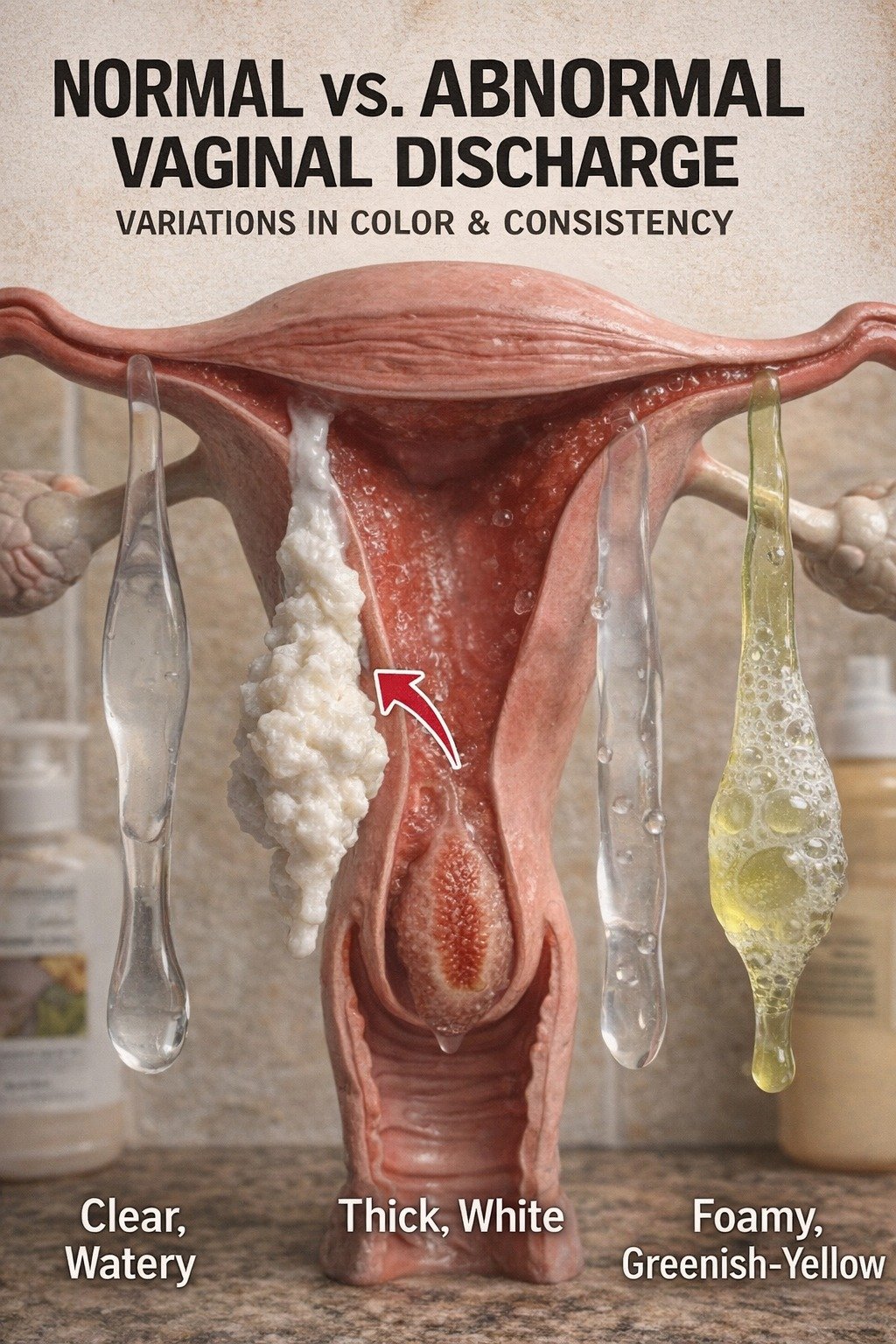
Vaginal discharge is a completely normal and healthy part of female physiology at every age after puberty. It is produced by glands in the cervix and vagina and serves important functions: cleaning the vagina, keeping it lubricated, protecting against infection, and maintaining a healthy acidic environment (pH 3.8–4.5).
However, changes in color, consistency, amount, smell, or accompanying symptoms can signal something that needs attention — from minor imbalances to infections or, rarely, more serious conditions.
Normal Vaginal Discharge – What to Expect
Appearance & consistency

- Clear or white
- Thin and watery (especially mid-cycle around ovulation)
- Thick and sticky (before or after period)
- Milky or creamy (common in luteal phase or pregnancy)
Amount
Varies greatly between women and throughout the cycle — from almost none to 1–2 teaspoons per day at peak ovulation.
Smell
Mild or odorless — may be slightly musky/sour due to lactobacilli (good bacteria).
Cycle-related patterns
- Follicular phase (days 1–14): usually clear & watery, increases toward ovulation
- Ovulation (around day 14): egg-white consistency (stretchy, slippery)
- Luteal phase (days 15–28): thicker, white/creamy
- Menopause / post-menopause: usually much less discharge, often dry or minimal
When Vaginal Discharge Becomes Abnormal – 7 Key Warning Signs
- Strong fishy odor (especially after sex or during period)
→ Classic sign of bacterial vaginosis (BV) — pH rises, lactobacilli die off, anaerobic bacteria overgrow. - Thick, white, cottage-cheese-like discharge + intense itching/burning
→ Most common presentation of vulvovaginal candidiasis (yeast infection). - Yellow, green, frothy, or pus-like discharge + foul odor + itching/pain
→ Suggests trichomoniasis (STI caused by Trichomonas vaginalis) or other infections. - Grayish-white discharge with fishy smell + no major itching
→ Strong indicator of bacterial vaginosis. - Watery, blood-tinged, or brown discharge after menopause
→ Must be investigated urgently — possible endometrial or cervical cancer, atrophy, or polyps. - Increased discharge with pelvic pain, fever, or painful intercourse
→ May indicate pelvic inflammatory disease (PID) — often from untreated STIs (chlamydia, gonorrhea). - Any sudden change in discharge + unusual bleeding (especially between periods or after intercourse)
→ Can signal cervical or endometrial issues, infection, or hormonal imbalance.
Quick Reference Chart – Normal vs. Concerning Discharge
| Type | Color | Consistency | Odor | Itching/Burning | Likely Cause / Action Needed |
|---|---|---|---|---|---|
| Normal (mid-cycle) | Clear | Watery, stretchy | None/mild | None | Ovulation – no action needed |
| Normal (luteal phase) | White | Creamy/thick | None/mild | None | Progesterone dominant – no action |
| Bacterial Vaginosis | Gray/white | Thin, homogeneous | Strong fishy | Mild or none | Needs antibiotic (metronidazole/clindamycin) |
| Yeast Infection | White | Thick, cottage-cheese | None or yeasty | Intense | Needs antifungal (fluconazole or topical) |
| Trichomoniasis | Yellow/green | Frothy | Foul/fishy | Moderate-strong | Needs antibiotic (metronidazole) + partner treatment |
| Postmenopausal bleeding | Pink/brown/red | Watery or any | Variable | Variable | Urgent gynecological evaluation (biopsy often needed) |
| Gonorrhea/Chlamydia | Yellow/green | Pus-like | Foul | Moderate | Urgent – antibiotics + partner treatment |
When to See a Gynecologist (Don’t Wait)
Urgent (same day or next day)

- Any postmenopausal bleeding/spotting
- Sudden foul-smelling discharge + fever + pelvic pain
- Severe itching/burning + thick discharge
Within 1–2 weeks
- Persistent fishy odor + thin discharge
- Yellow/green discharge + discomfort
- Any change lasting >2–3 weeks + other symptoms (pain, bleeding)
Routine check
- Annual gynecological exam (even without symptoms)
- Pap/HPV testing per guidelines (usually every 3–5 years)
- Any time you feel “something is different”
Bottom Line
Vaginal discharge is normal and healthy — but changes in color, consistency, odor, amount, or associated symptoms are not something to ignore. Most causes (BV, yeast, trich) are easily treatable when caught early. Serious causes (cancer, PID) are rare but far more treatable when detected promptly.
You know your body best. Trust persistent changes that feel abnormal or worsening.

Action step tonight
Look at today’s discharge (if any) — note color, consistency, smell.
Compare to your normal pattern over the last few weeks.
If anything feels different for >2 weeks — especially odor + color change — schedule a gynecologist visit this month.
Disclaimer
This article is for informational purposes only and is not medical or gynecological advice. Abnormal discharge, odor, pain, bleeding after menopause, or any concerning symptom requires professional evaluation. Many causes are benign (hormonal, BV, yeast), but some are serious (cancer, STI, PID). Never self-diagnose or self-treat persistent symptoms. Early diagnosis dramatically improves outcomes. Follow evidence-based gynecological screening guidelines for your age and risk factors. Personalized medical ssessment is essential.