
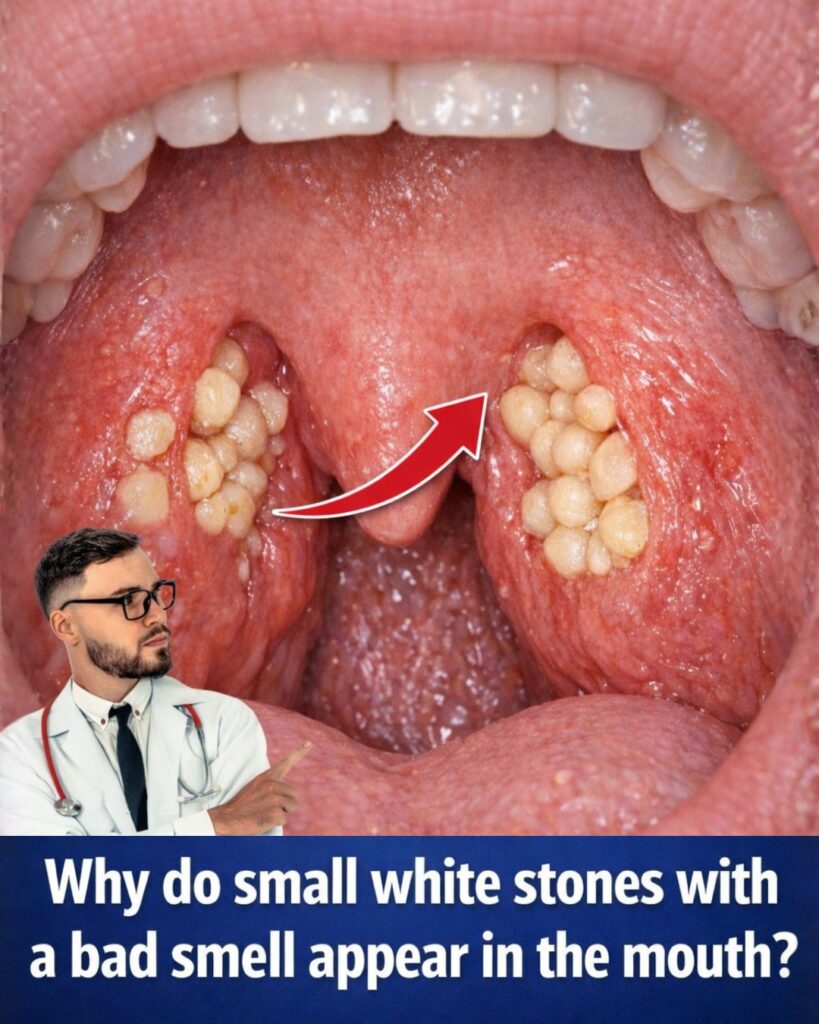
😮💨 What Are Those Smelly “White Stones” in Your Mouth That Cause Terrible Bad Breath?
(The Truth About Tonsil Stones — Tonsilloliths)
You cough or clear your throat and suddenly a small, hard, white or yellowish lump pops out—smelling so bad it makes you gag. That awful odor can linger for hours.
Those are tonsil stones (tonsilloliths)—one of the most common hidden causes of persistent bad breath that often doesn’t improve with brushing, flossing, or mouthwash.
🤔 What exactly are tonsil stones?
Tonsil stones are calcified deposits that form inside the natural crevices (“crypts”) of your tonsils when:
Food particles, dead cells, and mucus get trapped
Bacteria (especially anaerobic types) feed on that debris
Minerals in saliva—like calcium, phosphorus, and magnesium—harden the material into small “stones”
They can be as tiny as a grain of rice or as large as a pea. Some people get them once in a while; others form several every week.
🤢 Why do they smell so bad?
The bacteria inside tonsil stones produce volatile sulfur compounds—the same gases responsible for the smell of rotten eggs.
Just one small stone can make your breath worse than garlic for hours.
🚨 8 common signs you might have tonsil stones
(even if you can’t see them)
Persistent bad breath that doesn’t improve with good oral hygiene
A bad or metallic taste at the back of the throat
Frequent sore throat or the feeling of something stuck
White or yellowish spots on the tonsils
Ear pain (shared nerve pathways)
Swollen tonsils or mild, recurring tonsillitis
Small hard lumps you occasionally cough up
Difficulty swallowing or constant throat clearing

👥 Who is more likely to get them?
People with large or deeply “cryptic” tonsils
Teenagers and young adults
Those with post-nasal drip or chronic sinus issues
People who had frequent tonsillitis as children
🏠 How to reduce and deal with them at home
👉 Careful removal (when visible)
Use a clean cotton swab or a low-pressure oral irrigator
Gargle immediately with warm salt water afterward

🔁 Daily prevention routine
Gargle every night with warm salt water or an alcohol-free mouthwash
Gently use an oral irrigator around the tonsil area
Stay well hydrated (dry mouth favors stone formation)
Scrape your tongue and consider nasal rinsing if you have constant mucus
🌿 A natural spray many people use
Mix in a small spray bottle:
200 ml warm water
1 teaspoon salt
3–4 drops grapefruit seed extract or food-grade peppermint essential oil
Spray only on the tonsil area 3–4 times a day.
Many people report that stones shrink or loosen within a few days.
🩺 When to see a professional
Stones larger than 5–6 mm or very painful
Bleeding when trying to remove them
Persistent swelling on one side only
Recurrent infections (a professional can discuss definitive options)

📊 Quick comparison of approaches
Mouthwash only: temporary breath improvement, doesn’t remove stones, low prevention, $$
Salt water + irrigator: improves breath, removes stones, very good prevention, $
Professional procedures: improves breath, removes stones, long-lasting results, $$$$
👉 Many people who adopt the simple gargling + irrigator routine stop getting stones—and notice their breath improves quickly.
💡 Final message
You’re not careless—your tonsils just have deep crypts.
Start tonight with regular gargling and good oral hygiene habits. In a few days, your body may naturally clear the remaining stones.
Disclaimer: This content is for informational purposes only and does not replace medical advice. If symptoms persist or cause significant pain, consult a healthcare professional.
