Is Your Sleep Position Affecting Your Rest? Why the Side You Choose Matters
Many people fall asleep comfortably on their right side, only to wake up feeling tired, bloated, or slightly uncomfortable in the chest. It can be frustrating when a full night’s sleep doesn’t leave you feeling refreshed. If right-side sleeping has become your default position, it may be worth exploring whether a simple adjustment could improve how you feel each morning. Research suggests that body position during sleep can influence digestion, circulation, and overall comfort.
Why Side Sleeping Is So Common
Side sleeping is the most popular sleeping position among adults, with more than half of people preferring it. It often feels natural and secure, and many find it helps reduce snoring and supports easier breathing compared to sleeping on the back or stomach. Side sleeping can also keep the spine more aligned than stomach sleeping, making it a comfortable choice for long periods of rest.
However, not all side sleeping is the same. Because the body’s internal organs are not perfectly symmetrical, consistently sleeping on one side may affect how gravity interacts with your organs overnight.
Possible Downsides of Sleeping on the Right Side
Right-side sleeping isn’t necessarily harmful, but some research suggests it may contribute to certain issues for some individuals:
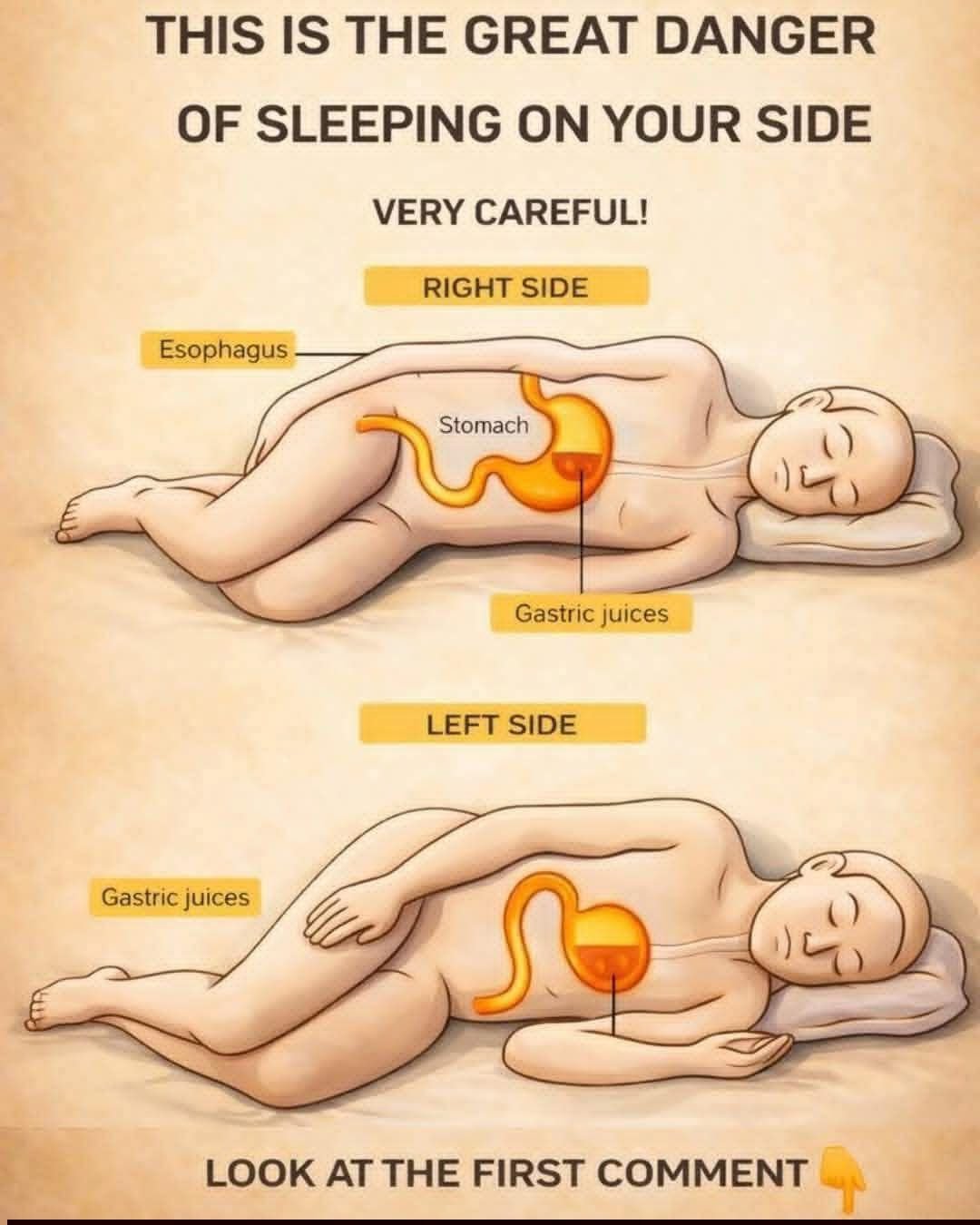
Digestive discomfort and heartburn: Stomach acid may flow more easily into the esophagus when lying on the right side, increasing the chance of reflux.
Organ pressure: The liver sits primarily on the right side, and extended pressure could influence comfort in some people.
Circulation effects: The inferior vena cava, a major vein returning blood to the heart, runs along the right side and may experience mild pressure depending on body position.

Lymphatic flow considerations: Some researchers note that lymphatic drainage pathways align more naturally when lying on the left side.

It’s important to remember that many people sleep comfortably on their right side without problems. However, if you experience digestive issues or restless sleep, your sleeping position may be worth reconsidering.
Why Experts Often Recommend Left-Side Sleeping
Research has highlighted several potential benefits of left-side sleeping:
Improved digestion: Gravity may help food move more smoothly through the digestive system.
Reduced nighttime heartburn: The stomach’s position relative to the esophagus can help limit acid reflux episodes.
Better circulation: Reduced pressure on major blood vessels may support healthy blood flow.
Enhanced lymphatic drainage: The body’s natural waste-removal pathways may function more efficiently.
Overall, side sleeping—especially on the left—may help promote more restorative rest for many individuals.

Other Sleeping Positions: Pros and Cons
Back sleeping may help maintain neutral spine alignment but can increase snoring or breathing issues for some people.
Stomach sleeping may feel cozy initially but can strain the neck and spine and make deep breathing more difficult.
For many people, side sleeping offers the best balance of comfort and health benefits.
Tips for Switching to Left-Side Sleeping
Changing sleep habits takes time, but small adjustments can help:
Start by falling asleep on your left side, even if you move during the night.
Use pillows for support—place one behind your back and another between your knees.
Choose a medium-firm pillow to keep your neck aligned.
Avoid heavy meals close to bedtime.
Track how you feel after a week or two of practice.

Extra Habits for Better Sleep
Maintain a consistent sleep schedule.
Keep your bedroom cool, dark, and quiet.
Limit screen time before bed.
Practice relaxation techniques such as gentle stretching or deep breathing.
Final Thoughts
Your sleep position may have a bigger impact on your rest than you realize. While right-side sleeping is comfortable for many people, left-side sleeping may offer added benefits for digestion, circulation, and overall sleep quality. With the right support and healthy bedtime habits, a small change in position could help you wake up feeling more refreshed and energized.
Disclaimer: This information is for educational purposes only and is not a substitute for medical advice. If you have ongoing sleep problems or health concerns, consult a healthcare professional for personalized guidance.