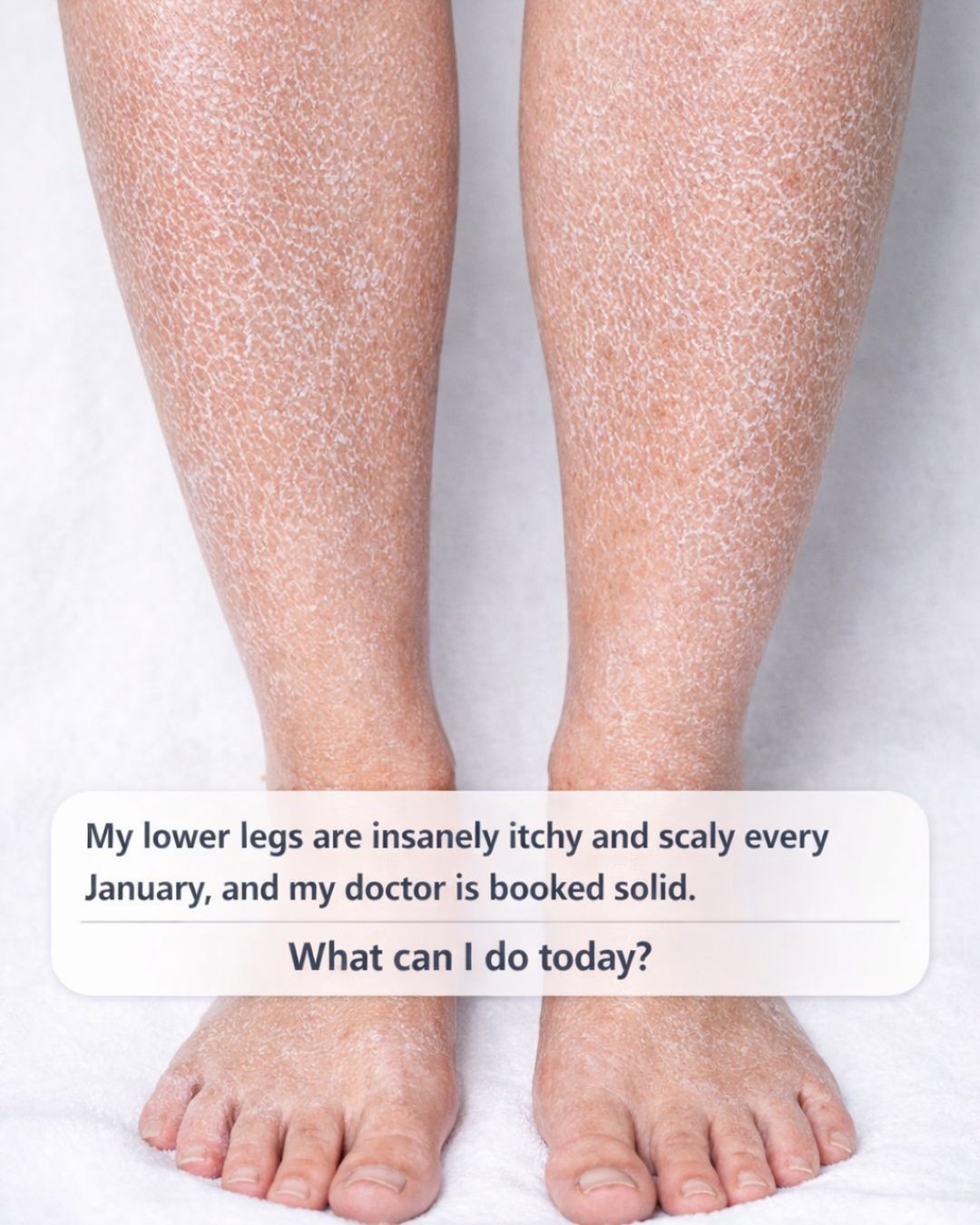
My Lower Legs Are Insanely Itchy and Scaly Every January — What Can I Do Today?
By Holly Owens, Contributing Writer
Every January, right after the holidays fade and winter fully settles in, a familiar problem returns for many people: unbearably itchy, flaky lower legs. What starts as mild dryness can quickly turn into relentless scratching, visible scales, and irritated skin that refuses to calm down.
If your doctor’s schedule is packed and you need relief now, you’re not alone — and you’re not out of options.
Winter-related skin problems are extremely common, especially on the lower legs. The good news? There are practical, dermatologist-approved steps you can take today to reduce itching, repair your skin barrier, and stop the cycle before it gets worse.
Let’s break it down.

1. Why Your Lower Legs Freak Out Every January
Winter creates the perfect environment for dry, irritated skin.
As temperatures drop, humidity levels fall — both outdoors and indoors. Heating systems pull moisture from the air, leaving your skin dehydrated. The lower legs are especially vulnerable because they naturally have:
Fewer oil glands
Thinner skin
Reduced blood circulation compared to other areas
This means they lose moisture faster and recover more slowly.
Add in hot showers, harsh soaps, and heavy winter clothing rubbing against already-dry skin, and January becomes prime time for itching, flaking, and scaling.
2. How To Tell If It Might Be Asteatotic Eczema (a.k.a. Winter Itch)
Not all dry skin is the same.
Asteatotic eczema — commonly called winter itch — has distinct signs:
Fine cracks forming a “dry riverbed” pattern
Red or pink irritation under flaky skin
Persistent itching that doesn’t improve with light lotion
Tightness or mild burning sensations
Unlike simple dryness, winter itch often continues even when you moisturize occasionally. It usually appears on the lower legs first and can worsen quickly without proper care.
3. The Immediate “Do No Harm” Rule: Stop These Common Irritants Today
Before adding treatments, remove what’s making things worse.
Stop using:
Fragranced body washes
Deodorant soaps
Exfoliating scrubs
Alcohol-based skincare products
These strip the skin’s protective barrier and intensify inflammation.
Also reconsider clothing:
Wool and synthetic fabrics can trigger itching

Tight pants increase friction

Switch to loose, soft, breathable cotton whenever possible.
Sometimes relief begins simply by stopping the damage.
4. Switch To A Short, Lukewarm, Fragrance-Free Shower Routine Tonight
Hot showers feel comforting in winter — but they’re one of the biggest culprits behind dry, itchy legs.
Instead:
Keep showers under 10 minutes
Use lukewarm (not hot) water
Choose fragrance-free, gentle cleansers
Avoid lathering your legs aggressively. Cleanse lightly and let water do most of the work.
After showering, pat your skin dry — never rub.
5. The 3-Minute Rule: Lock In Moisture Right After You Towel Off
This step matters more than most people realize.
Within three minutes of stepping out of the shower, your skin is still slightly damp. That moisture can either evaporate — or be sealed in.
Immediately apply moisturizer to your lower legs during this window to dramatically improve hydration.
This simple timing trick often makes the difference between temporary relief and real improvement.
6. Thick, Greasy, and Boring: The Kind of Moisturizer That Actually Works
When skin is severely dry, lotions usually aren’t enough.
What works best:
Ointments
Thick creams
Petrolatum-based products
They may not feel elegant, but they:
Create a protective seal
Prevent moisture loss
Allow cracked skin to heal
Look for ingredients like:
Ceramides
Glycerin
Petrolatum
Shea butter

Apply generously, especially before bed.
7. Strategic Use of OTC Hydrocortisone: When and How To Try It Safely
If itching becomes intense or inflamed, over-the-counter hydrocortisone (1%) can help.
Use it:
Once or twice daily
Only on visibly irritated areas
For no more than 5–7 days
Apply a thin layer, then follow with moisturizer after it absorbs.
Avoid long-term use without medical guidance, as steroid overuse can thin the skin.
8. Viral TikTok Hacks for Itchy Skin: What Helps and What to Skip
Social media is full of skin “fixes,” but not all are safe.
May help:
Colloidal oatmeal baths (anti-inflammatory)
Oatmeal-based creams
Skip entirely:
Lemon juice
Baking soda
Apple cider vinegar
Essential oils on broken skin
These disrupt skin pH and often worsen irritation — especially on winter-damaged legs.
When in doubt, simple and boring usually wins.
9. Easy Clothing and Laundry Tweaks That Calm Angry Winter Skin
Small changes can have a big impact.
Wear:
Loose cotton pants
Soft leggings without compression
Breathable fabrics
In your laundry routine:
Use fragrance-free detergent
Avoid fabric softeners
Add an extra rinse cycle

Residue left in clothing is a common trigger for chronic itching.
10. Humidify Your Space: Simple Home Fixes That Make a Big Difference
Dry indoor air keeps skin from healing.
Using a humidifier can:
Reduce moisture loss
Improve overnight skin recovery
Decrease itching intensity
Aim for indoor humidity between 30–50%.
Place humidifiers in bedrooms or living spaces, and clean them regularly to avoid mold.
11. When Itching Isn’t “Just Dry Skin”: Red Flags You Shouldn’t Ignore
Seek medical care if you notice:
Cracks that bleed or ooze
Thickened or discolored patches
Severe itching disrupting sleep
No improvement after 2–3 weeks of proper care
Conditions like psoriasis, fungal infections, or systemic issues can mimic winter itch and require targeted treatment.
12. How To Document Your Symptoms So Your Doctor Visit Counts
When you do get an appointment, preparation helps.
Track:
When symptoms started
What makes them worse or better
Products used
Photos taken weekly
Bring this information with you — it can significantly speed up diagnosis and improve treatment accuracy.
Final Thought
January itch doesn’t mean you’re doing something wrong — it means your skin is struggling against winter conditions.
With the right routine, gentler habits, and consistent moisture support, most people can calm itchy, scaly legs within days — even before seeing a doctor.
Sometimes, relief isn’t about doing more.
It’s about doing the right things — starting today.