
If You Feel Numbness in Your Hands and Feet, Here’s What It Could Mean
Feeling tingling, numbness, or a “pins and needles” sensation in your hands and feet is more common than many people think. Sometimes it lasts only a few minutes. Other times, it keeps coming back — and that’s when it starts to feel worrying.
So what does it actually mean when your hands or feet go numb?
Let’s break it down in a clear, simple way.
What Is Numbness and Tingling?
Numbness (also called paresthesia) happens when nerves are irritated, compressed, or not getting proper signals. It may feel like:
Tingling
Burning
“Electric” sensations
Partial loss of feeling
Cold or heavy hands and feet
These sensations usually point to a nerve-related issue, not a muscle problem.
1. Nerve Compression (Very Common)
One of the most frequent causes is pressure on nerves.
Examples include:
Sleeping in an awkward position
Sitting cross-legged for too long
Leaning on your elbows or wrists
Repetitive hand movements
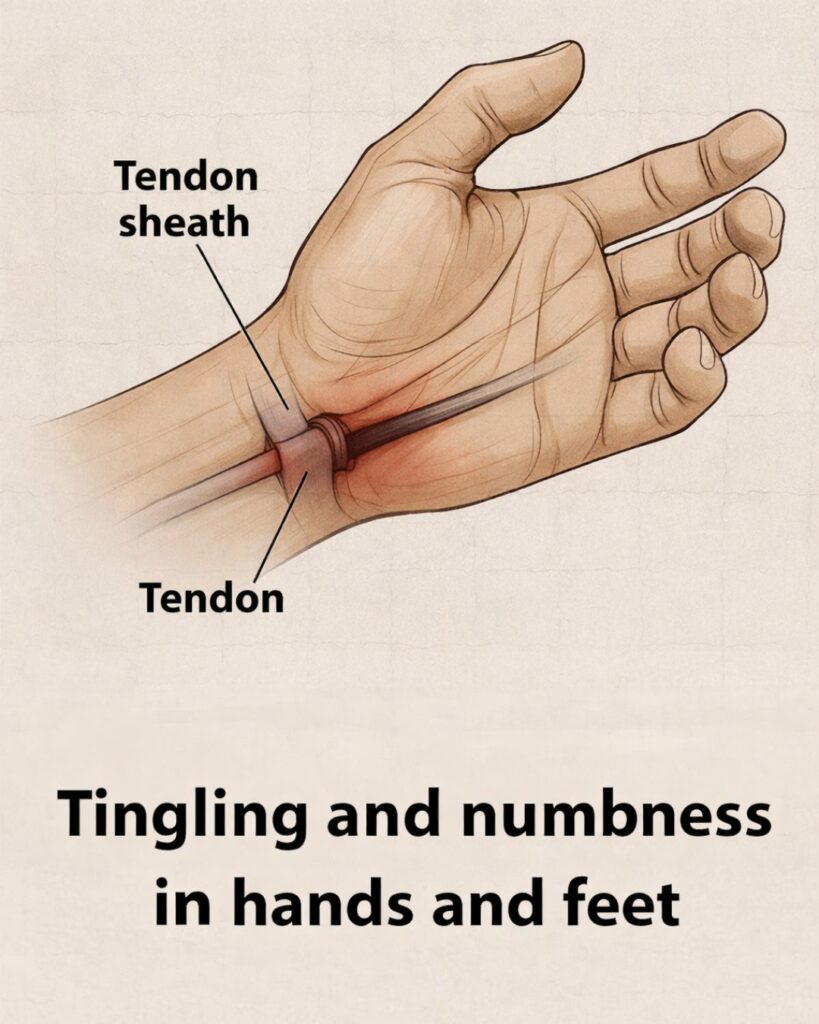
A common condition shown in the image is carpal tunnel syndrome, where the median nerve is compressed at the wrist due to inflammation of the tendon sheath.
Typical signs:
Tingling in fingers
Promoted Content
Weak grip

Numbness at night
Pain traveling up the arm





2. Poor Blood Circulation
Reduced blood flow can also cause numbness in hands and feet.
Possible reasons include:
Long periods without movement
Cold temperatures
Tight footwear
Smoking
Circulatory issues
When blood flow decreases, nerves receive less oxygen, triggering tingling sensations.
3. Vitamin Deficiencies
Low levels of certain vitamins — especially vitamin B12, B6, and folate — can directly affect nerve health.
Signs may include:
Persistent numbness
Fatigue
Weakness
Memory fog
This is especially common in people who:
Follow restrictive diets
Have digestive issues
Promoted ContentConsume little animal-based food




4. Stress and Anxiety
Stress doesn’t just affect the mind — it strongly affects the nervous system.
During anxiety or panic:
Breathing becomes shallow
Oxygen levels shift
Muscles tense
Nerves become overstimulated
This can cause temporary numbness, especially in fingers, toes, and lips.
5. Blood Sugar Imbalance
High or unstable blood sugar levels can damage small nerves over time, especially in the hands and feet.
Early symptoms may include:
Tingling at night
Burning feet
Reduced sensation
This is one of the earliest warning signs associated with nerve sensitivity related to glucose imbalance.
6. Inflammation and Tendon Irritation
Inflammation around tendons — such as tendon sheath swelling — can compress nearby nerves.
This often occurs due to:
Repetitive motions
Overuse of hands
Typing or phone use
Manual labor
Promoted Content



The image highlights this mechanism clearly: swollen tendon structures reduce space for nerves, leading to numbness.

When Should You Pay Attention?
Occasional numbness is usually harmless.
But you should not ignore it if:
It happens frequently
It affects both sides of the body
It worsens over time
It comes with weakness or pain
It interferes with daily activities
Persistent symptoms deserve proper evaluation.
Simple Habits That May Help
While causes vary, these habits often support nerve health:
Take breaks from repetitive movements
Stretch hands, wrists, and ankles daily
Improve posture
Stay hydrated
Maintain balanced nutrition
Avoid prolonged pressure on limbs
Small daily adjustments can make a big difference.
Final Thoughts
Numbness in the hands and feet is your body’s way of saying something needs attention — whether it’s nerve pressure, circulation, nutrition, or lifestyle habits.
Most cases are not dangerous, but repeated or long-lasting symptoms should never be ignored.
Listening early can prevent bigger problems later.
