
High Cholesterol: The Silent Enemy That Rarely Shows Its Face
high cholesterol is often called a silent enemy—most of the time, it doesn’t cause obvious symptoms. Many people only find out they have it when faced with a serious complication like a heart attack or stroke.
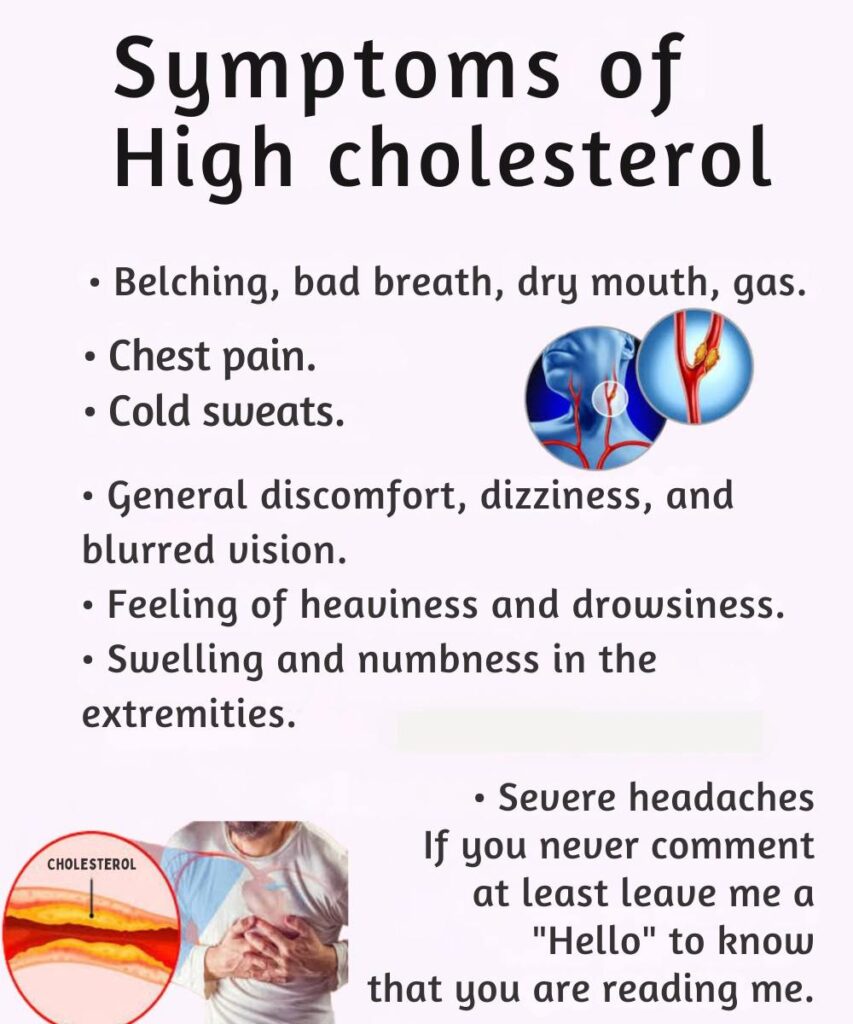
But if cholesterol levels remain too high for too long, the body may start sending warning signals that are easy to ignore. 👇
⚠️ Possible Warning Signs of high cholesterol
Chest pain or angina 🫀
Fatigue or shortness of breath
Dizziness, blurred vision, or feeling heavy
Cold sweats and intense headaches

Swelling or numbness in hands or feet
Fatty deposits under the skin (xanthomas) or yellow patches near the eyes (xanthelasmas)
A gray/white ring around the iris (corneal arcus)

🚨 Why It’s So Dangerous
If left untreated, high cholesterol can lead to:
Heart attack
Stroke
Peripheral artery disease

👉 That’s why it’s often called the “silent enemy.”
✅ The Only Reliable Way to Detect It
A simple blood test called a lipid profile is the best way to measure cholesterol.
Adults should check every 4–6 years if healthy.
More frequent checks are needed if you have obesity, high blood pressure, smoke, or a family history of heart disease.
🌿 Natural Ways to Prevent and Manage high cholesterol
The good news? You can lower your risk with lifestyle changes:
Eat smart: more fruits, vegetables, legumes, whole grains, nuts, and oily fish.
Cut down on trans fats and added sugars: avoid ultra-processed foods, fried snacks, and fast food.
Stay active: walking just 30 minutes a day makes a difference.
Avoid smoking and limit alcohol.
Maintain a healthy weight and reduce stress.

💡 Remember: high cholesterol doesn’t shout, but your body leaves small clues. The best prevention is listening to those signals and getting regular check-ups.
👉 Want to know which foods are most effective for lowering cholesterol naturally? 🍎🥑
Stay tuned for the next post!
