Turmeric for Teeth Whitening: Does This Natural Remedy Really Work?
In recent years, natural teeth whitening methods have exploded in popularity. From coconut oil pulling to charcoal powders, people are constantly searching for safer, chemical-free ways to brighten their smile. One remedy that keeps appearing on social media and wellness blogs is turmeric – the golden spice known for its anti-inflammatory and antibacterial properties.
But can turmeric really whiten teeth? And is it safe? Let’s break it down clearly and honestly.
Why Turmeric Is Trending in Oral Care
Turmeric contains curcumin, a powerful compound known for:
Antibacterial effects
Anti-inflammatory properties
Supporting gum health
Reducing plaque-causing bacteria
Because many tooth stains are linked to plaque buildup and bacterial activity, turmeric is often promoted as a natural way to improve tooth appearance and oral hygiene.
This is why you’ll often see turmeric combined with:
Coconut oil (for oil pulling)
Honey (antibacterial, soothing)
Salt (cleansing, but abrasive – more on that later)
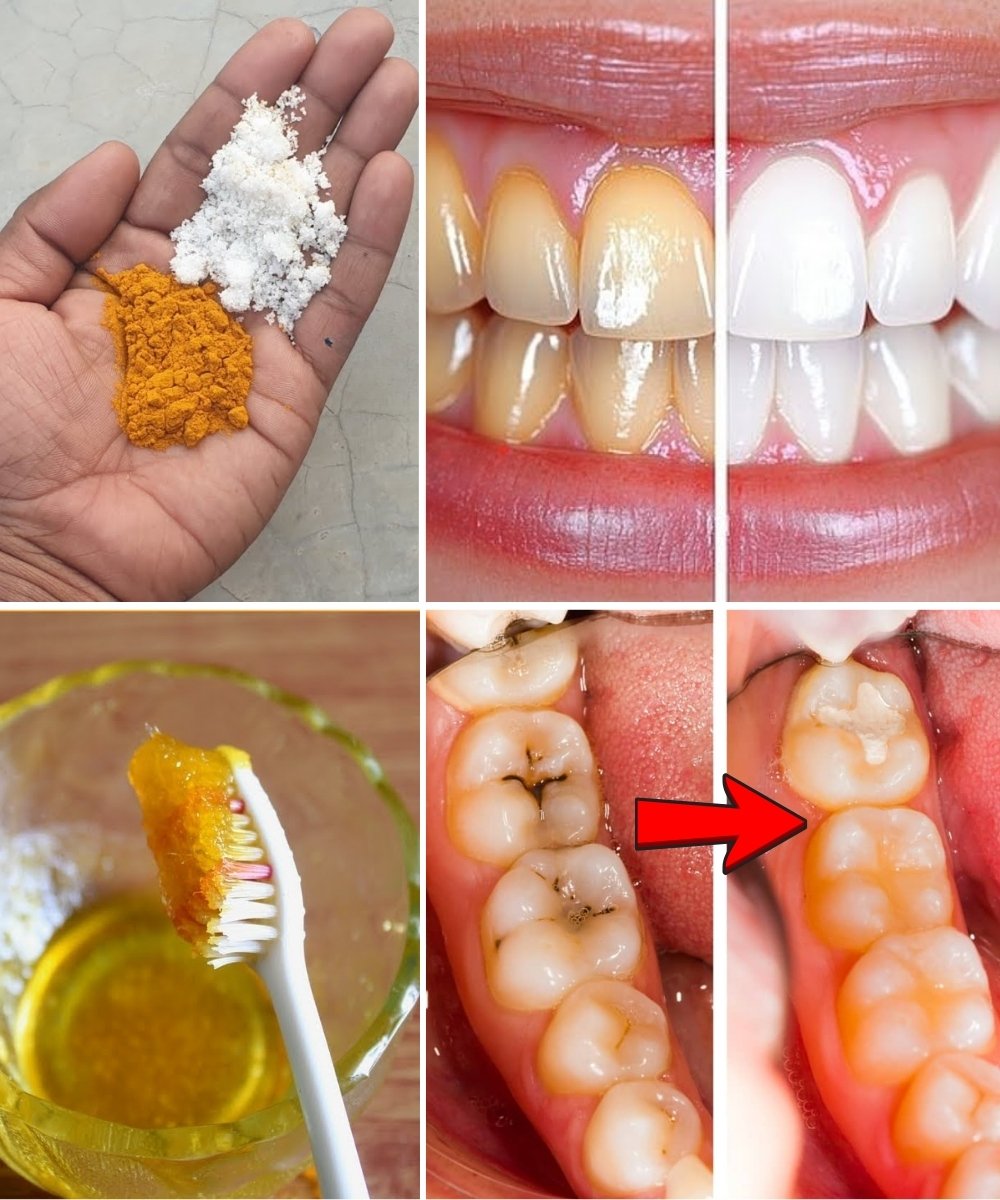
What the Images Are Suggesting
The images typically show:
Turmeric and salt in the hand
Yellow, stained teeth vs. bright white teeth

A toothbrush dipped in a golden mixture
Dark spots on molars disappearing after use

These visuals imply that a turmeric-based mixture can remove stains and even improve cavities. This is where we need to be very careful.
Turmeric can help with bacteria and inflammation, but it cannot repair cavities or replace professional dental treatment. Any content suggesting it “heals holes” in teeth is misleading.
Real Benefits of Turmeric for Teeth and Gums
Used correctly and gently, turmeric may help:
1. Reduce Plaque Buildup
Its antibacterial properties may limit the growth of plaque-causing bacteria.
2. Support Gum Health
Turmeric is well-known for calming inflammation, which may help with swollen or irritated gums.
3. Improve Surface Staining
Some users report that mild surface stains appear lighter over time due to cleaner enamel.
What Turmeric Cannot Do
Let’s be clear:
❌ It does not rebuild enamel
❌ It does not fix cavities
❌ It does not replace brushing, flossing, or dental visits
❌ It does not give instant professional-level whitening
Any article claiming “one use and your teeth are perfect” is pure clickbait.
Safety: The Most Important Part
Turmeric is not harmful by itself, but problems arise when people mix it with abrasive substances like salt or baking soda and scrub aggressively. This can:

Wear down enamel
Increase tooth sensitivity
Damage gums
Once enamel is gone, it never grows back. So gentleness is critical.
A Safer Way to Use Turmeric (If You Choose To)
If someone wants to try turmeric as a natural oral care supplement, it should be:
In very small amounts
Mixed with a gentle carrier like coconut oil
Used occasionally, not daily
Never scrubbed hard against teeth
Always rinse thoroughly, because turmeric can temporarily stain soft tissues.
Dentist-Approved Natural Alternatives
If the goal is a brighter, cleaner smile without chemicals, safer options include:
Good brushing technique with a soft brush
Flossing daily
Hydrogen peroxide mouth rinses (properly diluted, occasionally)
Professional cleanings
Whitening toothpaste with low abrasivity

These methods are far more predictable and safer long-term.
The Truth About “Before & After” Photos
Many viral images use:
Different lighting
Photo editing
Professional whitening results labeled as “natural remedies”
Always approach dramatic transformations with skepticism.
Final Verdict: Is Turmeric Worth Trying?
Turmeric can be:
A supportive ingredient for gum health
A mild helper for surface cleanliness
But it is not a miracle whitener and not a dental treatment.
If you like natural remedies, use turmeric carefully, gently, and realistically. And if you have stains, pain, or cavities – a dentist is always the correct solution.