
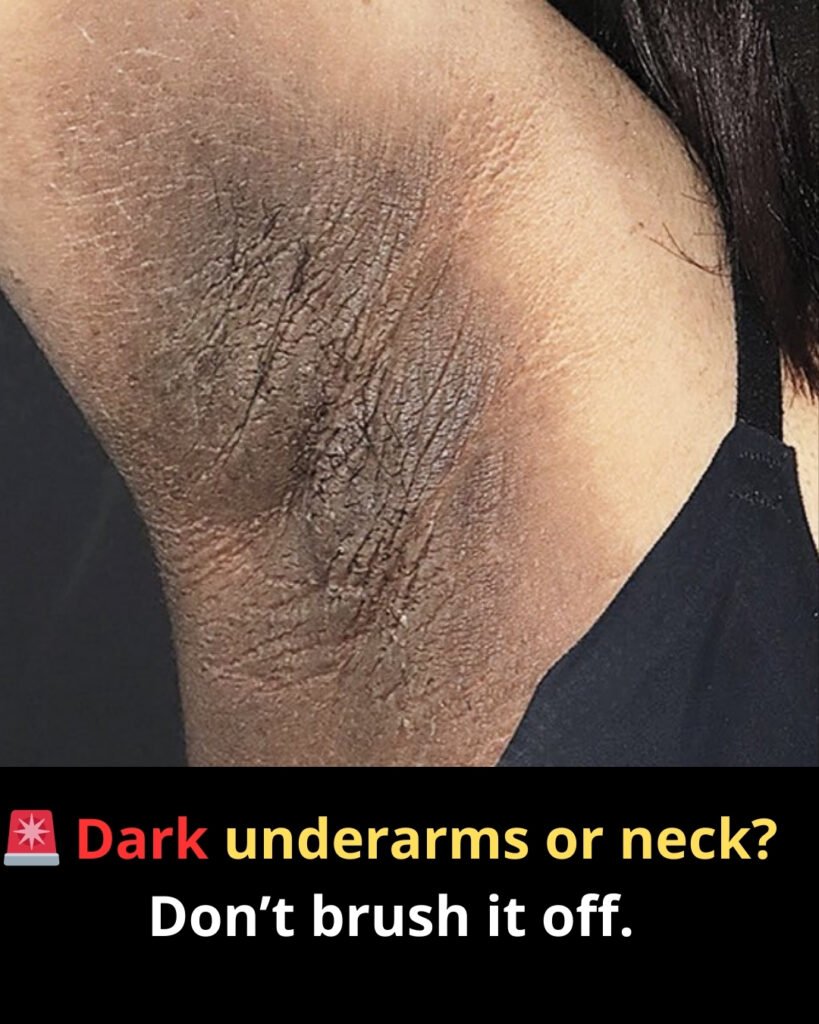
🚨 Dark underarms or neck? Don’t brush it off.
Acanthosis Nigricans (AN) isn’t just a cosmetic issue — it’s often your body’s early warning sign that something deeper is going on with your metabolic health.
Most people focus on lightening the skin…
but miss the real problem underneath.
Here’s a clear breakdown 👇
📌 What is Acanthosis Nigricans?
Acanthosis Nigricans is a skin condition marked by dark, thickened, velvety patches, commonly found in body folds such as:
Armpits
Neck
Groin
Under the breasts
Elbows or knees
It’s not contagious and usually not dangerous by itself, but it often signals an underlying health issue.
📌 What causes it?
🔹 Insulin resistance (most common)
This is the leading cause. When cells stop responding properly to insulin, insulin levels rise.
High insulin stimulates excess skin cell growth and pigmentation — especially in skin folds.
Seen in:
Prediabetes
Type 2 diabetes
Obesity

🔹 Hormonal conditions
These disrupt insulin sensitivity and metabolism:
Polycystic ovarian syndrome (PCOS)
Hypothyroidism
Cushing’s syndrome
🔹 Medications
Some drugs can trigger or worsen AN:
High-dose niacin
Oral contraceptives
Corticosteroids
Insulin or growth hormone
🔹 Genetics
Some people inherit a tendency to develop AN, often appearing in childhood or adolescence.
It’s more common in people of African or Hispanic descent.
🔹 Cancer (rare)
In very rare cases, AN can be linked to internal cancers (especially stomach or liver).
This type appears suddenly and spreads quickly.

📌 What does it look like?
Color: Dark brown to black
Texture: Thick, rough, velvety, slightly raised
Other signs: May itch or have an odor in severe cases
Progression: Develops gradually and becomes more noticeable over time
📌 How is it treated?
The key is treating the underlying cause, not just the skin.
✅ Lifestyle changes (most important)
Weight loss (if overweight)
Balanced diet low in added sugars
Regular physical activity
Good sleep and stress management
💊 Medical treatment
Doctors may treat conditions like PCOS, insulin resistance, or diabetes if present.
🧴 Skin treatments (cosmetic support)
These improve appearance but don’t fix the root cause:
Topical retinoids
Salicylic acid or alpha-hydroxy acids
Antibacterial or antifungal creams (if infection is present)
Procedures like chemical peels, laser therapy, or dermabrasion

📌 When to see a doctor
Get medical attention if:
Dark patches appear suddenly
They spread rapidly
They come with unexplained weight loss, stomach pain, or bleeding
📌 Bottom line
Acanthosis Nigricans is an early warning system.
Your skin may be the first place insulin resistance or hormonal imbalance shows up.
Start where it matters most:
Improve lifestyle habits
Manage stress
Support your skin — but don’t ignore what’s happening inside
Your body is talking. Listening early can make all the difference.
