
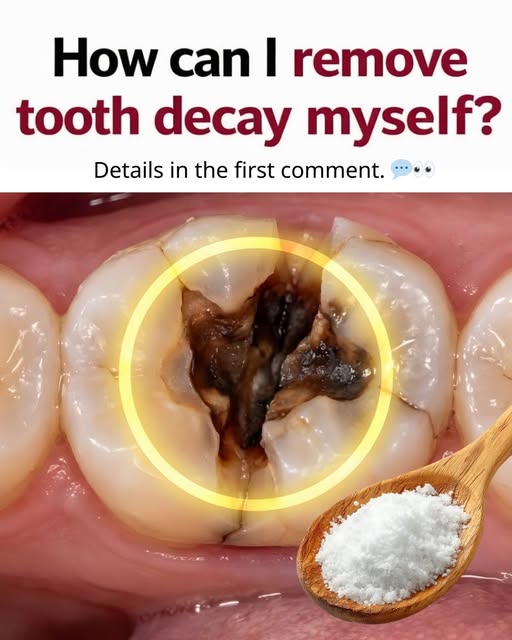
Searches for “how to remove tooth decay yourself” are incredibly common—and understandable. Tooth decay can be painful, expensive, and stressful. But here’s the reality upfront:
You cannot safely remove established tooth decay by yourself at home.
Once a cavity forms, only professional dental treatment can fully remove the decayed tissue.
That said, you can stop early decay, reduce pain, slow progression, and protect your teeth naturally—if you act early and correctly. This article explains exactly what’s possible, what’s not, and what actually helps.
What Tooth Decay Really Is (And Why DIY Removal Is a Myth)
Tooth decay happens when acids produced by bacteria dissolve tooth enamel and dentin. Once that damage creates a cavity (a hole), the structure is physically destroyed.
❌ Salt, baking soda, oil pulling, or herbal pastes cannot remove decayed tissue
❌ Scraping, picking, or “cleaning out” a cavity at home can cause infection
❌ DIY fixes often make decay spread faster and deeper
Removing decay means physically cutting away damaged tooth structure, which requires sterile tools, imaging, and training.
What You Can Do Yourself (That Actually Works)
1. Stop Early-Stage Decay (White Spots)
If decay is still in the demineralization stage, you can reverse or halt it.
Effective at-home strategies:
Brush twice daily with fluoride toothpaste

Use a fluoride mouth rinse (especially at night)
Reduce sugar and acidic foods
Chew xylitol gum to lower cavity-causing bacteria
Maintain consistent oral hygiene
👉 At this stage, no drilling is needed if addressed early.
2. Reduce Pain and Inflammation (Temporary Relief)
If a cavity already exists, home care can help manage symptoms—but not cure the problem.
Short-term relief options:
Rinse gently with warm salt water
Keep the area clean after meals
Avoid hot, cold, or sugary foods
Use dentist-approved temporary dental cement (pharmacy-grade)

⚠️ These methods do not remove decay—they only reduce discomfort.
3. Prevent Decay From Getting Worse
Even with an existing cavity, you can slow progression:
Brush gently but thoroughly around the area
Floss daily to prevent bacterial spread
Avoid chewing on the affected side
Do not use sharp objects or home “scraping” methods
Popular Internet Remedies: Do They Work?
| Remedy | Can It Remove Decay? | Reality |
|---|---|---|
| Salt or baking soda | ❌ No | May reduce bacteria, not decay |
| Oil pulling | ❌ No | No evidence of cavity removal |
| Coconut oil, clove oil | ❌ No | Temporary soothing only |
| Charcoal | ❌ No | Can damage enamel |
| “Natural tooth fillers” | ❌ No | Unsafe and ineffective |
If it claims to “remove cavities at home,” it’s misleading.
When You Must See a Dentist (No Exceptions)
You need professional care if you have:
Visible holes or dark spots
Persistent tooth pain
Sensitivity lasting more than a few days
Swelling, pus, or bad taste
Cracked or broken teeth

Delaying treatment can lead to:
Infection
Root canal
Tooth loss
More expensive procedures later
