The age of 70 is a pivotal threshold in longevity research. While genetic predispositions are set earlier in life, it is the cumulative effect of lifestyle choices, environmental exposures, and foundational biological resilience that truly determines health and survival in the eighth decade and beyond. The signs detailed here represent the body’s core systems—neurological, cardiovascular, metabolic, and musculoskeletal—whose current operational status provides the most accurate forecast of future vitality.
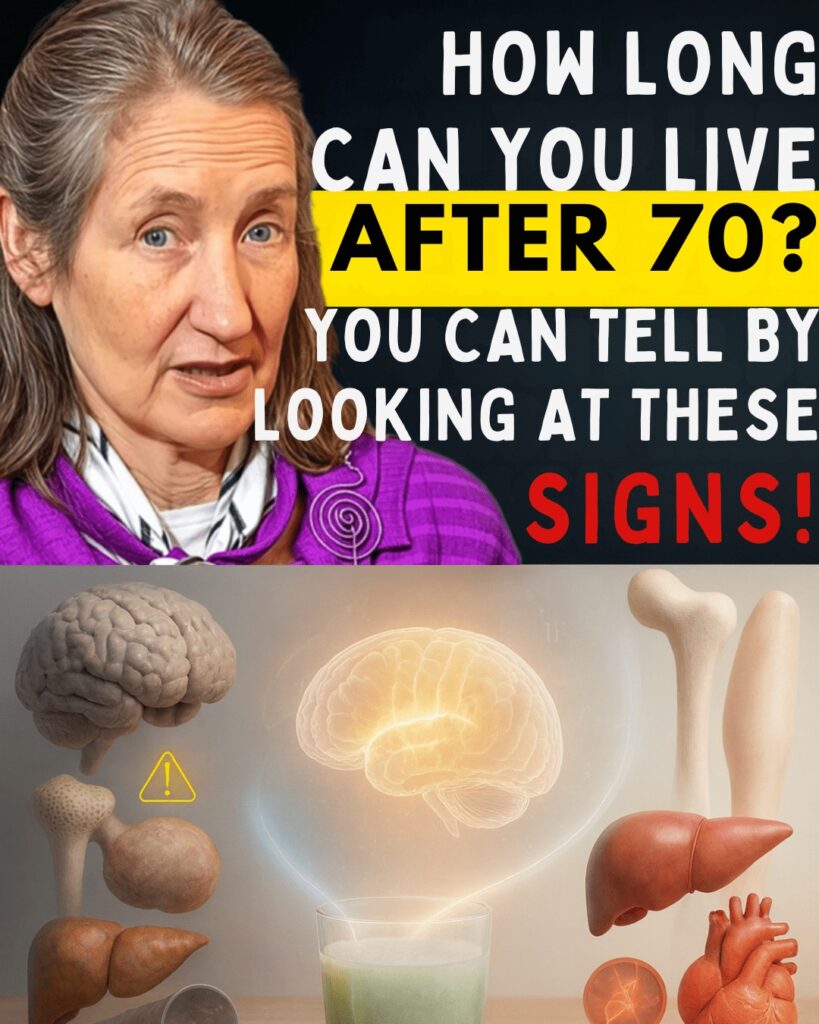
The image provided—featuring the brain, liver, heart, and bones—visually reinforces the interconnectedness of these vital organs and structures. Longevity is not the success of a single organ, but the harmonious function of the entire system.
1. Cognitive Resilience and Processing Speed (The Brain)
Your brain health is arguably the single most important predictor of independent living and overall life quality after 70. This goes far beyond memory. Cognitive resilience is the brain’s ability to maintain function despite accumulating age-related damage.
- What it predicts: A sharp mind is less prone to neurodegenerative conditions and better equipped to manage complex health regimens, social engagement, and problem-solving, all crucial for a long, high-quality life.
- The Key Indicator: Look at your processing speed and executive function—your ability to focus, plan, and shift between tasks. Simple tests like the ability to fluently name items in a category (e.g., animals or fruits) within 60 seconds, or quickly performing sequential tasks, are clinically relevant.
- Optimal Sign: Maintaining mental acuity that allows for the rapid acquisition of new skills, adaptability to new technology, and active participation in mentally stimulating activities. A resilient brain is flexible, constantly forming new neural pathways (neuroplasticity). This plasticity, demonstrated by learning, challenge, and novelty, suggests excellent underlying brain health and blood flow.
2. Grip Strength and Muscle Mass (The Musculoskeletal System)
Forget the gym mirror; muscle strength is a powerful biomarker for whole-body health. Sarcopenia, the age-related loss of muscle mass and function, is a major predictor of frailty, falls, and poor recovery from illness or surgery.
- What it predicts: Your functional independence. Strong muscle mass acts as a metabolic reserve, aiding in blood sugar control, bolstering the immune system, and providing the physical power needed to recover from stress.
- The Key Indicator: Grip strength, measured by a dynamometer, is a simple yet profoundly accurate surrogate measure for overall muscle power. Lower than average grip strength for your age and gender dramatically increases the risk of mortality from all causes. Another key functional test is the Chair Stand Test (how many times you can stand up and sit down without using your hands in 30 seconds).
- Optimal Sign: Grip strength remaining in the top quartile for your age group, demonstrating maintained muscle protein synthesis and nerve-muscle connection efficiency. The ability to carry out daily tasks with ease—lifting groceries, opening jars, climbing stairs—reflects preserved muscle quality and functional capacity.
3. Resting Heart Rate and Arterial Flexibility (The Heart and Vascular System)
Cardiovascular health is the bedrock of longevity. Your heart and the vast network of blood vessels deliver oxygen and nutrients to every cell. Dysfunction here rapidly accelerates aging throughout the body.
- What it predicts: The health of your circulatory system directly determines the risk of fatal events like heart attacks and strokes, and the incidence of chronic conditions like kidney disease and vascular dementia.
- The Key Indicator: Your Resting Heart Rate (RHR). A consistently high RHR (above 80 beats per minute) is associated with increased cardiovascular risk. The ideal range is often considered between 50 and 70 beats per minute, reflecting efficient heart function. Furthermore, Arterial Flexibility, sometimes measured via Pulse Wave Velocity, indicates the stiffness of your blood vessels. Stiff arteries force the heart to work harder.
- Optimal Sign: A consistently low RHR (in the 50-65 range) combined with normal blood pressure (ideally below 120/80 mmHg). This indicates a highly efficient heart pump and pliable, healthy blood vessels, allowing for easy blood flow and lower systemic inflammation.
4. Fasting Glucose and Insulin Sensitivity (The Metabolic System)
Metabolic health governs how your body uses energy. Dysregulation leads to type 2 diabetes and fuels chronic systemic inflammation, which is a major driver of all age-related diseases.
- What it predicts: Your susceptibility to diabetes, heart disease, and even some cancers. Maintaining optimal blood sugar control reduces damage to cells and organs caused by excess glucose (glycation).
- The Key Indicator: Your Fasting Blood Glucose and Hemoglobin A1c (HbA1c) levels. HbA1c provides a three-month average of your blood sugar control. An A1c level creeping into the pre-diabetic or diabetic range is a major red flag for compromised longevity. High insulin sensitivity means your cells respond efficiently to insulin, keeping your metabolic processes smooth.
- Optimal Sign: An HbA1c below 5.7% and a fasting glucose below 100 mg/dL. These metrics suggest excellent insulin sensitivity and a body that can efficiently manage its energy stores, minimizing the harmful effects of hyperglycemia and chronic metabolic stress.
5. Liver Enzyme Levels (The Liver and Detoxification)
The liver is the body’s primary filter and metabolic regulator. Its health is crucial for processing nutrients, hormones, and toxins. A stressed or compromised liver can cascade into problems affecting energy, immunity, and chronic disease risk.
- What it predicts: The efficiency of your body’s detoxification and regulatory processes. Elevated liver enzymes (ALT and AST) often indicate inflammation or damage, which can stem from metabolic issues (like Non-Alcoholic Fatty Liver Disease, NAFLD), excessive toxin exposure, or other insults.
- The Key Indicator: Alanine Aminotransferase (ALT) and Aspartate Aminotransferase (AST) levels in routine blood tests. Even slight, non-clinical elevations can be indicative of underlying metabolic stress.
- Optimal Sign: ALT and AST levels consistently in the low-normal range, suggesting a clean, efficient, and well-functioning liver. The absence of metabolic syndrome symptoms further confirms that the liver is not being taxed by excess fat or sugar processing.
6. Bone Mineral Density (The Skeletal System)
While muscle strength protects you from falls, Bone Mineral Density (BMD) dictates the severity of the consequences if you do fall. Fragility fractures, particularly hip fractures, drastically reduce life expectancy and independence in older adults.
- What it predicts: Your resilience against physical trauma and your overall hormonal and nutritional status (as bone health is tied to vitamin D, calcium, and hormone balance).
- The Key Indicator: The T-score from a DEXA scan. A low T-score indicates osteopenia or osteoporosis. The rate of bone loss is critical; rapid loss suggests a higher-risk trajectory.
- Optimal Sign: A T-score within the normal range, indicating strong, dense bones. This suggests a lifelong commitment to weight-bearing exercise and excellent nutrient assimilation, providing a robust frame that withstands minor injury and supports continued activity.
7. Inflammation Markers (The Systemic Health Status)
Chronic low-grade inflammation, often called “inflammaging,” is a key underlying factor in virtually all age-related diseases, including heart disease, cancer, and dementia. It’s the silent killer of vitality.
- What it predicts: Your overall biological age and the rate at which you are accumulating cellular damage. High inflammation accelerates telomere shortening and damages DNA.
- The Key Indicator: High-Sensitivity C-Reactive Protein (hs-CRP). This is a non-specific but powerful marker of systemic inflammation. Levels above 1.0 mg/L are often considered moderate to high risk, signaling ongoing, unresolved inflammatory processes in the body.
- Optimal Sign: An hs-CRP level consistently below 1.0 mg/L. This indicates a low inflammatory load, often achieved through an anti-inflammatory diet, stress management, optimal sleep, and regular physical activity, leading to a significantly reduced risk of chronic disease progression.
8. Social Engagement and Purpose (The Psychosocial Factor)
While the first seven signs are biological, this eighth factor is perhaps the most powerful integrator of all the others. Social isolation is a health risk comparable to smoking or obesity. A strong sense of purpose provides the why for maintaining all the physical health signs.
- What it predicts: Your mental resilience, motivation for self-care, and ability to handle stress. Loneliness is a profound stressor that increases cortisol and inflammation. Purpose drives healthy behaviors.
- The Key Indicator: Quantity and Quality of Social Ties (i.e., Do you feel close to people, and do you have a meaningful role in your community or family?) and a Sense of Meaning or Purpose in daily life. Research consistently links volunteering, learning, and strong relationships to increased life expectancy.
- Optimal Sign: Active involvement in diverse social networks, maintaining close, supportive relationships, and having a defined purpose that requires you to get up, engage, and contribute each day. This psychosocial vigor acts as a potent protective factor against cognitive decline and functional decline.