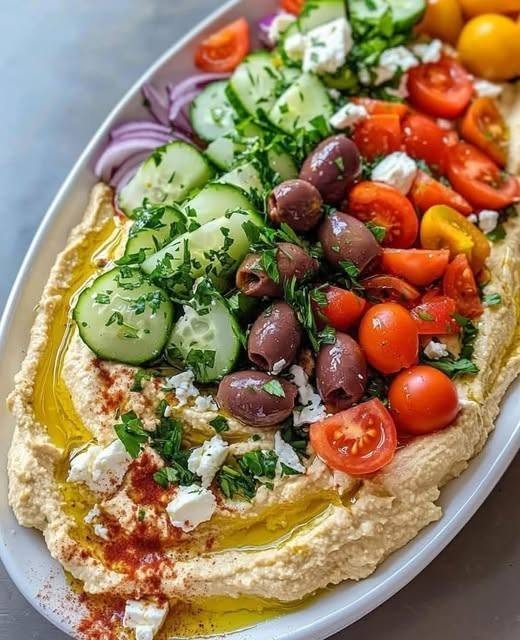
Loaded Hummus is a delicious Mediterranean-inspired appetizer made with smooth, creamy homemade hummus and topped with fresh vegetables, crispy chickpeas, olive oil, herbs, and flavorful seasonings. Every bite combines a silky hummus base with crunchy, juicy, savory toppings.
This easy recipe is perfect for parties, family gatherings, healthy snacks, lunch platters, or Mediterranean-inspired meals. Serve it with warm pita bread, fresh cucumber slices, carrots, or your favorite crackers.
Recipe Overview
Prep Time: 15 minutes
Cook Time: 15 minutes (optional, for crispy chickpeas)
Total Time: 30 minutes
Servings: 6
Difficulty: Easy
Cuisine: Mediterranean / Middle Eastern
Course: Appetizer, Snack, or Side Dish
Dietary: Vegetarian, naturally dairy-free, and gluten-free when served with gluten-free accompaniments.
Ingredients
For the Homemade Hummus
1 can (15 oz) chickpeas, drained and rinsed
¼ cup tahini
2 tablespoons fresh lemon juice
2 tablespoons extra virgin olive oil
1–2 cloves garlic
½ teaspoon ground cumin
½ teaspoon salt, or to taste
3–4 tablespoons ice-cold water
¼ teaspoon black pepper
For the Loaded Toppings
½ cup cherry tomatoes, finely chopped
½ cucumber, diced
¼ cup red onion, finely chopped
¼ cup Kalamata olives, sliced
¼ cup crumbled feta cheese (optional)
2 tablespoons fresh parsley, chopped
1 tablespoon fresh mint, chopped
2 tablespoons extra virgin olive oil
½ teaspoon smoked paprika
¼ teaspoon red pepper flakes (optional)
Optional Crispy Chickpea Topping
½ cup cooked chickpeas
1 teaspoon olive oil
¼ teaspoon paprika
¼ teaspoon garlic powder
Pinch of salt
Kitchen Equipment Needed
Food processor or high-speed blender
Mixing bowls
Small skillet or baking tray
Cutting board
Sharp knife
Measuring cups and spoons
Serving plate or shallow bowl
Spatula
Step-by-Step Instructions
Step 1: Prepare the Chickpeas
Open the canned chickpeas and drain the liquid.
Rinse thoroughly under cold running water.
For extra-smooth hummus, gently rub the chickpeas between clean kitchen towels to remove some of their skins.
Removing the skins is optional, but it helps create a creamier consistency.
Step 2: Blend the Tahini and Lemon Juice
Add tahini and fresh lemon juice to your food processor.
Blend for approximately 30–45 seconds until the mixture becomes creamy and slightly fluffy.
This step creates a smooth base for your hummus.
Step 3: Add Garlic and Seasonings
Add the garlic cloves, cumin, salt, and black pepper.
Blend again until everything is evenly combined.
Step 4: Add the Chickpeas
Add the drained chickpeas to the food processor.
Blend for 1–2 minutes, stopping occasionally to scrape down the sides.
Slowly add the olive oil and cold water, one tablespoon at a time, until the hummus becomes smooth and creamy.
Continue blending until you reach your preferred consistency.
Pro Tip: Ice-cold water helps create a light, fluffy hummus texture.
Step 5: Prepare the Crispy Chickpeas
If using the optional crispy chickpea topping, pat the cooked chickpeas dry.
Heat olive oil in a skillet over medium heat.
Add chickpeas, paprika, garlic powder, and salt.
Cook for approximately 8–12 minutes, stirring frequently, until golden and crispy.
Alternatively, roast them at 400°F (200°C) for approximately 20–25 minutes, shaking the tray halfway through.
Set aside to cool.
Step 6: Prepare the Fresh Vegetables
Wash and dry the cherry tomatoes and cucumber.
Finely chop the tomatoes, cucumber, and red onion.
Slice the Kalamata olives.
Chop the fresh parsley and mint.
Keep the toppings separate until assembly.
Step 7: Season the Toppings
Place the chopped tomatoes, cucumber, red onion, and olives in a small bowl.
Add a drizzle of olive oil, a pinch of salt, black pepper, and a little lemon juice.
Gently toss everything together.
Avoid overmixing because you want the vegetables to retain their fresh texture.
Step 8: Spread the Hummus
Transfer the prepared hummus to a large shallow serving plate or bowl.
Use the back of a spoon to spread it evenly.
Create a shallow well or decorative swirl in the center to hold the toppings and olive oil.
Step 9: Add the Loaded Toppings
Arrange the prepared vegetables over the hummus.
Add crispy chickpeas, sliced olives, and crumbled feta cheese if desired.
Sprinkle fresh parsley, mint, smoked paprika, and red pepper flakes over the top.
Step 10: Finish with Olive Oil
Drizzle extra virgin olive oil generously over the finished hummus.
Add a little extra lemon juice for brightness.
Serve immediately with warm pita bread, crackers, cucumber slices, or fresh vegetables.
Taste and Texture
Hummus Base: Smooth, creamy, rich, and slightly nutty.
Tomatoes: Juicy and naturally sweet.
Cucumber: Fresh, cool, and crunchy.
Red Onion: Adds a mild sharpness.
Olives: Provide a salty Mediterranean flavor.
Feta: Adds a creamy, tangy touch.
Crispy Chickpeas: Bring a delicious crunchy texture.
Fresh Herbs: Add brightness and freshness.
The combination creates a wonderful balance of creamy, crunchy, savory, tangy, and refreshing flavors.
Important Tips for Perfect Loaded Hummus
Use good-quality tahini for a rich, nutty flavor.
Add lemon juice gradually and adjust according to taste.
Blend the hummus long enough to achieve a smooth consistency.
Use ice-cold water to make the hummus lighter and fluffier.
Remove chickpea skins if you prefer an extra-smooth texture.
Pat vegetables dry before adding them to prevent watery hummus.
Add crispy chickpeas just before serving to preserve their crunch.
Use fresh parsley and mint for the best flavor.
Drizzle olive oil right before serving.
Avoid adding too much salt because olives and feta are already salty.
Delicious Variations
1. Greek Loaded Hummus
Add Kalamata olives, cucumber, cherry tomatoes, red onion, oregano, and crumbled feta.
2. Spicy Loaded Hummus
Add chili flakes, cayenne pepper, sliced jalapeños, and a drizzle of spicy olive oil.
3. Roasted Red Pepper Hummus
Blend roasted red peppers into the hummus base and finish with chopped parsley.
4. Mediterranean Chickpea Hummus
Top with roasted chickpeas, tomatoes, cucumbers, olives, and fresh lemon juice.
5. Avocado Loaded Hummus
Add diced avocado, cherry tomatoes, cilantro, and lime juice.
6. Protein-Rich Loaded Hummus
Add extra roasted chickpeas, hemp seeds, and a generous serving of protein-rich toppings.
What to Serve with Loaded Hummus
Warm pita bread
Whole-wheat pita chips
Fresh cucumber slices
Carrot sticks
Celery sticks
Bell pepper strips
Cherry tomatoes
Whole-grain crackers
Toasted sourdough
Grilled vegetables
Mediterranean salad
Falafel
Storage and Meal Prep Instructions
Refrigeration:
Transfer leftover hummus into an airtight container and refrigerate for approximately 3–4 days.
For the best texture, store the hummus and fresh toppings separately.
Freezing:
Plain hummus can be frozen in an airtight freezer-safe container for up to 3 months. Fresh vegetable toppings should be prepared separately.
Reheating:
Hummus is generally served cold or at room temperature. If it becomes too thick after refrigeration, stir in a teaspoon of cold water or olive oil.
Meal Prep Tip:
Prepare the hummus up to 3 days ahead. Chop and store the vegetables separately, then assemble the loaded hummus shortly before serving.
Approximate Nutrition Information
Per serving, based on 6 servings with feta cheese and toppings. Excludes pita bread and crackers.
| Nutrient | Amount |
|---|---|
| Calories | 235 kcal |
| Protein | 7 g |
| Carbohydrates | 19 g |
| Fat | 15 g |
| Fiber | 6 g |
| Sugar | 3 g |
| Sodium | 390 mg |
Frequently Asked Questions (FAQs)
Q1: Can I make loaded hummus ahead of time?
Yes! Prepare the hummus up to 3 days ahead. Store the toppings separately and assemble just before serving.
Q2: Can I use dried chickpeas instead of canned?
Absolutely. Soak dried chickpeas overnight and cook until completely tender before using.
Q3: How do I make hummus extra creamy?
Blend the tahini and lemon juice first, remove some chickpea skins, and gradually add ice-cold water while blending.
Q4: Is loaded hummus healthy?
It can be a nutritious option. Chickpeas provide plant-based protein and fiber, while tahini and olive oil provide unsaturated fats. Portion size and toppings affect the overall nutrition.
Q5: Can I make this recipe without tahini?
Yes. Substitute smooth natural almond butter or a little extra olive oil, although the traditional nutty flavor will change.
Q6: Is loaded hummus dairy-free?
Yes, if you leave out the feta cheese. The hummus base and remaining toppings are naturally dairy-free.
Q7: Can I make this recipe spicy?
Yes! Add chili flakes, cayenne pepper, jalapeños, or a drizzle of chili oil.
Q8: What can I use instead of pita bread?
Cucumber slices, carrots, celery, bell peppers, and gluten-free crackers are excellent alternatives.
Troubleshooting Guide
| Problem | Solution |
|---|---|
| Hummus is too thick | Add cold water gradually |
| Hummus tastes bitter | Use fresh, good-quality tahini |
| Hummus tastes bland | Add lemon juice, salt, or cumin |
| Hummus is grainy | Blend longer and remove chickpea skins |
| Hummus is too watery | Add more chickpeas |
| Toppings release too much liquid | Drain chopped vegetables before adding |
| Crispy chickpeas become soft | Add them immediately before serving |
Chef’s Special Tips
Always use fresh lemon juice for the brightest flavor.
A good tahini makes a noticeable difference.
Add a pinch of ground cumin for authentic Mediterranean-inspired flavor.
Use extra virgin olive oil for finishing rather than only mixing it into the hummus.
Create a decorative swirl with the back of a spoon before adding toppings.
Add fresh herbs at the end to preserve their color and aroma.
For a beautiful presentation, arrange each topping in small sections rather than mixing everything together.
Serving and Presentation Ideas
For a beautiful Mediterranean appetizer platter:
Spread creamy hummus across a large shallow serving plate.
Create decorative swirls using the back of a spoon.
Add chopped cucumber and cherry tomatoes.
Scatter Kalamata olives and red onion over the top.
Add crispy chickpeas for crunch.
Sprinkle crumbled feta, parsley, and mint.
Finish with extra virgin olive oil and smoked paprika.
Arrange warm pita wedges and fresh vegetable sticks around the plate.
Why You’ll Love This Recipe
Easy to prepare with simple ingredients.
Naturally vegetarian and customizable.
Packed with chickpeas and plant-based fiber.
Creamy, crunchy, fresh, and flavorful.
Perfect for parties and gatherings.
Great for Mediterranean-inspired meal prep.
Easy to adjust for dairy-free and gluten-free preferences.
Final Thoughts
Loaded Hummus is more than just a simple dip. It’s a colorful, satisfying Mediterranean-inspired dish that combines creamy homemade hummus with fresh vegetables, olives, herbs, crispy chickpeas, and delicious olive oil.