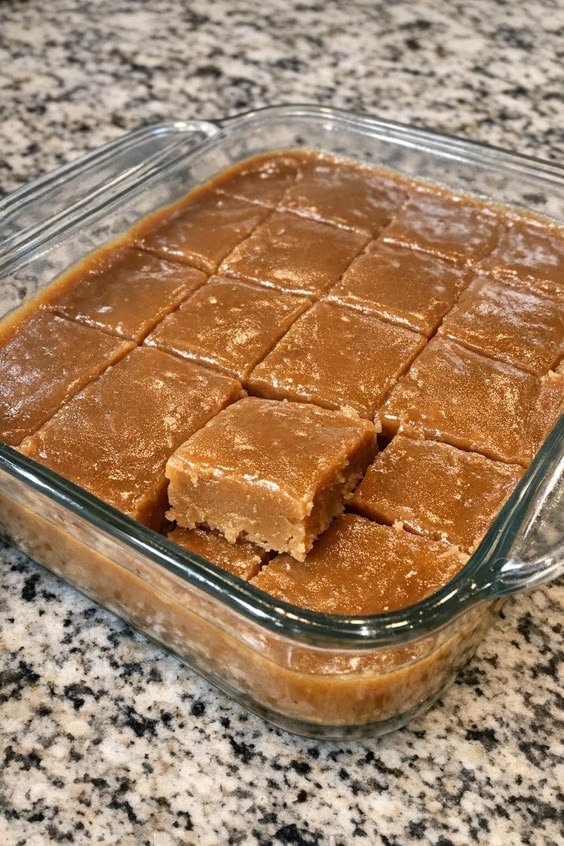
4-Ingredient Depression Era Brown Sugar Fudge Slabs are an old-fashioned homemade candy inspired by the simple, budget-friendly desserts of the Great Depression era. Made with just four basic ingredients, this traditional-style fudge has a rich brown sugar flavor, a smooth buttery texture, and a delicious caramel-like sweetness.
Unlike chocolate fudge, this version gets its distinctive flavor from brown sugar, butter, and milk. It is perfect for holiday dessert trays, family gatherings, homemade gifts, or whenever you want a nostalgic sweet treat without complicated ingredients.
1. Recipe Overview
| Detail | Information |
|---|---|
| Prep Time | 10 minutes |
| Cook Time | 15–20 minutes |
| Cooling Time | 2–3 hours |
| Total Time | Approximately 3 hours |
| Servings | 16–20 pieces |
| Difficulty | Medium |
| Cuisine | American-inspired vintage dessert |
| Cooking Method | Stovetop |
| Main Ingredient | Brown sugar |
| Flavor | Buttery, caramel-like, and sweet |
2. Ingredients
This recipe uses four main ingredients.
2 cups packed light brown sugar – Provides the classic caramel-like flavor.
½ cup unsalted butter – Adds richness and a smooth buttery taste.
½ cup whole milk – Helps create the creamy fudge mixture.
2 cups powdered sugar – Gives the fudge its sweetness and helps it set.
Equipment Needed
Medium heavy-bottomed saucepan
Wooden spoon or heat-resistant spatula
Candy thermometer
Mixing bowl
8 × 8-inch square baking pan
Parchment paper
Sharp knife
3. Step-by-Step Instructions
Step 1: Prepare the baking pan
Line an 8 × 8-inch square baking pan with parchment paper.
Leave a little extra parchment hanging over the sides.
Lightly grease the parchment paper with butter.
Set the pan aside.
This makes removing and slicing the finished fudge much easier.
Step 2: Combine the brown sugar, butter, and milk
Place a heavy-bottomed saucepan over medium heat.
Add the packed brown sugar.
Add the unsalted butter.
Pour in the whole milk.
Stir gently until the butter melts and the sugar begins to dissolve.
Continue stirring until the mixture becomes smooth.
Step 3: Bring the mixture to a boil
Increase the heat slightly until the mixture reaches a steady boil.
Stir gently to prevent sticking.
Once the mixture is boiling, avoid scraping crystallized sugar from the sides of the saucepan into the mixture.
Attach a candy thermometer to the saucepan.
Continue cooking until the mixture reaches approximately 238°F (114°C), the soft-ball stage.
Important: Use a candy thermometer for the most reliable results. The temperature determines whether the fudge will set properly.
Step 4: Cool the mixture slightly
Remove the saucepan from the heat.
Allow the mixture to cool undisturbed until it reaches approximately 110°F (43°C).
Avoid stirring during this cooling period.
This helps control the formation of sugar crystals and improves the final texture.
Step 5: Add the powdered sugar
Transfer the cooled brown sugar mixture to a large mixing bowl if needed.
Gradually add the powdered sugar.
Beat with a wooden spoon or electric mixer on low speed.
Continue mixing until the mixture thickens and becomes creamy.
Stop mixing when it is smooth, thick, and spreadable.
Step 6: Transfer to the baking pan
Immediately spoon the fudge mixture into the prepared baking pan.
Spread it evenly with a spatula.
Smooth the surface gently.
Tap the pan lightly on the countertop to remove large air pockets.
Step 7: Let the fudge set
Leave the pan at room temperature for approximately 2–3 hours.
Allow the fudge to become completely firm before cutting.
Avoid moving the pan while it sets.
If your kitchen is particularly warm, refrigerate it after the initial cooling period.
Step 8: Slice into fudge slabs
Lift the fudge out of the pan using the parchment paper.
Place it on a cutting board.
Use a sharp knife to cut it into squares or rectangular slabs.
Wipe the knife between cuts for cleaner edges.
Arrange the pieces on a serving plate.
4. Taste and Texture
Brown sugar: Rich, sweet, and naturally caramel-like.
Butter: Adds a creamy, smooth, and luxurious flavor.
Milk: Helps create a soft and rich fudge consistency.
Powdered sugar: Helps produce a thick, smooth candy texture.
The finished fudge should be firm enough to hold its shape while remaining tender and slightly creamy when you bite into it.
5. Ingredient Substitutions
| Original Ingredient | Substitute |
|---|---|
| Light brown sugar | Dark brown sugar |
| Unsalted butter | Salted butter (omit extra salt) |
| Whole milk | Evaporated milk |
| Powdered sugar | Homemade finely ground powdered sugar |
Note: Substitutions can affect the sweetness, flavor, and setting consistency. For the most reliable result, use the original ingredients.
6. Delicious Recipe Variations
1. Pecan Brown Sugar Fudge
Add ½ cup finely chopped toasted pecans after mixing in the powdered sugar.
2. Walnut Brown Sugar Fudge
Mix in ½ cup chopped walnuts for a traditional nutty flavor and extra crunch.
3. Vanilla Brown Sugar Fudge
Add 1 teaspoon vanilla extract after removing the mixture from the heat. This is an optional fifth ingredient.
4. Sea Salt Brown Sugar Fudge
Sprinkle a small amount of flaky sea salt over the top before the fudge sets.
5. Cinnamon Brown Sugar Fudge
Add ½ teaspoon ground cinnamon for a warm, cozy flavor.
6. Chocolate Drizzle Fudge
Drizzle melted chocolate over the cooled fudge slabs for a delicious chocolate-and-caramel combination.
7. Serving Suggestions
These old-fashioned fudge slabs are wonderful with:
Freshly brewed coffee
Hot tea
Hot chocolate
A glass of cold milk
Vanilla ice cream
Fresh strawberries
Holiday cookie platters
Homemade dessert trays
For special occasions, arrange the fudge pieces in small paper candy cups.
8. Storage and Make-Ahead Tips
Room Temperature Storage
Allow the fudge to set completely.
Place pieces in an airtight container.
Store in a cool, dry place for approximately 3–5 days.
Keep pieces separated with parchment paper.
Refrigerator Storage
Store in an airtight container.
Refrigerate for approximately 1–2 weeks.
Allow the fudge to sit at room temperature for a few minutes before serving for a softer texture.
Freezing Instructions
Cut the fudge into individual slabs.
Wrap each piece in parchment paper.
Place the wrapped pieces in a freezer-safe container.
Seal tightly.
Freeze for up to 2–3 months for best quality.
Thaw overnight in the refrigerator before serving.
9. Approximate Nutrition Information
Estimated per piece, assuming 20 pieces from one batch.
| Nutrient | Amount |
|---|---|
| Calories | 150–175 kcal |
| Protein | 0–1 g |
| Carbohydrates | 27–31 g |
| Fat | 5–7 g |
| Fiber | 0 g |
| Sugar | 26–30 g |
| Sodium | 25–45 mg |
Actual nutrition varies depending on the brown sugar, butter, and powdered sugar brands.
10. Frequently Asked Questions
Q1: Why is my brown sugar fudge not setting?
The mixture may not have reached the correct cooking temperature. It needs to reach approximately 238°F (114°C) before cooling and mixing with powdered sugar.
Q2: Can I make this fudge without a candy thermometer?
Yes, but it is more difficult to get consistent results. The traditional cold-water soft-ball test can help, although a candy thermometer is more reliable.
Q3: Why did my fudge become grainy?
Graininess can develop when sugar crystals form too early or crystallized sugar from the sides of the pan gets mixed back into the mixture.
Q4: Can I use dark brown sugar?
Yes. Dark brown sugar creates a deeper molasses flavor and a darker-colored fudge.
Q5: Can I make this recipe ahead of time?
Absolutely. Prepare the fudge a day or two before serving and store it in an airtight container.
Q6: How do I get clean fudge slices?
Allow the fudge to become completely firm, then use a sharp knife warmed slightly under hot water and wiped dry between cuts.
Q7: Can I add nuts?
Yes. Pecans and walnuts are especially delicious. Add them after mixing in the powdered sugar.
Q8: Is this recipe the exact original Depression-era recipe?
Not necessarily. This is a simplified, four-ingredient, vintage-inspired brown sugar fudge recipe. Recipes and methods varied across households and historical periods.
11. Troubleshooting Guide
| Problem | Possible Cause | Solution |
|---|---|---|
| Fudge stays soft | Mixture did not reach soft-ball stage | Cook to approximately 238°F |
| Fudge is too hard | Mixture was overheated | Use a candy thermometer next time |
| Fudge is grainy | Sugar crystallized prematurely | Avoid stirring after boiling and don’t scrape the pan sides |
| Fudge is too thick to spread | Powdered sugar was added too quickly or mixture cooled too much | Mix promptly and spread while workable |
| Fudge is sticky | Not enough cooking or setting time | Allow additional setting time |
| Fudge has uneven texture | Ingredients were not fully incorporated | Beat until smooth and evenly combined |
12. Chef’s Tips for Perfect Brown Sugar Fudge
Use a heavy-bottomed saucepan to distribute heat evenly.
Measure the brown sugar accurately and pack it into the measuring cup.
Use room-temperature milk to help ingredients combine smoothly.
Avoid scraping crystallized sugar from the sides of the pan.
Use a candy thermometer for accurate cooking.
Let the mixture cool before beating in powdered sugar.
Work quickly once the fudge becomes thick and spreadable.
Prepare the baking pan before starting because the mixture sets quickly.
Allow the fudge to set completely before slicing.
Store in an airtight container to maintain its texture.
13. Serving and Presentation Ideas
For a beautiful old-fashioned dessert presentation:
Cut the fudge into neat rectangular slabs.
Arrange the pieces on a vintage-style serving platter.
Place parchment paper between stacked pieces.
Add a light sprinkle of chopped pecans if using the nut variation.
Serve alongside coffee or tea.
Package individual pieces in small decorative paper wrappers for homemade gifts.
14. Final Recipe Summary
4-Ingredient Depression Era Brown Sugar Fudge Slabs are a simple, nostalgic homemade candy featuring brown sugar, butter, milk, and powdered sugar.
They have a rich caramel-like flavor, a buttery aroma, and a smooth, firm texture that makes them perfect for holidays, dessert tables, and homemade gifts.